 Every season in the B/R 99, one search away. Category coverage varies by era: print era cards (1980-98) show points and finish only, since ADP did not exist before online drafts arrived. Early internet era cards (1999-2006) carry ADP where period draft boards survive. ADP era cards (2007-25) have full data. A card's rank by raw points is its place among these 99 seasons by point total, not its finish within its own year.
Ranking and player summaries by Gary Davenport.
1
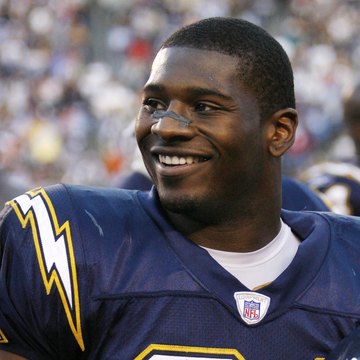 LaDainian Tomlinson
Putting together this list was equal parts fun and folly. An enjoyably impossible endeavor. I have zero doubt that there will be no shortage of comments on social media from people railing that so-and-so is ranked ahead of such-and-such—despite the fact that the gap between No. 25 and No. 45 is that there isn't one.
All of these seasons were great and merit celebration. There are dozens more that missed the cut but are remembered fondly by fantasy managers who reaped the rewards.
But while there's loads of room for debate about most of this assemblage of awesome, one thing is certain. A mortal lock.
No one in the history of fantasy football has had a better season than LaDainian Tomlinson in 2006.
If you had Tomlinson rostered that season, you likely won your league. If your opponent did, you just chalked up that week as a loss and prayed you wouldn't see them again in the playoffs.
He was that good.
Tomlinson led the league in rushing with over 1,800 rushing yards. Topped 2,300 total yards for the second time in his career. And set an NFL record with (and this is not a misprint) 31 total touchdowns.
Steven Jackson's big year kept the running back position from being a complete runaway, but Tomlinson averaged over 30 PPR points per game.
Boom goes the dynamite.
2
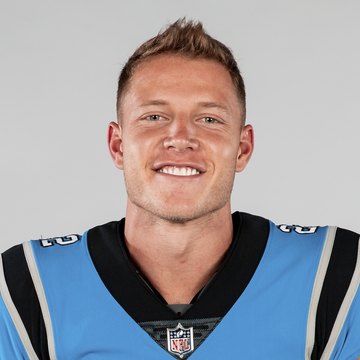 Christian McCaffrey
There have been three running backs in NFL history who have gained over 1,000 rushing yards and over 1,000 receiving yards in the same season. The first two of those campaigns have already been discussed on this list.
But in terms of PPR points, Christian McCaffrey's 2019 rampage was the biggest of the lot.
As McCaffrey entered his third season with the Carolina Panthers, he was coming off the first 1,000-yard rushing season of his career. He added 107 receptions in 2018 and fell just shy of Saquon Barkley for the title of fantasy football's highest-scoring running back.
As it turns out, he was only getting started.
McCaffrey's 2019 was bananas. In his first game of that season, he carried the ball 19 times for 128 yards and two scores. Topped 200 total yards. And caught 10 passes.
It's those receptions that shot McCaffrey into the stratosphere. McCaffrey would go on to tally 116 catches that year—the most ever in a season by a running back. McCaffrey topped 400 touches, came up just short of 2,400 total yards and scored 19 times.
McCaffrey was the highest-scoring player in fantasy football by over 40 fantasy points, and he was the top running back by over 150 PPR points.
Yes, you read that right. A buck-fifty.
3
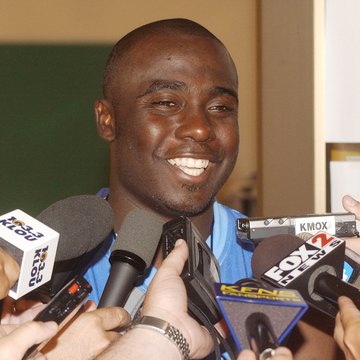 Marshall Faulk
There is no shortage of outstanding running backs in the NFL in 2026, whether it's Christian McCaffrey, Jahmyr Gibbs or Bijan Robinson.
But the dawn of the 21st century was a golden age for fantasy managers in the backfield. There were multiple backs in their prime who went on to make the Hall of Fame. Others who had shorter but still wildly productive careers. 400-point fantasy seasons happened with a fair amount of regularity.
Marshall Faulk was as dominant as any of them—the offensive fulcrum of "The Greatest Show on Turf." His ability to gain yardage both on the ground and through the air made him a fantasy manager's dream. Faulk rushed for over 1,000 yards seven times and had four consecutive seasons with over 2,000 total yards.
And in 2000, Faulk had the best fantasy season of his career on the way to being named the NFL's Most Valuable Player.
Faulk cleared 1,300 yards on the ground. Surpassed 80 catches and 800 receiving yards. Flirted with 2,200 total yards. And scored a league-high 26 touchdowns.
Faulk wasn't just fantasy's No. 1 running back. Or the top player overall. He was the No. 1 fantasy asset by more than 50 PPR points.
4
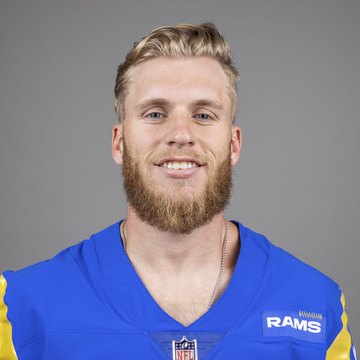 Cooper Kupp
The 2021 season was Cooper Kupp's fifth in the NFL. By that year, he had already exceeded the third-round pick the Rams spent on him, topping 90 catches in a season twice and topping 1,150 yards with 10 touchdowns in 2019.
At that point, Kupp was regarded as a valuable fantasy asset but not an elite one—his average draft position was in the fourth round. In March of 2021, the Rams sent Jared Goff and two first-round picks to the Detroit Lions for Matthew Stafford.
And that new quarterback would propel Kupp to the single-most productive PPR season any wide receiver has ever had.
It didn't take long for it to become abundantly clear that Kupp was in for a massive season—he caught seven passes for 108 yards and a touchdown in the season opener before erupting for nine catches for 163 yards and two scores in Week 2. Kupp was targeted at least 10 times in each of the Rams' first seven games.
At season's end, Kupp was targeted 191 times. He paced the league in receptions, receiving yards and receiving scores, becoming the fourth wideout since the AFL-NFL merger to win the receiving "Triple Crown."
Kupp finished just shy of 440 PPR points and was the highest-scoring player in the league.
5
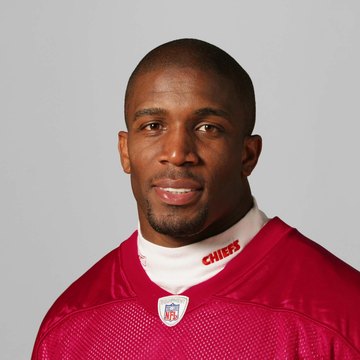 Priest Holmes
When the greatest running backs to ever play the game are discussed, you won't hear Priest Holmes' name mentioned. He only had four 1,000-yard seasons in a career that was cut short by injuries. By the 2005 season, Holmes had been pushed aside by Larry Johnson as the lead back in Kansas City.
But before he was cast aside the Chiefs rode Holmes in a big way—and in 2003 that resulted in the fourth-biggest PPR season we have ever seen from a running back.
It wasn't Holmes' best season in terms of rushing yards—in fact, over his three-year reign as (arguably) fantasy football's top back, his 1,420 yards on the ground that year were the lowest. But it was the best season of his career in terms of receptions, and in 2003 Holmes found the end zone a jaw-dropping 27 times—at the time the all-time high-water mark in that category. Holmes edged out LaDainian Tomlinson that year for the top spot among running backs, posting over 450 PPR points.
Sadly, that was pretty much it for Holmes. He averaged 111.5 yards per game on the ground in 2004 but missed half the season, and by 2005 Grandmama had usurped him in Kansas City.
Wait. That's the wrong Larry Johnson.
6
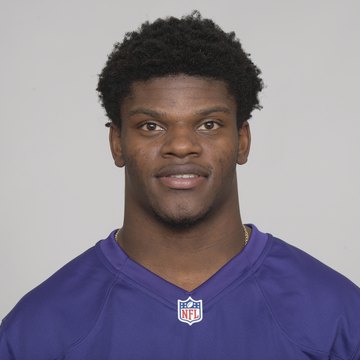 Lamar Jackson
In 2018, we watched Patrick Mahomes go from low-end weekly starter on draft day to dominant fantasy force in his second professional season.
The following season, it was Lamar Jackson's turn.
The last pick of Round 1 in 2018, Jackson headed into that second season coming off a strong finish to his rookie year. In the first game of that season, Jackson shredded the Miami defense for 324 yards and five touchdown passes. The following week, it was 272 yards and two scores through the air and another 120 yards on the ground.
That dual-threat ability propelled Jackson into fantasy mega-stardom.
That Week 1 game was the only time that Jackson threw for 300 yards. But he topped 100 yards on the ground five times on the way to 1,206 rushing yards—more than any other quarterback in the history of the NFL.
In addition to all those rushing yards (and seven touchdowns on the ground), Jackson also completed over 66 percent of his passes for over 3,100 yards and an NFL-high 36 touchdown passes.
In terms of just raw fantasy points, it wasn't the best season of Jackson's career. But when you factor in an ADP at the back end of Round 9, it's the best fantasy campaign a quarterback has ever had.
7
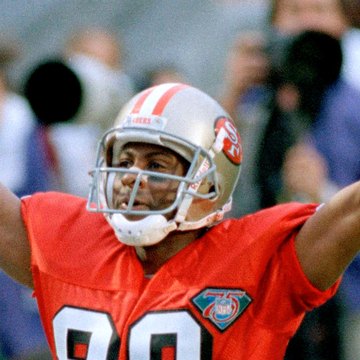 Jerry Rice
Jerry Rice was pretty good at the whole catching a football thing.
Over a 20-year NFL career, Rice caught 1,549 passes for 22,895 yards and 197 touchdowns. Every one of those numbers is No. 1 all-time.
So is Rice. He's the best wideout to ever play the game. Full stop. And 1995 was his best season.
Entering 1995, Rice was riding a nine-year streak of racking up at least 1,000 receiving yards. He had scored at least 10 touchdown catches in six straight seasons. He was a Super Bowl champion, a two-time Offensive Player of the Year and a lock for the Hall of Fame.
Rice's 1995 campaign was the icing on all that tasty cake.
That year, Rice set a career high in targets. And catches. And receiving yards. His 1,848 receiving yards was an NFL record at the time. Rice had four games that season with over 10 catches and 150 yards—including 14 receptions for 289 yards and three touchdowns against the Minnesota Vikings—in fantasy championship week.
At season's end Rice was the only wide receiver with over 400 PPR points and one of just two players overall to surpass that total.
8
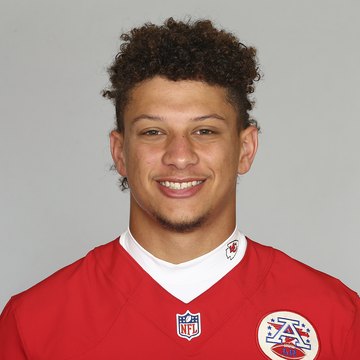 Patrick Mahomes
The 10th overall pick in the 2017 draft, Patrick Mahomes spent his first professional season watching Alex Smith play quarterback for the Kansas City Chiefs. The following year, the Chiefs handed Mahomes the keys to the offense.
And Mahomes proceeded to break the land speed record.
Sure, people expected Mahomes to be good. But when he threw for 326 yards and six touchdowns against the Pittsburgh Steelers in Week 2, we knew we were in for something special.
And Mahomes was only getting started. That was the first of eight straight 300-yard games for Mahomes. He would throw for six scores again later that season in the infamous 54-51 shootout with the Los Angeles Rams. Mahomes had six games that season with four or more touchdown passes.
By the time the dust settled, Mahomes had posted one of the greatest statistical seasons by a quarterback ever, joining Peyton Manning as the only two quarterbacks to throw for 5,000 yards and 50 touchdowns.
Mahomes was the highest-scoring player in fantasy and the top quarterback by over 60 points. And with an ADP in low-end weekly starter territory, Mahomes was one of the best values we've ever seen under center.
9
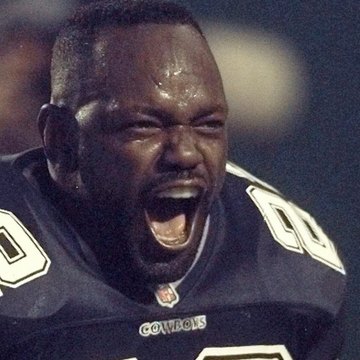 Emmitt Smith
In the history of the National Football League, no running back has more career rushing yards than the 18,355 that Emmitt James Smith III accrued over 15 seasons with the Dallas Cowboys and Arizona Cardinals.
Starting in his second season, Smith piled up a staggering streak of production. Smith topped 1,000 yards on the ground 11 times—in a row. Despite a heavy workload year after year, Smith missed just six games over that span—and a third of those were due to a contract dispute.
Smith was the offensive engine for a Cowboys team that won three Super Bowls in four years—and the 1995 season was his best.
By that year, Smith had led the league in rushing three times. He had been named the NFL's Most Valuable Player. But the 1995 campaign was his most productive—Smith set career-highs in rushing yards, rushing scores and receptions. He averaged over 110 yards per game on the ground and paced the NFL with 2,148 total yards. Smith found the end zone a whopping 25 times that year. And he blew up to the tune of over 425 PPR points—the most of any player that season.
10
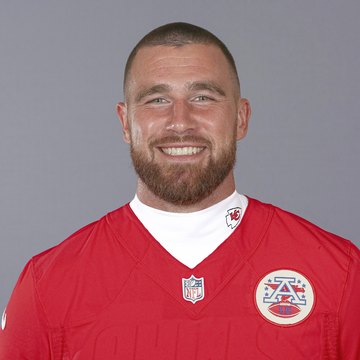 Travis Kelce
Right now, Travis Kelce is on the downslope of his career. But even a declining Kelce is still productive—he was fourth in PPR points among tight ends last year and hasn't finished outside the top five at the position in a decade.
In his prime though, Kelce ruled the tight end spot with an iron fist. From 2016 to 2022, Kelce posted seven straight seasons with over 1,000 receiving yards. He topped 100 catches three times. Scored 10 or more touchdowns three times. And led the tight end position in PPR points six times.
The seventh year he finished second—that bum.
2022 was the last of those seasons—the final year of King Kelce's unquestioned dominance of tight ends. But he went out with a bang. That year Kelce was targeted a career-high 152 times. He set a career-high in receptions. Topped 1,300 receiving yards. Found the end zone a dozen times. And had six games with at least 100 receiving yards.
It was the second-highest PPR point total ever for a tight end. And arguably the most dominant season by a player at his position ever—Kelce outscored the No. 2 tight end in 2022 by a touchdown per contest.
There hasn't been a more consistently dominant player at his position—period.
11
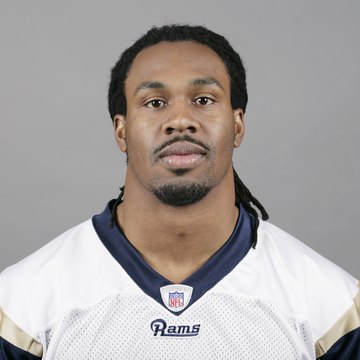 Steven Jackson
Steven Jackson had the unenviable task of being the guy who followed Marshall Faulk in the backfield for the St. Louis Rams. Jackson may not have reached the heights that Faulk did—but when he was on his game he was plenty capable of blowing up in his own right.
In 2006, Jackson most assuredly blew up.
Fresh off the first 1,000-yard rushing season of his career, Jackson exploded to the tune of an NFL-high 2,334 yards that season. He caught 90 passes, scored 16 total touchdowns and posted over 415 PPR points.
The only thing that stopped Jackson from leading all players in points by a sizable margin was the greatest fantasy campaign of all time.
12
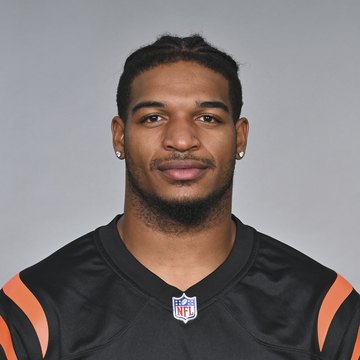 Ja'Marr Chase
In most fantasy football leagues this year, Ja'Marr Chase will be the first receiver drafted.
There's a reason for that.
Even with Joe Burrow hurt last season, Chase was elite—he led the NFL in targets, caught 125 passes and topped 1,400 receiving yards.
Two years ago with his bae Joe Cool throwing him the rock, Chase also led the league in targets with 175. In addition, he led the league in receptions. And receiving yards. And touchdown catches, becoming the fifth receiver in the Super Bowl era to win the "Triple Crown."
Chase was the only non-quarterback to score 400 points that season, he topped Justin Jefferson by a mile for the top spot at his position and Chase posted the fourth-most PPR points by a wideout ever.
So, yeah—drafting Chase this season is probably a good idea.
13
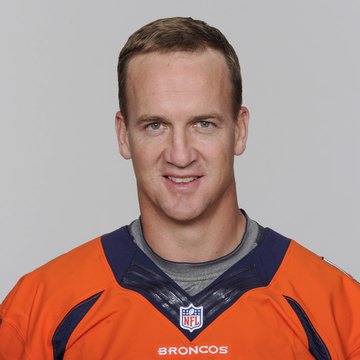 Peyton Manning
Peyton Manning led the Denver Broncos to a pair of Super Bowls.
OK, the one they won the team sorta led him—details.
The Broncos may have gotten waxed in Super Bowl XLVIII, but that came after Manning and the Denver offense absolutely shredded the league in the regular season.
Manning carved the NFL to pieces. He averaged over 340 passing yards a game and made history three times over. His 5,477 passing yards remain the single-season record. So do his 55 touchdown passes. And Manning was the first quarterback in league history to record 5,000 passing yards and 50 touchdown throws in the same year.
It's a top-five season from a fantasy QB all-time—from a guy who couldn't run if zombies were chasing him.
14
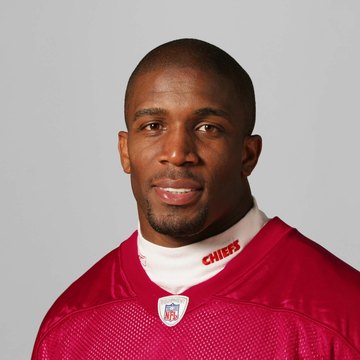 Priest Holmes
You had to know that Priest Holmes was going to make at least one appearance on this list.
There might be more.
Holmes logged a 1,000-yard season over four years in Baltimore, but he wasn't a highly-valued fantasy asset. In the last four seasons of his career after injuries set in, he never hit 1,000 rushing yards again.
But there was a three-year stretch where Holmes was the Tasmanian Devil—and 2002 was smack in the middle.
In his second season in Kansas City, Holmes topped 1,600 rushing yards, posted the second of three straight 2,000-yard seasons, caught 70 passes and found paydirt an NFL-high 24 times.
It was one of the six biggest seasons a back has ever had in PPR points.
And it wasn't even his best year.
15
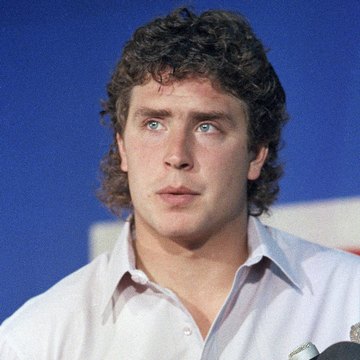 Dan Marino
People born before a certain year just don't understand the magnitude of what Dan Marino did in Miami in 1984.
Whippersnappers.
In a time when 4,000-yard passers were far more exception than rule, Marino did the unthinkable, becoming the first player in the history of the NFL to throw for over 5,000 yards in a season.
No one would repeat the feat for nearly a quarter-century.
Marino led all quarterbacks in every stat that mattered that season, including touchdown passes and yards per attempt. He averaged over 315 passing yards per game. And was the No. 1 fantasy quarterback by 60-plus points.
The runner-up was Neil Lomax. You cannot make this stuff up.
16
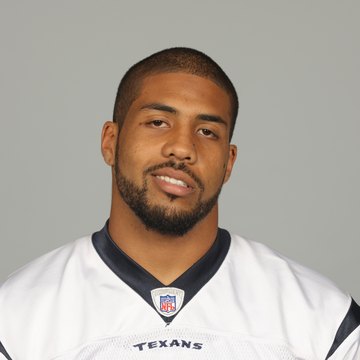 Arian Foster
There is nothing better in fantasy football than landing an elite running back as late as possible—it's the Golden Ticket that gets you a trip to the chocolate factory.
Arian Foster was 24 karat awesome in 2010.
In 2009, Foster was a seldom-used back who carried the ball all of 54 times. In his second season, though, he touched the ball just a little bit more—a league-leading 393 times. Foster averaged over 100 yards per game on the ground, topped 65 receptions, led the NFL with 2,220 total yards and scored 18 touchdowns on the way to finishing more than 75 fantasy points ahead of, well, anyone.
He was a winning Powerball ticket. And those who drafted him hit the jackpot.
17
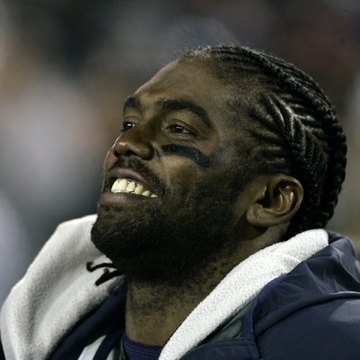 Randy Moss
By the time the 2007 season rolled around, Randy Moss had gone from the NFL's most feared receiver to a player trying to get his career back on track after a disappointing stint in Oakland.
They hadn't stolen all the city's sports teams yet.
Moss landed in New England that season catching passes from some rando named Mike Brady or Tom Brady or something.
And he got back on track, all right.
Brady targeted Moss 160 times during New England's undefeated regular season. Moss reeled in almost 100 of those targets and flirted with 1,500 receiving yards. Oh yeah, and Moss also set an NFL record with 23 touchdown receptions.
The only player who had more fantasy points than Moss that season was that Brady guy.
Whoever he was.
18
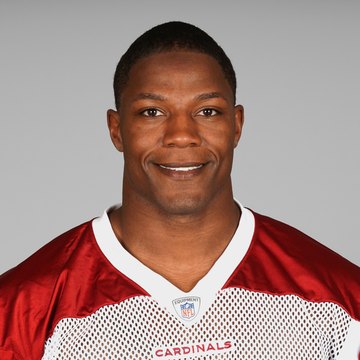 David Johnson
You can't tell the history of popular music without mentioning one-hit wonders.
And you can't tell the history of modern fantasy football without talking about David Johnson.
In eight NFL seasons, Johnson barely averaged four yards per carry. He topped 1,000 yards on the ground just once.
But that one season? Bonkers.
In his second season with the Arizona Cardinals, Johnson rushed for over 1,200 yards. Drew a whopping 120 targets in the passing game. Topped 2,100 total yards. And found the end zone 20 times.
Johnson was the only player in fantasy football to top 400 points that season, and he dominated the fantasy runner-up at running back (Ezekiel Elliott) by over 80 PPR points.
19
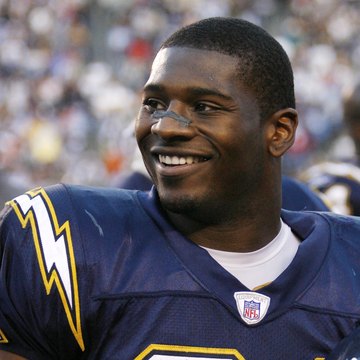 LaDainian Tomlinson
LaDainian Tomlinson was...something.
It wasn't just the Hall of Fame talent, although Tomlinson had no shortage of that. His skill-set was made for piling up PPR points. He was the focal point of the Chargers offense, in that he essentially was the Chargers offense.
He was my first fantasy football love affair—and it was torrid.
That Tomlinson wasn't selected for the Pro Bowl in 2003 is laughable—he averaged 5.3 yards per carry, caught a career-high 100 passes, led the league with 2,370 total yards and found the end zone 17 times.
Tomlinson came up just shy of 450 PPR points in 2003—and was the fantasy runner-up at his position.
20
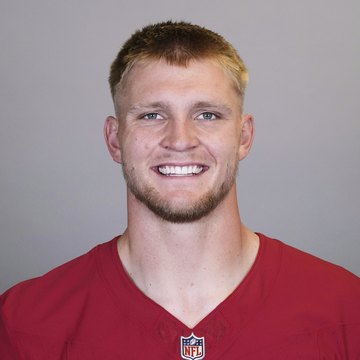 Trey McBride
Recency bias is most assuredly a thing in fantasy football—the last big thing that happened is the best big thing ever. And for as talented as Cardinals tight end Trey McBride is, he may never have another season like the one he just did.
But it also checks all the boxes for an all-time fantasy campaign.
Want some history? McBride had the most receptions ever by a tight end in a season and became the first player at the position with back-to-back 100-catch years.
Want fantasy points? McBride had the third-most by a tight end ever.
Want dominance over his peers? McBride outscored Kyle Pitts by over 100 PPR points.
21
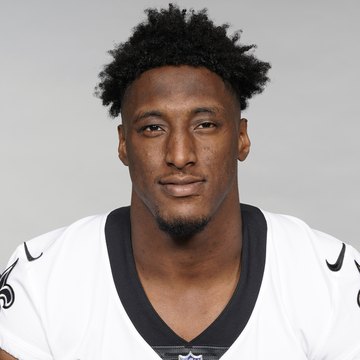 Michael Thomas
Michael Thomas is one of those wide receivers that just kind of gets lost amidst all the gonzo seasons we have seen at the position over the past decade—especially since his career was cut short by injury after his massive season in 2019.
But, oh what a season it was.
By 2019, Thomas had already posted back-to-back 100-catch seasons. But that was nothing compared to all the catching he did that year.
149 receptions—the most by any player in NFL history. Thomas averaged almost 108 yards per game, caught over 80 percent of his targets for the second year in a row and finished as the No. 1 wide receiver by a margin of almost 100 PPR points.
22
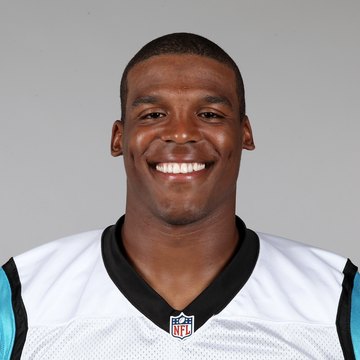 Cam Newton
In many respects, Cam Newton is one of one—and it's not just about his fashion sense.
The man wears what he wants. Credit where it's due.
There's plenty of credit to be given where Newton's MVP season in 2015 is concerned—the quarterback who ran like a halfback and looked like a fullback was at his cape-wearing best.
On the way to a 15-1 season and appearance in Super Bowl 50, Newton tossed a career-high 35 touchdown passes, surpassed 3,800 passing yards, ran for over 600 yards and added 10 more scores on the ground.
Newton outscored the No. 2 quarterback (Tom Brady) by nearly 50 points and finished as the highest-scorer among all players.
23
 Christian McCaffrey
Last year, San Francisco 49ers running back Christian McCaffrey was coming off a disastrous 2024 campaign where he played in just four games. Despite his astronomical fantasy ceiling, McCaffrey fell outside the first round in as many drafts as not.
And the teams who landed McCaffrey there probably won their leagues.
We were all reminded of that astronomical upside in 2025—McCaffrey led the NFL with 413 touches. Surpassed 1,200 rushing yards. Caught 102 passes. He racked up over 2,100 total yards—the second-highest total of his nine-year career.
And McCaffrey was the only 400-point player in fantasy football.
Still fading him in 2026 though—that workload is going to catch up to him.
24
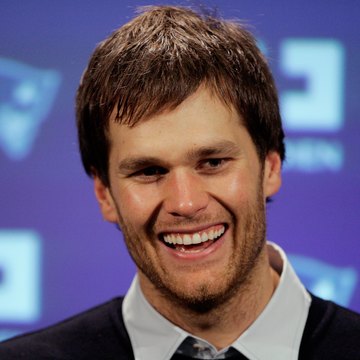 Tom Brady
Were it not for Eli Manning and the New York Giants, the 2007 New England Patriots would be remembered as the greatest single-season team ever. They are still the only team to peel off a 16-game undefeated regular season.
And shock and amazement, Tom Brady played a big part in that unbeaten season.
All Brady did that year was complete almost 69 percent of his passes. Average just over 300 passing yards per game. Lead the league in both yards per attempt and air yards per attempt. And become the first signal-caller in NFL history to throw 50 touchdown passes in a season.
Brady finished with 398 fantasy points that year.
No other quarterback was within 80.
25
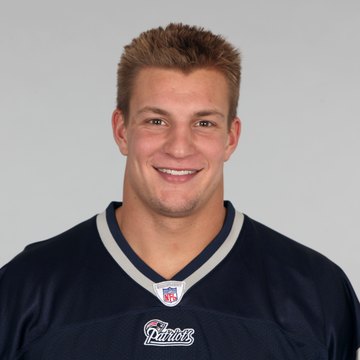 Rob Gronkowski
Entering the 2011 season, Rob Gronkowski of the Patriots was coming off a solid (if unspectacular) rookie season where he finished outside the top-10 tight ends in PPR points. His ADP in 2011 was in Round 10.
That would be the last time Gronk was available that late in fantasy drafts.
That season was the first of several huge ones from the huge tight end. Gronkowski was targeted 124 times—over twice as many as his first season. He caught 90 passes, averaged nearly 15 yards a reception and led the NFL in touchdown grabs.
He was the only tight end in the league to surpass 300 PPR points.
A league-winner in every sense.
26
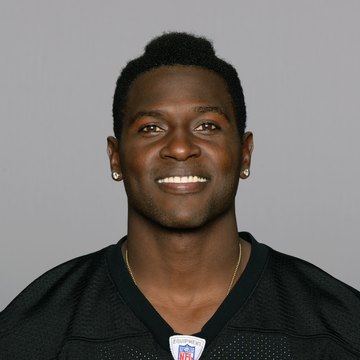 Antonio Brown
Antonio Brown's career didn't exactly end on the best of terms. But fantasy football is all about numbers. Stats.
And in his prime, Brown racked up numbers as well as anyone ever has. Two of the six-highest seasons in PPR points ever are on his resume.
Wait for it...2015 was the best.
Brown didn't lead the league in receiving yards that season. Or in touchdown grabs. But he paced the NFL in catches and finished second in receiving yards behind Julio Jones.
Brown wasn't quite able to repeat as fantasy's No. 1 player overall (damn you, Cam Newton), but he missed being the king of imaginary football in back-to-back years by less than a point per game—at wide receiver.
27
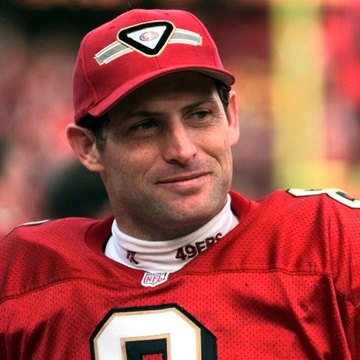 Steve Young
From a fantasy perspective, Steve Young was a better quarterback than Joe Montana ever thought about being.
Because in fantasy, you should want your signal-caller the way I like my eggs—scrambling.
I'll take forced metaphors for $400, Alex.
By 1998, Young was nearing the end of his Hall of Fame career. But in addition to throwing for a career-high 4,170 yards and leading the league in touchdown passes for the fourth time, Young also had his second-most rushing yards and added six scores on the ground.
At season's end, Young wasn't just fantasy's No. 1 quarterback—he beat out another omelet (Randall Cunningham) by over five points per game.
Gaps that big win leagues.
Pass the salsa.
28
 Marshall Faulk
Here's the thing about "The Greatest Show on Turf."
Kurt Warner is one of the greatest stories the NFL has ever seen—the bag boy turned Hall of Famer. Isaac Bruce and Torry Holt were an all-time duo at wide receiver.
But it doesn't become a buzzsaw without Marshall Faulk.
In 2001 (A Space Odyssey), the Rams were two seasons removed from a title. An unstoppable offensive machine. They lost Super Bowl XXXVI that season because the Patriots took Faulk out of the game, not because of "Spygate."
In the regular season though, it was a different story—Faulk led the league in rushing yards per game, caught over 80 passes, sailed past 2,100 total yards and in general just did a lot of Faulk-esque stuff.
He's the Godfather of PPR.
29
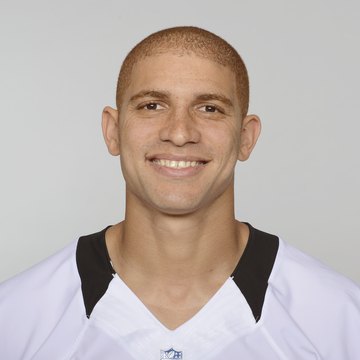 Jimmy Graham
The fantasy football landscape is constantly shifting. As the NFL changes, fantasy changes with it.
And in the 21st century, we have all witnessed the emergence of the league-breaking tight end. And at his best, Jimmy Graham was most assuredly breaking stuff.
Had Graham not spent his heyday mostly in the (large) shadow of Rob Gronkowski, he'd get a little more run. But Graham out-shined all shadows back in 2013—he was targeted over 140 times for the second time in his career, topped 85 catches and 1,200 yards, led the NFL with 16 touchdown catches and posted a top-five season in PPR points among tight ends—of all time.
30
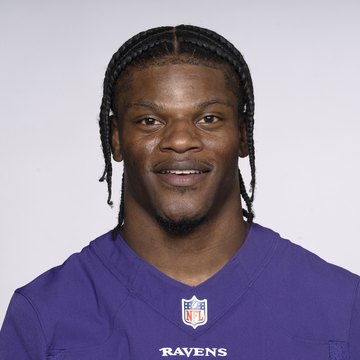 Lamar Jackson
The opinions of fantasy pundits are mixed on Baltimore Ravens quarterback Lamar Jackson in 2026 after an injury-marred 2025. Some are concerned that Jackson's best days (fantasy-wise) are behind him.
Others remember the long-ago days of 2024.
It wasn't Jackson's best fantasy campaign, in that by two years ago if you wanted to ride the highlight train the ticket was significantly more expensive than it once was.
But that doesn't make the numbers any less impressive—Jackson's lone season to date with 4,000 passing yards, a career-high in touchdown passes, over 900 yards on the ground and (in many fantasy scoring systems) the most points in PPR leagues by a quarterback.
Like, ever.
31
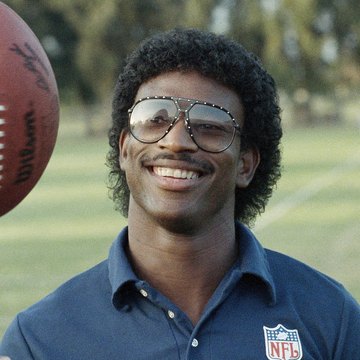 Eric Dickerson
Yes, for many of the people reading this the year 1983 might as well be 1583—it was the Dark Ages, filled with dragons and no WiFi.
There was barely cable TV. It was scary stuff. But like the legend of Beowulf, the saga of the heroism of Eric Dickerson has persevered in the tales of elders.
Dickerson is one of the five best running backs who ever played—and that's a conservative assessment. And while Dickerson would set the single-season rushing record with 2,105 yards in 1984, from a fantasy perspective his rookie year was even more impressive.
441 touches. 113 rushing yards per game. Over 50 receptions. Twenty total touchdowns.
It wasn't his welcome to the NFL. It was the NFL's welcome to Eric Dickerson.
32
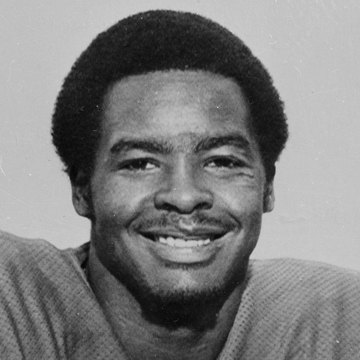 Kellen Winslow
Back in 1980, Kellen Winslow of the San Diego (Super) Chargers wasn't like the other tight ends.
Granted, he wasn't the only tight end of his era who was more receiver than blocker. Or who was the No. 1 receiving option on his team. But they were far more exception than rule—and in old-school fantasy leagues where scores were tabulated on Tuesday morning using the newspaper, he was a cheat code.
Winslow's 1980 season came a year before his epic playoff game against the Miami Dolphins, but it was epic in its own right—the first of two straight seasons where Winslow led the NFL in receptions, topped 1,000 yards and scored at least nine times.
No other tight end flirted with 200 PPR points that year.
Winslow had almost 275.
33
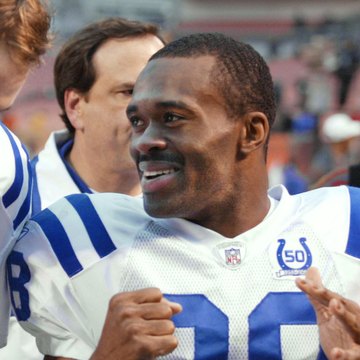 Marvin Harrison
We've already discussed Marvin Harrison's Hall of Fame career. His eight straight seasons with over 1,100 receiving yards. The fact that he found the end zone at least 10 times each and every season over that span, which is just ridiculous given how fluky touchdowns can be.
It's a stretch of dominance as good as we've ever seen at the position. And the 2002 season was the highlight of that rampage. Godzilla meets Tokyo.
That season, Harrison was targeted 205 times—the third-most in league history. The result was career-highs in receptions and receiving yards and the most PPR points among wide receivers by a sizable margin.
34
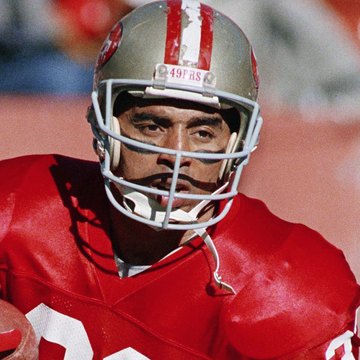 Roger Craig
That it took Roger Craig until 2026 to be inducted into the Pro Football Hall of Fame is a bit baffling. Granted, Craig's not especially high on the list of career rushing yards. In 11 seasons, Craig topped 1,000 yards on the ground just three times.
But when a player accomplishes something that no player in the history of the NFL had ever accomplished, that should vault them up the all-time greats list.
That's what Craig did in 1985.
Until that season, no player had ever gained 1,000 rushing yards and 1,000 receiving yards in the same year. Craig led the league with 92 catches, scored 15 total touchdowns and edged out Marcus Allen for the top spot in PPR points among all players.
35
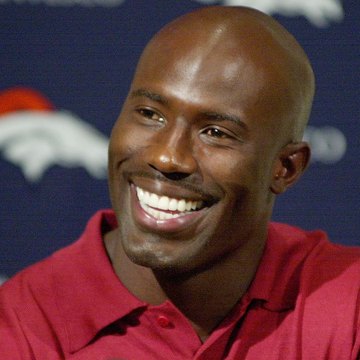 Terrell Davis
Terrell Davis was done in by being Terrell Davis.
He's also one of the prime reasons that John Elway has two Super Bowl rings instead of none.
Those Denver teams didn't run through Elway playing hero-ball. They ran through Davis—literally. In both 1997 and 1998, Davis topped 400 touches and surpassed 2,000 total yards.
His zenith was that 1998 campaign—Davis led the NFL at 5.1 yards per carry. Averaged 125-plus yards per game on the ground, topped 2,200 total yards, scored a whopping 23 touchdowns and was named the NFL's Most Valuable Player.
It was also essentially the end of his career—all those touches took their toll, Davis never had even 800 rushing yards in a season again and by 2002 he was out of the NFL.
36
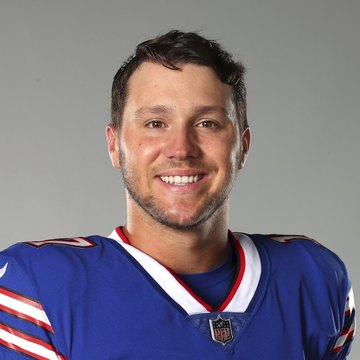 Josh Allen
Oh look, Josh Allen's back on the list again—go figure.
True story—Allen was my third-ranked QB prospect in the 2018 class. Had Josh (ugh) Rosen and Baker Mayfield ahead of him. Had the guy who just won a Super Bowl fourth.
In related news, I'm stupid.
That Super Bowl trip may have eluded Allen to date (no player in league history has more postseason wins without playing in a Super Bowl), but statistical success hasn't.
In terms of passing yards, the 2020 season was Allen's best—the only time he's topped 4,500 yards through the air. He also set a career-best in scoring strikes while adding over 400 rushing yards and eight more scores on the ground.
37
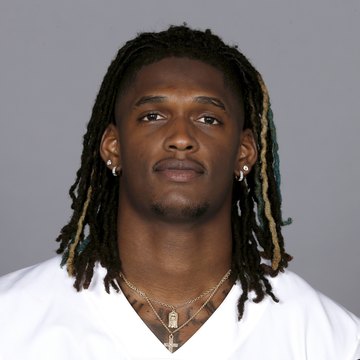 CeeDee Lamb
The only reason that CeeDee Lamb isn't talked about more as the NFL's best wide receiver is that he had the misfortune of playing in an era with guys like Ja'Marr Chase and Justin Jefferson.
But in 2023, Lamb told 'em all to get in the back—because he was driving the fantasy bus at wide receiver.
That year, Lamb was targeted an NFL-high 181 times—and caught almost 75 percent of them. He led the league in receptions, finished just behind Tyreek Hill in receiving yards and was just one touchdown off the league lead.
It's the sort of season PPR managers dream of—big numbers in every category on the way to finishing with over 400 PPR points.
Bear that in mind if you haven't drafted yet.
38
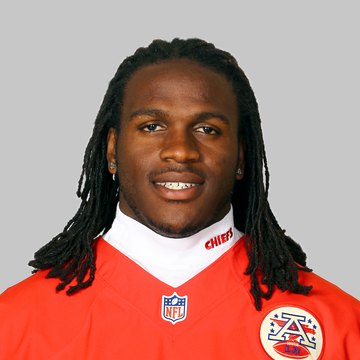 Jamaal Charles
There are four running backs in the history of the NFL with over 1,000 career carries who have averaged five yards a pop—the greatest running back ever (Jim Brown), Joe Perry (not the guitarist), Nick Chubb (what might have been—sigh) and Jamaal Charles.
Not one (not even Jimmy B) averaged more yards per tote than the 5.38 Charles posted.
The 2013 season wasn't Charles' biggest in terms of rushing yards—he gained over 1,500 yards on the ground the year before. But Charles tied for the league lead in rushing scores, caught 70 passes, came up just shy of 2,000 total yards and had the most PPR points among all non-quarterbacks.
39
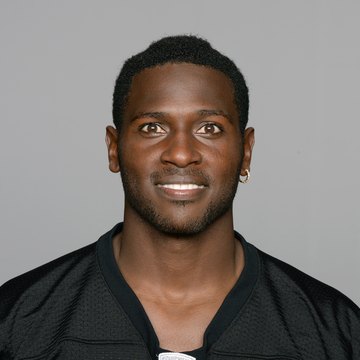 Antonio Brown
There was a time when Antonio Brown was the best wide receiver in the NFL. Not arguably the best wideout. Maybe the guy. There wasn't a more feared receiver in the NFL—full stop.
For six straight years from 2013 to 2018 while a member of the Pittsburgh Steelers, Brown topped 100 catches and logged at least 1,200 receiving yards. Four times during that stretch, Brown found the end zone at least 10 times.
The 2014 campaign marked the second year of that rampage—Brown led the league in both receptions and receiving yards.
40
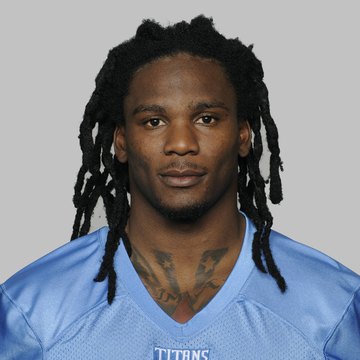 Chris Johnson
Chris Johnson didn't have the longest career, but he was so good at his best that he had two nicknames.
Before Johnson ever had a carry in the NFL, the former East Carolina standout was "CJ4.24" after he set a new record in the 40-yard dash at the NFL Scouting Combine. But in 2009, Johnson decided that moniker wasn't cool enough—so he earned a new nickname...
"CJ2K."
In just his second professional season, Johnson racked up a gaudy 408 touches. Averaged an equally gaudy 5.6 yards per carry. Surpassed 2,500 total yards. And became the sixth back in NFL history to eclipse 2,000 yards on the ground.
41
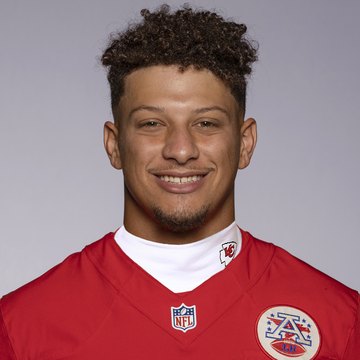 Patrick Mahomes
You may not know this, but according to sources with knowledge of the situation, Kansas City Chiefs quarterback Patrick Mahomes is good at throwing a football.
The secret was out by 2022, of course—by then Mahomes had already posted one of the greatest statistical seasons by a quarterback in NFL history and won a Super Bowl. In 2022, he would win his second. And his second MVP. And post his second year with over 5,000 passing yards.
2022 is actually the only season that Mahomes has led the NFL in passing yards. He also led the NFL in touchdown throws, averaged over 308 passing yards a game, and captured the top spot among fantasy quarterbacks.
42
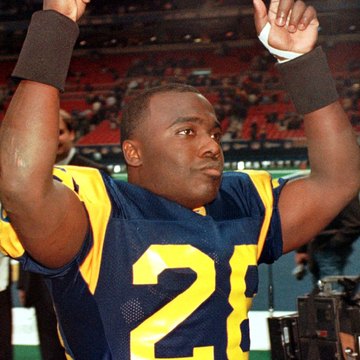 Marshall Faulk
By the time the Indianapolis Colts thought it would be a good idea to trade Marshall Faulk, he had already established himself as one of the best backs in the game.
In 1999, Faulk made history.
That season, he joined Roger Craig as the only two backs in the history of the NFL to record 1,000 rushing yards and 1,000 receiving yards in the same season. Faulk's 5.5 yards per carry paced the NFL. Averaged 12 yards per catch. And logged a career-high 2,429 total yards.
It was the second of a ridiculous four straight seasons with 2,000 total yards for Faulk—and yet somehow still not close to the best fantasy season he had.
43
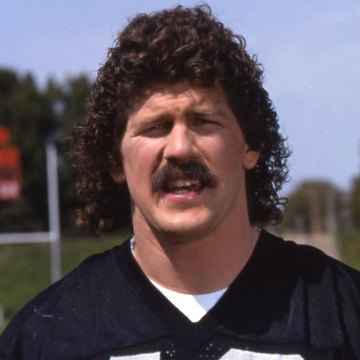 Todd Christensen
For quite some time, tight ends were mostly afterthoughts in fantasy football—with a precious few exceptions, the position just didn't generate enough stats to matter.
But then Todd Christensen of the Raiders came along and paved the way for superstar tight ends to come.
In 1983, Christensen didn't just lead the position in catches. He led all NFL pass-catchers. Christensen surpassed 1,200 receiving yards, found the end zone a career-high 12 times and made the Pro Bowl for the first time.
That season, Christensen finished among the top-10 players overall in PPR points. And had more fantasy points than any wideout in the game.
Take that, Travis Kelce.
44
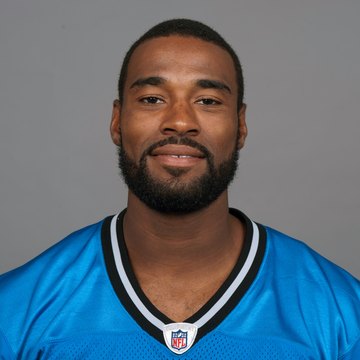 Calvin Johnson
To be clear, all the stuff that Megatron did with the Decepticons was messed up. Beating up on Optimus Prime. Trying to destroy the Earth. Not cool.
But the stuff that Calvin Johnson did while a member of the Detroit Lions was otherworldly in a good way—and Johnson's 2012 campaign was the best in NFL history in terms of receiving yards.
Johnson came one long catch from hitting 2,000 yards on 122 catches and over 200 targets. He averaged a mind-blowing 122.8 yards per game.
Had Johnson managed more than five touchdowns that year he'd be far higher on this list, but he was still fantasy's top receiver in PPR points.
45
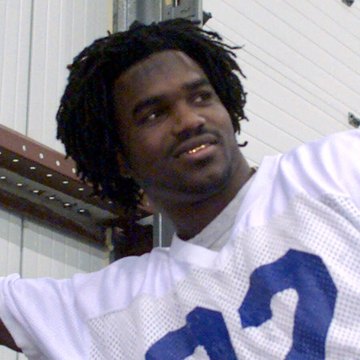 Edgerrin James
By the time the 2000 fantasy season rolled around, the scourge of "Y2K" had passed.
It was the biggest nothingburger ever.
The scourge of Edgerrin James was only getting started.
After exploding into the NFL with an NFL-high 431 touches and 1,553 rushing yards on the way to Rookie of the Year honors in 1999, James did that one better the following campaign—he touched the ball 450 times, led the league in both rushing yards and total yards, caught a career-high 63 passes and scored 18 total touchdowns.
If that sounds like it equated to a lot of fantasy points, it did—he was one of two players that year to hit 400 PPR points.
46
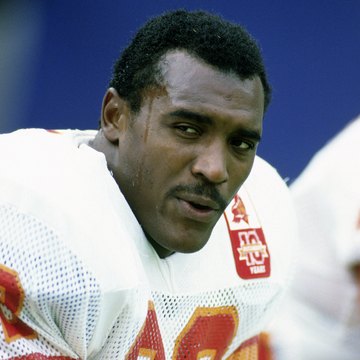 James Wilder
Sometimes, a player just catches lightning in a bottle. Explodes from nowhere into a supernova of fantasy points and then fades just as quickly back into obscurity. But man, it's fun while it lasts—even if it doesn't last long.
To be fair, James Wilder topped 1,000 total yards with the Tampa Bay Buccaneers in 1983 and rushed for over 1,000 yards in 1985. But those seasons were nothing compared to what he accomplished in 1984.
That season, Wilder led the NFL in carries and added 85 receptions. All told, he touched the ball a staggering 492 times—the most by a running back in a season in the history of the National Football League.
47
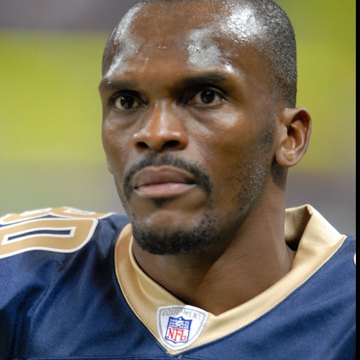 Isaac Bruce
Back in 1995, "The Greatest Show on Turf" was still several years away. The head coach of the Rams that year was Rich Brooks. The quarterbacks were Chris Miller and Mark Rypien. The team was—not great.
However, a 23-year-old Isaac Bruce was.
Miller and Rypien knew what they had in "The Reverend." In his second season, Bruce was targeted almost 200 times. Came up just short of 120 catches and 1,800 receiving yards. Scored 13 touchdowns. And didn't lead the league in any of those categories.
For what it's worth, Bruce did lead the NFL in receiving yards in 1996—with over 400 less than in this all-time fantasy season.
48
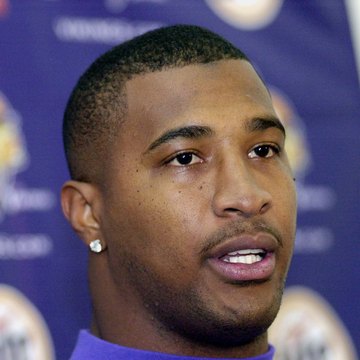 Daunte Culpepper
The 21st century has been so littered with outstanding quarterback play that there are signal-callers who had amazing seasons who don't get the run they should.
Daunte Culpepper's 2004 season with the Minnesota Vikings was one of those years.
In a season where the Vikings were led in receiving yards by Nate Burleson (no, really), Culpepper had the best season of his seven years in the Twin Cities—he led the league in passing yards, averaging almost 295 yards per contest. Culpepper paced the NFC in passing scores. And thanks to over 400 yards on the ground, Culpepper beat Peyton Manning for the crown of highest-scoring fantasy player overall.
49
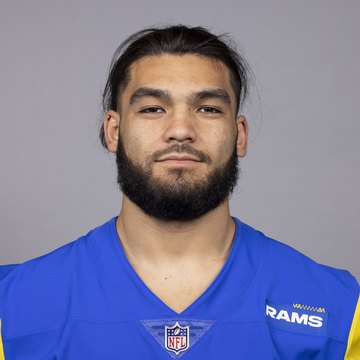 Puka Nacua
Will someone please explain to me how Puka Nacua wasn't drafted until the fifth round in 2023? Explain it to me like I'm five.
Les Snead is a sorcerer.
Nacua has essentially been in rampage mode from the moment he hit an NFL field. As a rookie, he broke a record for receiving yards by a first-year player that had stood for over six decades and set a new high-water mark for rookie catches (since broken).
In 2025, Nacua led the league in receptions and receiving yards per game, topped 1,700 yards and claimed his first title as fantasy's highest-scoring wideout.
It won't be his last.
50
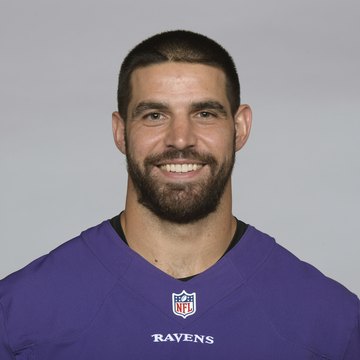 Mark Andrews
It wasn't easy to knock King Travis I off his pedestal atop all fantasy tight ends in his prime. But not only did Mark Andrews do it in 2021, it wasn't particularly close.
Granted, it was a "perfect storm" season—that year, Andrews was targeted a whopping 153 times—40 more than in any other season of his career. He had almost 35 more receptions than in any other season of his career.
Outlier or not, it was a dominant season. Andrews was the only tight end with 270 PPR points that year. And 280 PPR points. And 290 PPR points. And 300 PPR points.
51
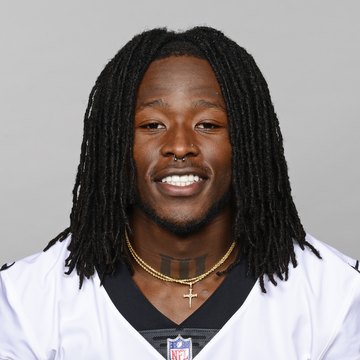 Alvin Kamara
Alvin Kamara is something of a unicorn.
If someone told you that in nine years in the NFL, a running back never had 1,000 yards on the ground, most would assume that back was an afterthought. Maybe a handcuff or late-round dart-throw.
Of course, most backs don't also start their careers with four straight seasons with over 80 catches just as fantasy scoring was pivoting to PPR.
The man had timing.
Kamara did just fine running the ball in 2020, averaging five yards a carry and leading the NFC with 16 rushing scores. Add in 83 receptions and a league-high 21 total touchdowns and Kamara was the No. 1 running back in fantasy by a wide margin—including over a 2,000-yard rusher.
52
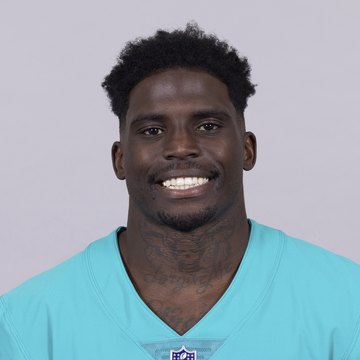 Tyreek Hill
The 21st century (and especially the last 10 years) has seen the rise of the wide receiver in fantasy football. It's not just PPR scoring. Or the fact that most leagues started to require three weekly starters.
In fact, it can be argued that those changes were driven by the growing number of ridiculous talents at the position.
And at his best, Tyreek Hill was absolutely ridiculous.
Hill's 2023 season came after he was an established star who had won a Super Bowl before being traded to the Miami Dolphins. But Hill's second season on South Beach was a reminder The Cheetah could still run—Hill set career-bests in both receiving yards and touchdowns (leading the league in both categories) on the way to nearly 380 PPR points.
53
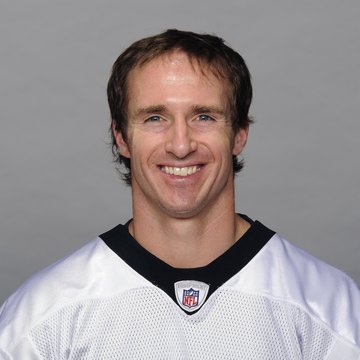 Drew Brees
That Drew Brees was just inducted into the Pro Football Hall of Fame surprised exactly zero people.
Because at his best, there has never been a more prolific quarterback in NFL history.
Over a 20-year career that included 13 Pro Bowls, Brees made what was once unthinkable routine—his five seasons with 5,000 passing yards are more than the No. 2 and No. 3 quarterbacks on that list combined.
2011 was the best of the lot—not only did Brees set an NFL record in passing yards, but he also led the league in touchdown passes and completion percentage.
That he didn't even lead his position in fantasy points per game that year speaks to a season where three quarterbacks topped 5,000 yards.
Yep. They threw the ball in the olden times.
54
 Christian McCaffrey
Oh look—it's Christian McCaffrey (again).
The 2023 season wasn't McCaffrey's most productive. But it was his most important. After his seismic 2019 campaign, McCaffrey had lost two seasons and changed teams, moving from Carolina to San Francisco.
But any doubts about McCaffrey (or the 49ers trading for him) was ground to dust beneath a second buzzsaw season. McCaffrey led the NFL in rushing yards for the only time in his career. Caught 67 passes. Topped 2,000 total yards on just 339 touches. Scored a career-best 21 total touchdowns...
And outscored the next-closest fantasy running back by over a touchdown—per game.
That rampage should probably be higher on this list.
But we aren't done with CMC. Not by a longshot.
55
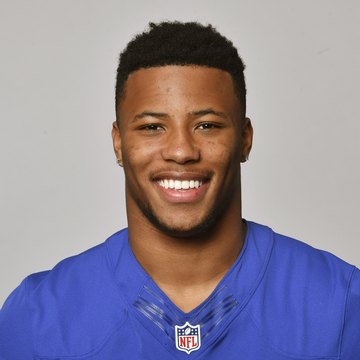 Saquon Barkley
In the 21st century, there hasn't been a running back drafted earlier than Saquon Barkley, who was selected second overall by the New York Giants in 2018.
He didn't take long to start paying off on that hefty investment.
Barkley entered the NFL with a hefty asking price in fantasy—he was selected seventh overall on average. But most of the six teams who passed on Barkley wanted a do-over after he cleared 1,300 yards on the ground, caught 91 passes, topped 2,000 total yards and found the end zone 15 times.
Barkley finished that first season as fantasy's highest-scoring back—and announced his presence in fantasy football in emphatic fashion.
56
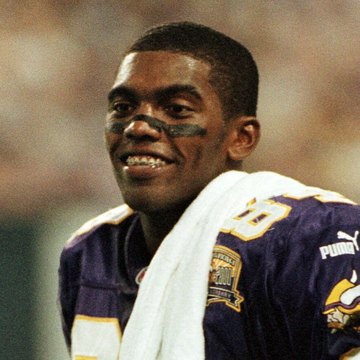 Randy Moss
Time for some hard-hitting fantasy analysis.
Randy Moss was good at catching a football.
Truth bomb.
Opponents and fantasy managers alike were well aware of that by the 2003 season—not that it really helped. Moss was arguably the most un-guardable wideout the league has ever seen.
That year, Moss was targeted 172 times—the second straight year he averaged over 10 targets a game. Moss caught a career-high 111 passes that season, set a career-best in receiving yards and led the league in touchdown grabs—for the third time.
It also marked Moss' last 1,000-yard season in the purple and gold—after a down 2004 he was traded to the Oakland Raiders.
57
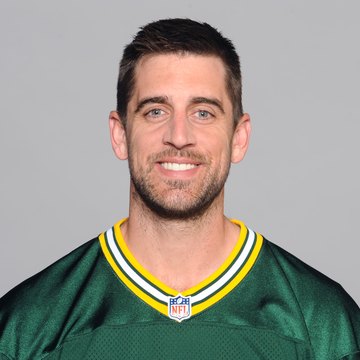 Aaron Rodgers
At this point in his career, Aaron Rodgers' days of fantasy relevance appear to be over—his ADP in drafts in 2026 is 28th among quarterbacks.
A decade ago, it was a far different story.
In 2016, Rodgers completed over 65 percent of his passes, topped 4,400 passing yards and threw a league-leading 40 touchdowns against just seven interceptions. It was also the best season of his two-decade career as a runner—Rodgers rushed for 369 yards and added four more touchdowns with his feet.
Rodgers was so lethally efficient that season that he out-pointed Drew Brees of the Saints—in a season where Brees threw for the sixth-most yards in NFL history.
58
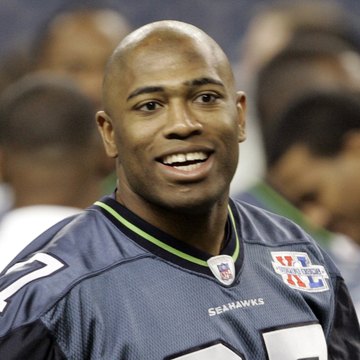 Shaun Alexander
This writer has a special place in his heart for Shaun Alexander. He was on my first two fantasy teams—both of which made the Championship game.
I lost that title game in 2005, but it wasn't Alexander's fault.
That 2005 season was the best of Alexander's career—he led the NFL with 370 carries, flirted with 1,900 yards on the ground, averaged over 117 rushing yards per game and paced the NFL in total touchdowns. He was fantasy's highest-scoring back that year.
Unfortunately, "The Curse of 370" got Alexander the following season. He missed six games the following year and was out of the NFL altogether a few years later.
59
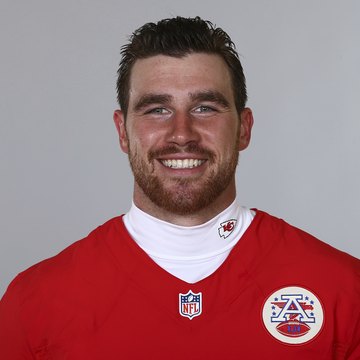 Travis Kelce
Oh look, Travis is back!
The stretch of dominance among tight ends that Kelce enjoyed in his heyday was unparalleled—he wasn't just the No. 1 tight end. He was a tier of his own. It was Kelce—and then everyone else.
The 2018 season was right in the middle of that seven-season reign of terror.
That year, Kelce was targeted a career-best 150 times by a young quarterback in his first year as the starter named Patrick Mahomes. He surpassed 100 catches for the first time in his career, topped 1,300 receiving yards and found the end zone 10 times on the way to his third straight No. 1 finish in PPR points at his position.
60
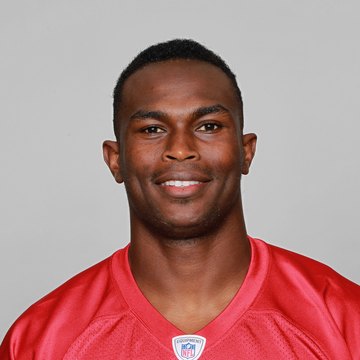 Julio Jones
The time is coming soon when the Hall of Fame credentials of Julio Jones will be debated—he's eligible for induction in 2029.
It's a debate that shouldn't take especially long—from 2010 to 2019, no wide receiver in the NFL had more receiving yards than Jones—and his career didn't start until 2011.
It didn't get any better for Jones than the 2015 campaign—he set career-highs in receptions and receiving yards, was targeted a jaw-dropping 203 times and had more receiving yards than any other player had scrimmage yards.
Jones wasn't the No. 1 wide receiver that year, but he finished less than a PPR point per game off the pace and averaged over 23 points per contest.
61
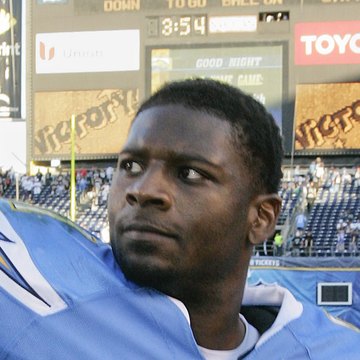 LaDainian Tomlinson
A pretty good argument can be made that LaDainian Tomlinson is the most dominant player in fantasy football history. For quite a few years, he was certainly the most coveted.
2002 was Tomlinson's second season in the pros, and while he had a solid rookie year with over 1,600 total yards, it was Year 2 when we truly saw the damage Tomlinson could do in fantasy leagues.
Tomlinson saw a career-high 451 touches that year—an average of over 28 per game. He was targeted over 100 times through the air. Tomlinson amassed a whopping 2,172 total yards that year, scored 15 touchdowns and finished second in PPR points at his position.
You might see his name again before this is all said and done. Just saying.
62
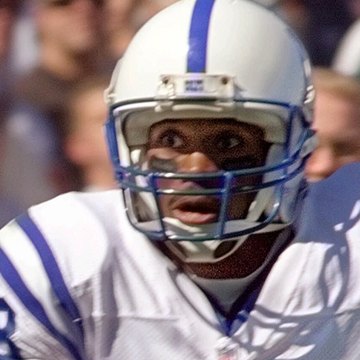 Marvin Harrison
Marvin Harrison spent 13 years in the NFL—all in Indianapolis. He topped 1,000 receiving yards and made the Pro Bowl eight times—in a row. He reached double digits in touchdowns eight times—in a row.
The 1999 season was the first of those 1,000-yard campaigns—and one of his best.
Playing with a second-year quarterback named Peyton Something, Harrison was targeted an NFL-high 193 times. He sailed past 100 catches, paced the league in receiving yards for the first time and found the end zone a dozen times.
Harrison was the only wide receiver that year to hit 350 PPR points, and he out-scored the No. 2 wideout that year by almost 40 points.
63
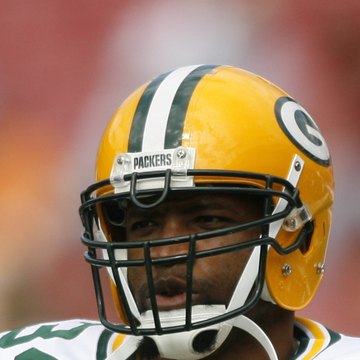 Ahman Green
Ahman Green played a dozen seasons in the NFL. But he'll always be best-known for a five-year span at the turn of the century with the Green Bay Packers. And in 2003, Green went on a rampage that would make a kaiju blush.
That season, Green racked up a whopping 405 touches. He rushed for almost 1,900 yards. Averaged 5.3 yards per carry. Piled up 2,250 total yards. And found the end zone 20 times.
It was the biggest of five straight 1,000-yard campaigns on the ground for Green. And the wildest part about all of those jaw-dropping stats?
Not one of those categories led the league—and Green was third in PPR points at his position.
64
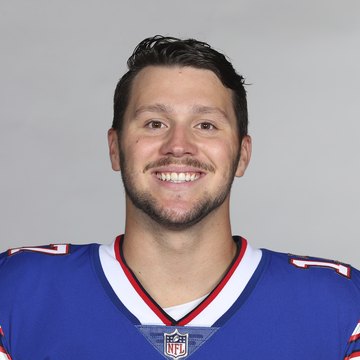 Josh Allen
The 2018 draft class was loaded at quarterback. Three of the four signal-callers taken in the top-10 that year are still starting in the NFL. One just won the Super Bowl.
That's the only box Josh Allen hasn't checked to this point in his career, but he's the unquestioned No. 1 quarterback in fantasy.
Allen's 2021 season wasn't his best passing, although he topped 4,400 passing yards and topped 35 touchdown passes for the second consecutive year. His six rushing scores are almost pedestrian by his recent standards. But he also eclipsed 750 yards on the ground and was the highest-scoring quarterback in fantasy by more than 20 points.
65
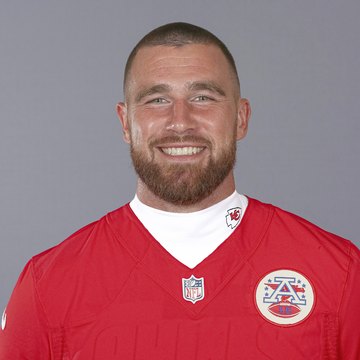 Travis Kelce
There have been quite a few dominant fantasy tight ends over the years, from Antonio Gates to Tony Gonzalez to Jimmy Graham and Rob Gronkowski.
At the heights of his dominance, Travis Kelce was as good as any of them—and given his consistency and longevity you can argue none are better.
Kelce's 2020 rampage came smack in the middle of a seven-year streak of 1,000-yard seasons. It was the second time in his career he caught 100 passes and scored double-digit touchdowns. He was the only tight end to score 300 PPR points and would have finished fourth that year among wide receivers.
Taylor's bae was cooking.
66
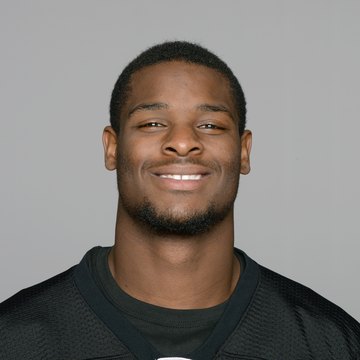 Le'Veon Bell
Le'Veon Bell may well be remembered more for how his career ended than how it began—after holding out the entire 2018 season, Bell was never able to recapture the form that saw him top 1,250 rushing yards three times in four years before that.
2014 was the first of those big years—and the best.
Bell averaged 4.7 yards per carry, caught 83 passes, eclipsed 2,200 total yards and found the end zone 11 times on the way to leading all running backs with over 23 PPR points per game.
And with an ADP in Round 3 in a time when running backs dominated the early rounds, that breakout season won quite a few folks a little cabbage.
67
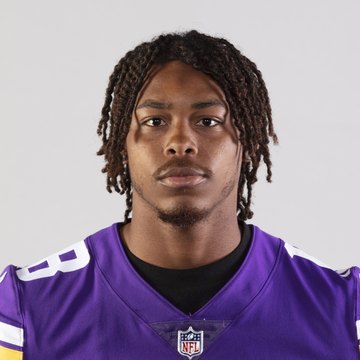 Justin Jefferson
We are well and truly in a golden age of wide receivers in the NFL—and it's not just because of all the bling Justin Jefferson of the Minnesota Vikings wears on the field.
Jefferson has been a force from the moment he stepped on an NFL field—as a rookie his 1,400 receiving yards were an NFL record for a first-year player. And that was Jefferson just getting warmed up.
By his third season, Jefferson was a Terminator—he topped the league in catches and yards while averaging an NFL-high 106.4 yards per game.
Only two wideouts averaged 20 PPR points that year—and no one averaged more.
68
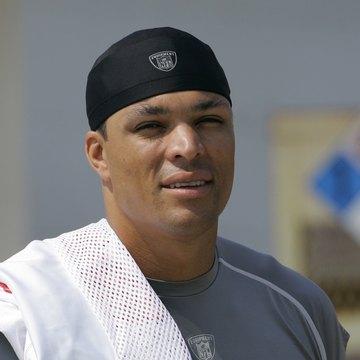 Tony Gonzalez
Tony Gonzalez helped change the way the tight end position is viewed—both in the NFL and fantasy football.
Yes, there had been tight ends before Gonzalez who could stretch the field and present matchup nightmares for opposing defenses. There was another at the time in Antonio Gates.
But Gonzalez was just—unstoppable. By the time the 2004 season rolled around, Gonzalez had already been named to a handful of Pro Bowls. But that year with the Chiefs may have been the high point of a 17-year career.
That season, Gonzalez topped 100 receptions for the only time in his career. He set a career-high in receiving yards. And his 12.3 yards per touch topped not only all tight ends but all qualifying players.
69
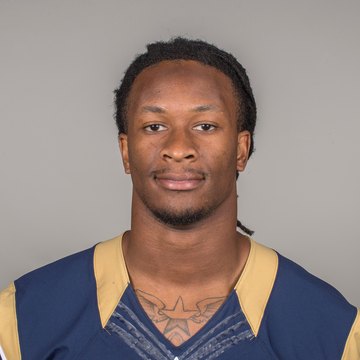 Todd Gurley
Todd Gurley didn't have a long career in the NFL—he played just six seasons in the league.
But when Gurley was at his best, he was a phenomenal talent. And 2017 was about as good as it got for him in the pros.
It marked the first of two straight seasons when Gurley led the NFL in rushing touchdowns. And total touchdowns. His 2,093 total yards in 2017 also topped the league. And over that two-year span, Gurley caught 123 passes.
Just two running backs averaged 20 PPR points per game that season. Only one averaged 25.
Three guesses who that was.
70
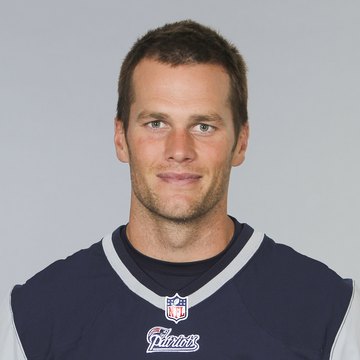 Tom Brady
Remember when people were convinced that Tom Brady was washed after two decades with the New England Patriots? That him joining the Tampa Bay Buccaneers was Joe Namath with the Los Angeles Rams?
Someone forgot to tell The Golden Boy, because Brady went out and led the Buccaneers to a dominant win over the Kansas City Chiefs in Super Bowl LV in 2020 before having one of the best statistical seasons of his career in 2021. Brady led the league in pass attempts, completions, passing yards, passing touchdowns and averaged 312.7 yards per game on the way to finishing third in fantasy points among quarterbacks.
It was rather a big year for the position.
71
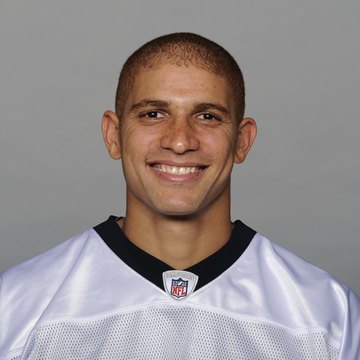 Jimmy Graham
The tight end position in fantasy football has long been tricky. Many years, there are two camps—the "haves" and the "have-nots." Far more often than not, the latter camp is bigger than the former.
But back in 2011, fantasy managers who drafted Jimmy Graham late were having all over the place.
A third-round pick in 2010, Graham was mostly a non-factor as a rookie. In his second season, he was a league-winner—Graham led all tight ends in targets and receptions on the way to a second-place finish in PPR points behind Rob Gronkowski.
And he did so as a low-end TE1 available multiple rounds later than Gronkzilla.
72
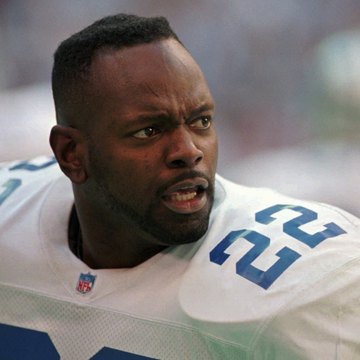 Emmitt Smith
In the history of the NFL, no running back has more yards on the ground than Emmitt Smith. Or more rushing touchdowns. Or more carries or total touches. He was the ultimate "workhorse" back—a player I saw shred an NFL defense on a staggering 42 touches with one arm.
No, really—it happened.
That epic performance was still a little ways off in 1992—Smith's third year in the NFL. It's the season when he truly arrived. It was the second of four times Smith led the league in rushing. The first of three times he rushed for at least 18 scores. And the first time he led all running backs in PPR points.
73
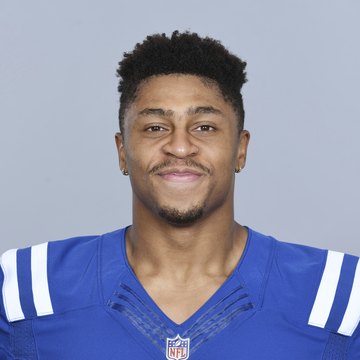 Jonathan Taylor
Indianapolis Colts running back Jonathan Taylor led the league last year in both carries (323) and rushing touchdowns (18). It was a great season.
However, 2021 was the best season of his career.
Taylor led running backs in just about every category that season. He had a league-high 332 carries, averaged 106.5 rushing yards per game, paced the league in rushing touchdowns and led the NFL with 2,171 total yards and 20 total scores.
Unfortunately, while Taylor led all running backs in PPR points that year, his 372 touches put him in the crosshairs of "The Curse of 370," and he wound up missing half a dozen games in 2022.
74
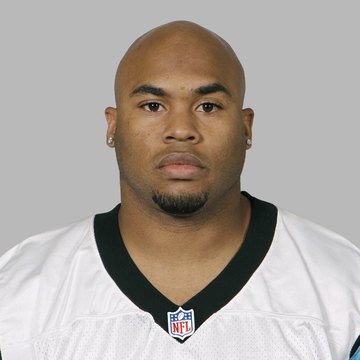 Steve Smith Sr.
In the Super Bowl era, there have been five wide receivers who have won the "Triple Crown" at wide receiver, logging the most receptions, receiving yards and receiving touchdowns in a season.
In 2005, Steve Smith of the Panthers became the third of that quintet.
Technically, Smith tied Larry Fitzgerald of the Cardinals for the most receptions and tied Marvin Harrison of the Colts for the most touchdown grabs. But Smith was the only receiver in the league that season who topped 1,500 receiving yards, and he beat out Fitzgerald for the No. 1 spot among wide receivers in fantasy by over 30 PPR points.
75
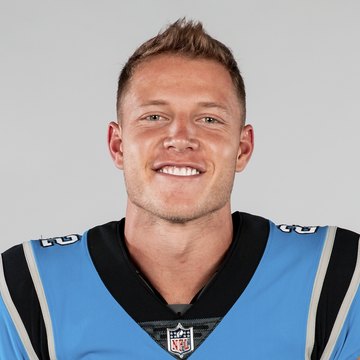 Christian McCaffrey
The eighth overall pick in 2017, Christian McCaffrey was good but not great for the Carolina Panthers as a rookie—he topped 1,000 total yards but did most of his damage as a receiver, averaging just 3.7 yards per carry.
By his second season, McCaffrey was breaking stuff—and well on his way to being one of the most dominant fantasy assets of his generation.
In 2018, McCaffrey went from averaging less than four yards per carry to five yards a pop—top-10 in the league. McCaffrey also finished inside the top-10 in receptions, with 16 more than any other running back.
He fell just shy of being the highest-scoring back in PPR points—a crown he'd claim soon enough.
There would be many more.
76
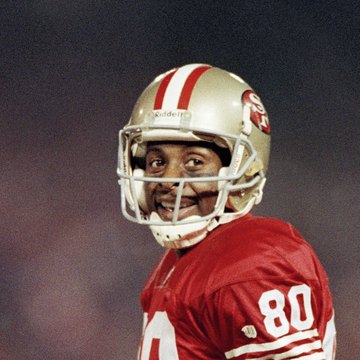 Jerry Rice
There's a legitimate debate to be had about the best quarterback in NFL history. Or the best running back. But the best wide receiver question has been answered—emphatically.
By Jerry Lee Rice.
In 1994, Rice was in the middle of a three-year string of leading the NFL in receiving yards—a feat he accomplished half a dozen times over his career. The best part about that three-year stretch of absolute dominance?
Statistically, this was the worst one of the lot in terms of touchdown catches and receiving yards, and even then he was the No. 1 fantasy wideout by almost three PPR points per game.
He was a baaaaaad man.
Get it? GOAT?
Ha! I kill me!
77
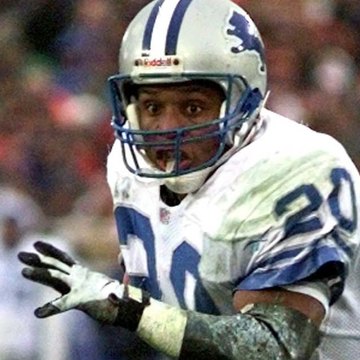 Barry Sanders
There's no way you can have a list like this and not include Barry Sanders. He's one of the greatest running backs to ever lace them up. Full stop.
And in 1997, Sanders joined the 2K club.
That season marked the third time in four years that Sanders led the league in rushing. It was also the third time in his career that Sanders averaged over 100 rushing yards per game. He was never a big threat catching the ball (Sanders caught 33 passes in 1997 and never had 50 receptions in a season), and his overall point total was fairly modest by "modern" standards.
But it's still Barry Sanders. Enough said.
78
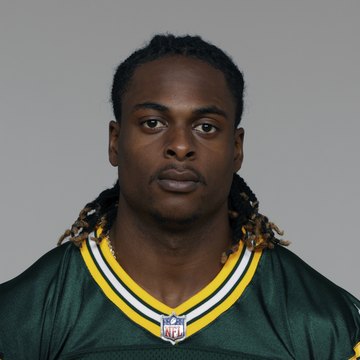 Davante Adams
Davante Adams is still doing damage in the NFL at the age of 33—he led the league with 14 receiving touchdowns in 2025 and was a top-10 fantasy option.
Back in 2020, Adams was in his prime—and it showed.
Despite missing a pair of games, Adams still led the league in touchdown catches and receiving yards per game that season, finishing tied for first in the NFC in catches and third in receiving yards.
Most importantly, despite those two missed games Adams wasn't just the highest-scoring fantasy wideout. He was so by a large margin—almost three PPR points per game better than second-place finisher Tyreek Hill.
79
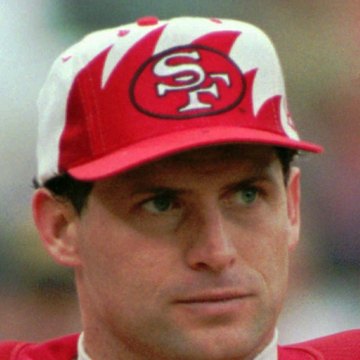 Steve Young
The size. The scrambling ability. The southpaw cannon. There's a reason the San Francisco 49ers closed the book on the Joe Montana era.
That reason was named Steve Young.
The 1994 season was Young's 10th in the NFL—and also arguably his best. He led the league in completion percentage. And touchdown passes. And both yards and air yards per attempt. Young was fourth in the league in passing yards and added seven more touchdowns on the ground on the way to MVP honors and a win over the San Diego Chargers in Super Bowl XXIX.
He also led all quarterbacks in fantasy points that year—and it wasn't close.
80
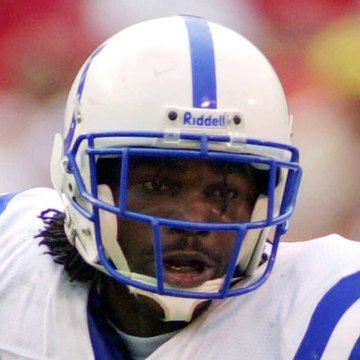 Edgerrin James
Time to hop back into the wayback machine again and re-visit the ancient times known as the 20th century.
Specifically, we're going to party like it's 1999.
As we all hurtled toward the Apocalypse known as "Y2K," a young running back from Miami was joining the Indianapolis Colts. And Edgerrin James didn't waste any time justifying the Colts drafting him fourth overall.
As a rookie, James led the NFL in carries (369). And rushing yards. And total touches (431). And total touchdowns (17). He finished third in Offensive Player of the Year voting, got an MVP vote, topped 370 PPR points and finished second at the position to Marshall Faulk.
As rookie years go, you could do worse.
81
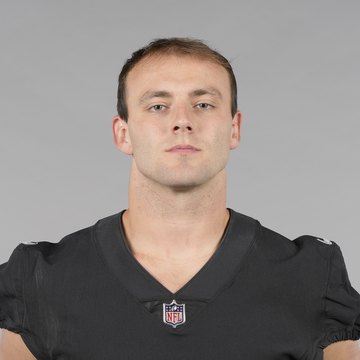 Brock Bowers
Let's spend a little time in the now—or at least the recent past.
Las Vegas Raiders tight end Brock Bowers suffered through an injury-marred 2025 season, but the year before was a far different story. In his first professional season, Bowers was the only tight end in the league who was targeted over 150 times. He broke Mike Ditka's 60-plus year-old record for receiving yards by a rookie tight end. He broke the NFL record for the most catches as a rookie at any position. And he set a new franchise record for catches in a single season.
Other than that, he was just OK.
82
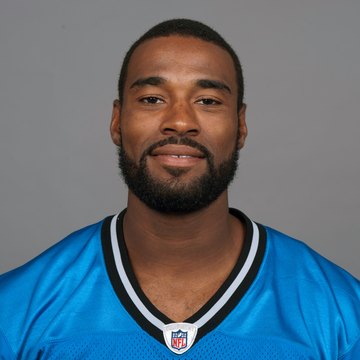 Calvin Johnson
Breaking news—Calvin Johnson was pretty good at catching the football.
Johnson may not rank especially high on many all-time stat lists, but that's because he walked away from the game when he was just 30 years old. At his best, "Megatron" was as feared as any receiver the NFL has ever seen.
In 2011, Johnson truly demonstrated that for the first time. That year he led the league in receiving yards, averaged over 105 receiving yards per game, 10.6 yards per target and a touchdown catch per contest and finished the season as the only wideout in the league that topped 350 PPR points.
As it turns out, he was only getting started.
83
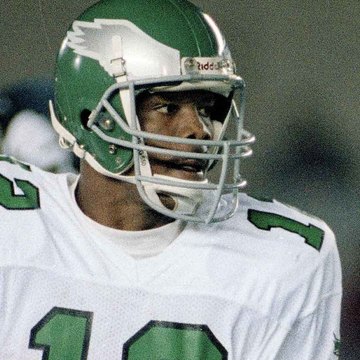 Randall Cunningham
Randall Cunningham was a quarterback ahead of his time. Lamar Jackson 30 years before Lamar Jackson was a thing.
The 1990 season was the best of the first chapter of his career.
In his fourth season as a starter for the Eagles, Cunningham did plenty of damage with his arm that year—he threw for almost 3,500 yards and racked up 30 touchdown passes.
But as we have learned to love with scrambling quarterbacks, it was with his legs where Cunningham was especially lethal—his 942 rushing yards that season were the second-most ever by a quarterback at the time, and Cunningham averaged a gaudy eight yards every time he took off.
No player in fantasy had more points that season.
84
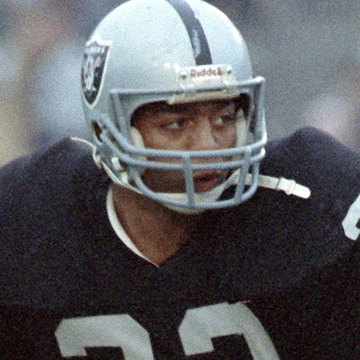 Marcus Allen
Marcus Allen is one of the best running backs in NFL history who doesn't get the run he should as one of the best running backs in NFL history.
And 1985 was the apex of his prowess.
That season, Allen racked up a career-high 447 touches, which led the NFL. So did his 2,314 total yards. Allen averaged 4.6 yards per carry, found the end zone 14 times and was named the league's Most Valuable Player. Allen flirted with 400 PPR points that season—and didn't even finish as the highest-scoring back in fantasy (more on that later).
However, Allen was the No. 2 running back that year by well over three PPR points per game over Walter Payton, so old-school fantasy managers likely found some way to live with that second-place finish.
85
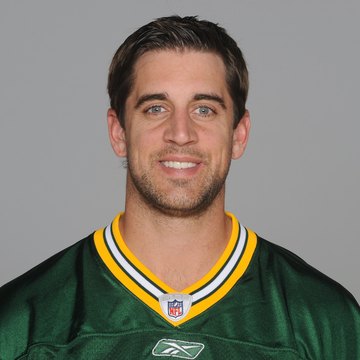 Aaron Rodgers
Over two-plus decades in the NFL, Aaron Rodgers has thrown for over 66,000 yards and has tossed 527 touchdown passes. Both rank in the top-five all-time. No quarterback in league history has a better career passer rating or interception percentage. Rodgers has been named the NFL's Most Valuable Player four times.
This probably won't be the last time you see his name mentioned in this countdown. Just saying.
The 2011 season was Rodgers' first MVP campaign. His 4,643 passing yards that year was a career-high. That year, Rodgers threw 40-plus touchdowns for the first time. Despite having over 800 fewer passing yards than Drew Brees that season, Rodgers finished less than 10 fantasy points behind him for the lead among signal-callers in fantasy points.
86
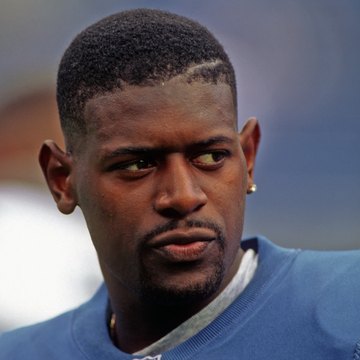 Herman Moore
The NFL is far more pass-heavy than it was 30-plus years ago. But in 1995, several wide receivers went ballistic—among them Herman Moore of the Detroit Lions.
An underrated player who was mired on bad teams in Motown for most of his career, Moore was one of four wideouts who saw 180 targets or more. And one of four receivers who averaged over 100 receiving yards per game.
Since 1977, there have been three wide receivers who were targeted at least 205 times in a season. Moore's 1995 campaign was one of them—he averaged 12.8 targets per game on the way to finishing third in PPR points at the position.
87
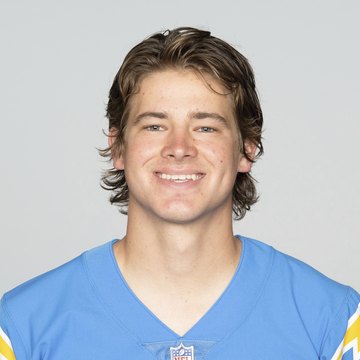 Justin Herbert
Justin Herbert has a little Rodney Dangerfield action going on. Playing in an era with the likes of Patrick Mahomes and Josh Allen, Herbert doesn't get a lot of respect as an elite fantasy option. His ADP in 2026 is ninth among quarterbacks—one slot lower than back in 2021.
Just as he will do this year, Herbert smashed that asking price that season.
In 2021, Herbert had the best statistical season of his career to date. He was one of two quarterbacks that year who surpassed 5,000 passing yards. Only Tom Brady and Matthew Stafford had more touchdown passes. And Herbert finished as fantasy's No. 2 quarterback, behind only Josh Allen.
88
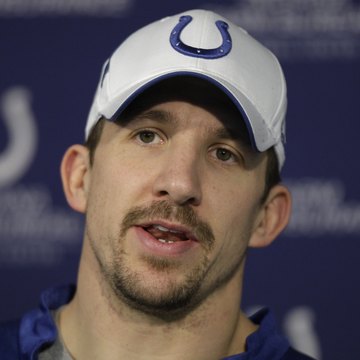 Dallas Clark
When people think about historic fantasy seasons, tight end Dallas Clark doesn't immediately leap to mind. Over 11 professional seasons spent primarily with the Colts, Clark managed 80 catches and 1,000 receiving yards just once.
Both happened in 2009.
That season, Clark led all tight ends in catches—more than Tony Gonzalez and Antonio Gates. He and Gates were the only two tight ends who had more than 1,100 receiving yards. He was one of three tight ends who hauled in double-digit touchdowns. And Clark topped 270 PPR points, tops at the position.
If you're going to be a one-hit wonder, make that hit a banger.
89
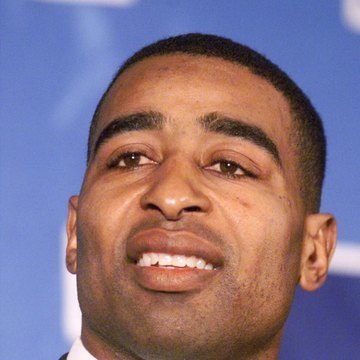 Cris Carter
Cris Carter's Hall of Fame career spanned 16 seasons. Over that span, Carter topped 1,000 receiving yards eight times (in a row) and hauled in 130 touchdowns. He was named to eight Pro Bowls.
The 1995 season was arguably the best of his career.
That season, Carter was targeted a staggering 197 times—third behind Isaac Bruce (199) and Herman Moore (206!) that year. Carter tied his career-high in receptions and eclipsed 1,250 receiving yards. That he was just fourth in PPR points among wideouts that year (behind Jerry Rice, Isaac Bruce and Moore) speaks to how gonzo the 1995 campaign was at the position.
Carter also led the NFL with 17 touchdown grabs that year. That tracks—after all, Buddy Ryan said that's all Carter was good for.
90
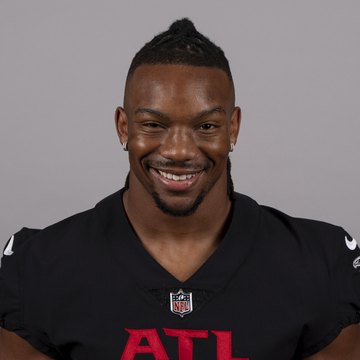 Bijan Robinson
In terms of Average Draft Position, Atlanta Falcons running back Bijan Robinson is the second player off the board in fantasy drafts this summer.
Based on what Robinson did last year, the argument can be made that he should be going first.
For the second straight season, Robinson had at least 365 touches, rushed for over 1,450 yards and scored double-digit touchdowns. But Robinson upped his receiving numbers to 79 grabs and 820 receiving yards in 2025, and his 2,298 total yards was tops in the NFL.
Robinson finished his third season as the runner-up to Christian McCaffrey in PPR points among running backs, but given that his fantasy numbers have improved in each season if we did this list five years from now Robinson could find himself a fair bit higher up the rankings.
91
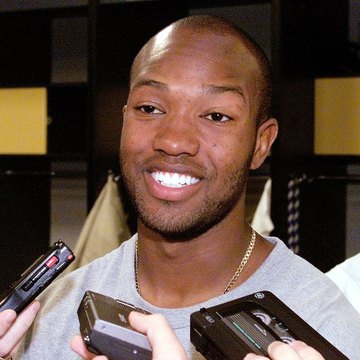 Torry Holt
Torry Holt was a key component of "The Greatest Show on Turf"—one of the most high-octane offenses in NFL history. From 2000-2007, Holt piled up eight straight seasons with over 1,000 receiving yards.
By the time the 2003 season rolled around, the GSOT's heyday was behind them—Kurt Warner was benched after six fumbles in the season opener. But a new quarterback didn't slow down "Big Game" even a little.
That season, Holt led the league in both receptions and receiving yards. Had Randy Moss not been a big fat jerk and caught 17 touchdown passes that season, Holt would have won the receiving "Triple Crown."
Moss was also fantasy's No. 1 receiver that year, but Holt was only about a PPR point per game off the pace.
92
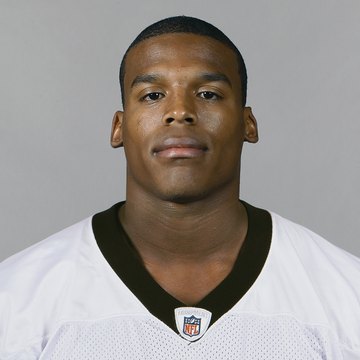 Cam Newton
When Cam Newton entered the NFL in 2011, fantasy managers were skeptical about the statistical impact he would make on a bad Panthers team. Newton was drafted outside the top-20 fantasy quarterbacks that year.
We should have known better than to doubt Superman.
In a season where three quarterbacks threw for over 5,000 yards, Newton barely cracked 4,000. His 21 touchdown passes ranked outside the top-10. But Newton also led all quarterbacks in rushing yards and scored more rushing touchdowns than the next three quarterbacks in that category combined.
Newton finished that first professional season third in fantasy points among signal-callers, making him a league-winning steal given his non-existent cost.
He'll also be making another appearance on this list.
That's called foreshadowing.
93
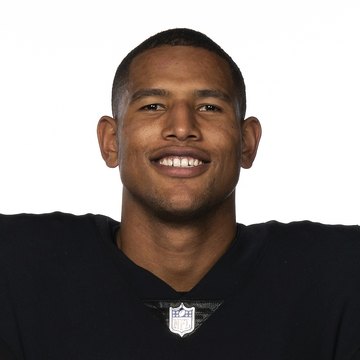 Darren Waller
Darren Waller's story was a rags-to-riches one. A Day 3 wide receiver pick who converted to tight end and lost over a season to multiple suspensions for violating the NFL's substance abuse policy.
But once Waller joined the Raiders in 2019, the lightbulb appeared to come on—and the following season, that light cranked up to 150 watts.
In the Raiders' first season in Sin City, Waller led all NFL tight ends with 146 targets and 107 receptions. Only Travis Kelce had more receiving yards at the position, and only Kelce and Robert Tonyan had more touchdown catches.
Waller finished second in PPR points among tight ends that year—far and away the best season of his professional career.
94
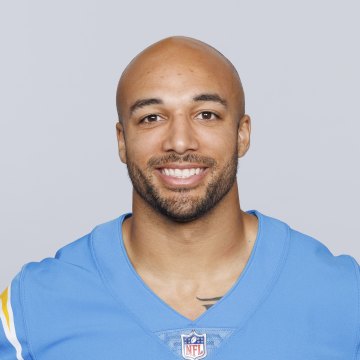 Austin Ekeler
Over nine years in the NFL, Austin Ekeler never rushed for 1,000 yards. But there was a stretch when Ekeler was considered an elite fantasy option—especially in PPR formats.
Because Ekeler caught the ball out of the backfield—a lot.
The 2022 season was Ekeler's best as a rusher—he topped 900 yards on the ground and was second in the league in rushing scores. But it was the passing game that shot Ekeler into the top spot among running backs—Ekeler's 107 catches in 2022 were over 20 more than any other running back had that season, and Ekeler found the end zone five more times through the air.
It was the last top-20 fantasy finish of Ekeler's NFL career.
95
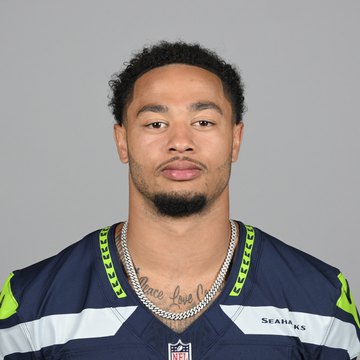 Jaxon Smith-Njigba
Come with me if you will and hop into the Tardis so that we can travel back to the long-ago days of last season.
Hey, at least it's a short trip.
Jaxon Smith-Njigba is now the highest-paid wide receiver in the history of the National Football League, and the 2025 season is the reason "JSN" now makes just over $42 million a season.
It's good work if you can get it.
On the way to capturing Offensive Player of the Year honors, Smith-Njigba led the league with almost 1,800 receiving yards and finished third in receptions and tied for third in touchdown catches.
It's the last time Smith-Njigba is going to be available in the third round of fantasy drafts.
96
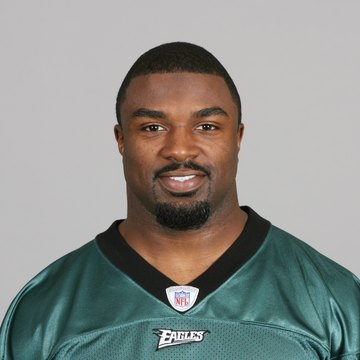 Brian Westbrook
The decade of the 2000s was something of a golden age for fantasy running backs. LaDainian Tomlinson. Priest Holmes. Shaun Alexander. All were at the height of their statistical prowess, racking up yards and PPR points in gaudy fashion.
Brian Westbrook sometimes gets lost in the shuffle among those fantasy greats. But the 2007 campaign belonged to "Westy."
That year, only Tomlinson and Adrian Peterson (in his rookie year) had more rushing yards than Westbrook. But it was as a receiver where he truly went off—his 118 targets that year were easily the most at the position, and 90 catches and five receiving touchdowns helped propel Westbrook past Tomlinson and into the top spot in the backfield.
97
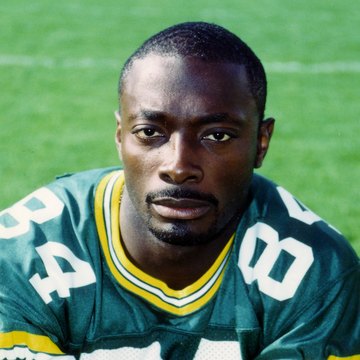 Sterling Sharpe
The career of Sterling Sharpe was as much about what could have been as what was. Over seven years in the NFL, Sharpe topped 1,100 yards five times, scored 65 touchdowns and made five Pro Bowls. But after the 1994 season, Sharpe had surgery to repair a neck injury and never played another snap.
That injury-shortened career was enough to get Sharpe into the Pro Football Hall of Fame though—and the 1992 season was his Sharpest.
That was punderfully witty.
That year, Sharpe won the "Triple Crown," pacing the league in receptions, receiving yards and touchdowns. In news that should surprise no one, Sharpe was also fantasy football's No. 1 wideout, beating out the great Jerry Rice by a sizable margin.
98
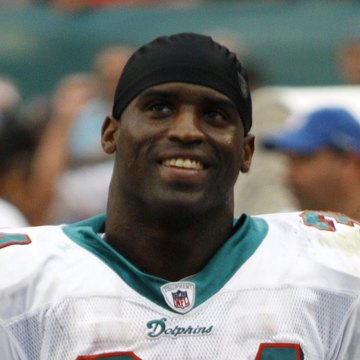 Ricky Williams
Ricky Williams had an, um, eventful career in the NFL. The New Orleans Saints traded their entire draft class to Washington for the right to draft Williams fifth overall, only to then flip Williams to the Miami Dolphins after three years.
With Williams the highs were high and the lows were low. And that first season in Miami in 2002 was as high as Williams ever got.
Get it?
In that first season on South Beach, Williams led the league in carries, paced the NFL with over 1,800 rushing yards, averaging almost 116 yards per game. Finished second in rushing touchdowns to Priest Holmes. And checked in third among running backs in PPR points behind Holmes and LaDainian Tomlinson.
It was the only Pro Bowl season of Williams' career.
99
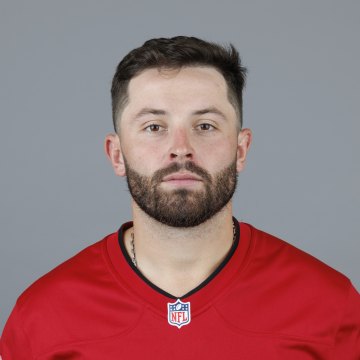 Baker Mayfield
Didn't expect Baker the Touchdown Maker to lead this off, did ya?
In terms of raw stats, the 2024 season belonged to Joe Burrow under center—Burrow led the league in passing yards (4,918) and touchdown passes (43). Lamar Jackson (remember that name, you'll hear it again) had the most fantasy points among quarterbacks.
But both of those quarterbacks were off draft boards by the end of Round 6. Mayfield wasn't drafted inside the top-20 at his own position in his second season in Tampa.
But after the best season of his career in terms of both passing yards and touchdown passes, Mayfield finished the season as fantasy's No. 3 quarterback—and won quite a few fantasy managers' leagues along the way.
6
Lamar Jackson
In 2018, we watched Patrick Mahomes go from low-end weekly starter on draft day to dominant fantasy force in his second professional season.
The following season, it was Lamar Jackson's turn.
The last pick of Round 1 in 2018, Jackson headed into that second season coming off a strong finish to his rookie year. In the first game of that season, Jackson shredded the Miami defense for 324 yards and five touchdown passes. The following week, it was 272 yards and two scores through the air and another 120 yards on the ground.
That dual-threat ability propelled Jackson into fantasy mega-stardom.
That Week 1 game was the only time that Jackson threw for 300 yards. But he topped 100 yards on the ground five times on the way to 1,206 rushing yards—more than any other quarterback in the history of the NFL.
In addition to all those rushing yards (and seven touchdowns on the ground), Jackson also completed over 66 percent of his passes for over 3,100 yards and an NFL-high 36 touchdown passes.
In terms of just raw fantasy points, it wasn't the best season of Jackson's career. But when you factor in an ADP at the back end of Round 9, it's the best fantasy campaign a quarterback has ever had.
8
Patrick Mahomes
The 10th overall pick in the 2017 draft, Patrick Mahomes spent his first professional season watching Alex Smith play quarterback for the Kansas City Chiefs. The following year, the Chiefs handed Mahomes the keys to the offense.
And Mahomes proceeded to break the land speed record.
Sure, people expected Mahomes to be good. But when he threw for 326 yards and six touchdowns against the Pittsburgh Steelers in Week 2, we knew we were in for something special.
And Mahomes was only getting started. That was the first of eight straight 300-yard games for Mahomes. He would throw for six scores again later that season in the infamous 54-51 shootout with the Los Angeles Rams. Mahomes had six games that season with four or more touchdown passes.
By the time the dust settled, Mahomes had posted one of the greatest statistical seasons by a quarterback ever, joining Peyton Manning as the only two quarterbacks to throw for 5,000 yards and 50 touchdowns.
Mahomes was the highest-scoring player in fantasy and the top quarterback by over 60 points. And with an ADP in low-end weekly starter territory, Mahomes was one of the best values we've ever seen under center.
13
Peyton Manning
Peyton Manning led the Denver Broncos to a pair of Super Bowls.
OK, the one they won the team sorta led him—details.
The Broncos may have gotten waxed in Super Bowl XLVIII, but that came after Manning and the Denver offense absolutely shredded the league in the regular season.
Manning carved the NFL to pieces. He averaged over 340 passing yards a game and made history three times over. His 5,477 passing yards remain the single-season record. So do his 55 touchdown passes. And Manning was the first quarterback in league history to record 5,000 passing yards and 50 touchdown throws in the same year.
It's a top-five season from a fantasy QB all-time—from a guy who couldn't run if zombies were chasing him.
15
Dan Marino
People born before a certain year just don't understand the magnitude of what Dan Marino did in Miami in 1984.
Whippersnappers.
In a time when 4,000-yard passers were far more exception than rule, Marino did the unthinkable, becoming the first player in the history of the NFL to throw for over 5,000 yards in a season.
No one would repeat the feat for nearly a quarter-century.
Marino led all quarterbacks in every stat that mattered that season, including touchdown passes and yards per attempt. He averaged over 315 passing yards per game. And was the No. 1 fantasy quarterback by 60-plus points.
The runner-up was Neil Lomax. You cannot make this stuff up.
22
Cam Newton
In many respects, Cam Newton is one of one—and it's not just about his fashion sense.
The man wears what he wants. Credit where it's due.
There's plenty of credit to be given where Newton's MVP season in 2015 is concerned—the quarterback who ran like a halfback and looked like a fullback was at his cape-wearing best.
On the way to a 15-1 season and appearance in Super Bowl 50, Newton tossed a career-high 35 touchdown passes, surpassed 3,800 passing yards, ran for over 600 yards and added 10 more scores on the ground.
Newton outscored the No. 2 quarterback (Tom Brady) by nearly 50 points and finished as the highest-scorer among all players.
24
Tom Brady
Were it not for Eli Manning and the New York Giants, the 2007 New England Patriots would be remembered as the greatest single-season team ever. They are still the only team to peel off a 16-game undefeated regular season.
And shock and amazement, Tom Brady played a big part in that unbeaten season.
All Brady did that year was complete almost 69 percent of his passes. Average just over 300 passing yards per game. Lead the league in both yards per attempt and air yards per attempt. And become the first signal-caller in NFL history to throw 50 touchdown passes in a season.
Brady finished with 398 fantasy points that year.
No other quarterback was within 80.
27
Steve Young
From a fantasy perspective, Steve Young was a better quarterback than Joe Montana ever thought about being.
Because in fantasy, you should want your signal-caller the way I like my eggs—scrambling.
I'll take forced metaphors for $400, Alex.
By 1998, Young was nearing the end of his Hall of Fame career. But in addition to throwing for a career-high 4,170 yards and leading the league in touchdown passes for the fourth time, Young also had his second-most rushing yards and added six scores on the ground.
At season's end, Young wasn't just fantasy's No. 1 quarterback—he beat out another omelet (Randall Cunningham) by over five points per game.
Gaps that big win leagues.
Pass the salsa.
30
Lamar Jackson
The opinions of fantasy pundits are mixed on Baltimore Ravens quarterback Lamar Jackson in 2026 after an injury-marred 2025. Some are concerned that Jackson's best days (fantasy-wise) are behind him.
Others remember the long-ago days of 2024.
It wasn't Jackson's best fantasy campaign, in that by two years ago if you wanted to ride the highlight train the ticket was significantly more expensive than it once was.
But that doesn't make the numbers any less impressive—Jackson's lone season to date with 4,000 passing yards, a career-high in touchdown passes, over 900 yards on the ground and (in many fantasy scoring systems) the most points in PPR leagues by a quarterback.
Like, ever.
36
Josh Allen
Oh look, Josh Allen's back on the list again—go figure.
True story—Allen was my third-ranked QB prospect in the 2018 class. Had Josh (ugh) Rosen and Baker Mayfield ahead of him. Had the guy who just won a Super Bowl fourth.
In related news, I'm stupid.
That Super Bowl trip may have eluded Allen to date (no player in league history has more postseason wins without playing in a Super Bowl), but statistical success hasn't.
In terms of passing yards, the 2020 season was Allen's best—the only time he's topped 4,500 yards through the air. He also set a career-best in scoring strikes while adding over 400 rushing yards and eight more scores on the ground.
41
Patrick Mahomes
You may not know this, but according to sources with knowledge of the situation, Kansas City Chiefs quarterback Patrick Mahomes is good at throwing a football.
The secret was out by 2022, of course—by then Mahomes had already posted one of the greatest statistical seasons by a quarterback in NFL history and won a Super Bowl. In 2022, he would win his second. And his second MVP. And post his second year with over 5,000 passing yards.
2022 is actually the only season that Mahomes has led the NFL in passing yards. He also led the NFL in touchdown throws, averaged over 308 passing yards a game, and captured the top spot among fantasy quarterbacks.
48
Daunte Culpepper
The 21st century has been so littered with outstanding quarterback play that there are signal-callers who had amazing seasons who don't get the run they should.
Daunte Culpepper's 2004 season with the Minnesota Vikings was one of those years.
In a season where the Vikings were led in receiving yards by Nate Burleson (no, really), Culpepper had the best season of his seven years in the Twin Cities—he led the league in passing yards, averaging almost 295 yards per contest. Culpepper paced the NFC in passing scores. And thanks to over 400 yards on the ground, Culpepper beat Peyton Manning for the crown of highest-scoring fantasy player overall.
53
Drew Brees
That Drew Brees was just inducted into the Pro Football Hall of Fame surprised exactly zero people.
Because at his best, there has never been a more prolific quarterback in NFL history.
Over a 20-year career that included 13 Pro Bowls, Brees made what was once unthinkable routine—his five seasons with 5,000 passing yards are more than the No. 2 and No. 3 quarterbacks on that list combined.
2011 was the best of the lot—not only did Brees set an NFL record in passing yards, but he also led the league in touchdown passes and completion percentage.
That he didn't even lead his position in fantasy points per game that year speaks to a season where three quarterbacks topped 5,000 yards.
Yep. They threw the ball in the olden times.
57
Aaron Rodgers
At this point in his career, Aaron Rodgers' days of fantasy relevance appear to be over—his ADP in drafts in 2026 is 28th among quarterbacks.
A decade ago, it was a far different story.
In 2016, Rodgers completed over 65 percent of his passes, topped 4,400 passing yards and threw a league-leading 40 touchdowns against just seven interceptions. It was also the best season of his two-decade career as a runner—Rodgers rushed for 369 yards and added four more touchdowns with his feet.
Rodgers was so lethally efficient that season that he out-pointed Drew Brees of the Saints—in a season where Brees threw for the sixth-most yards in NFL history.
64
Josh Allen
The 2018 draft class was loaded at quarterback. Three of the four signal-callers taken in the top-10 that year are still starting in the NFL. One just won the Super Bowl.
That's the only box Josh Allen hasn't checked to this point in his career, but he's the unquestioned No. 1 quarterback in fantasy.
Allen's 2021 season wasn't his best passing, although he topped 4,400 passing yards and topped 35 touchdown passes for the second consecutive year. His six rushing scores are almost pedestrian by his recent standards. But he also eclipsed 750 yards on the ground and was the highest-scoring quarterback in fantasy by more than 20 points.
70
Tom Brady
Remember when people were convinced that Tom Brady was washed after two decades with the New England Patriots? That him joining the Tampa Bay Buccaneers was Joe Namath with the Los Angeles Rams?
Someone forgot to tell The Golden Boy, because Brady went out and led the Buccaneers to a dominant win over the Kansas City Chiefs in Super Bowl LV in 2020 before having one of the best statistical seasons of his career in 2021. Brady led the league in pass attempts, completions, passing yards, passing touchdowns and averaged 312.7 yards per game on the way to finishing third in fantasy points among quarterbacks.
It was rather a big year for the position.
79
Steve Young
The size. The scrambling ability. The southpaw cannon. There's a reason the San Francisco 49ers closed the book on the Joe Montana era.
That reason was named Steve Young.
The 1994 season was Young's 10th in the NFL—and also arguably his best. He led the league in completion percentage. And touchdown passes. And both yards and air yards per attempt. Young was fourth in the league in passing yards and added seven more touchdowns on the ground on the way to MVP honors and a win over the San Diego Chargers in Super Bowl XXIX.
He also led all quarterbacks in fantasy points that year—and it wasn't close.
83
Randall Cunningham
Randall Cunningham was a quarterback ahead of his time. Lamar Jackson 30 years before Lamar Jackson was a thing.
The 1990 season was the best of the first chapter of his career.
In his fourth season as a starter for the Eagles, Cunningham did plenty of damage with his arm that year—he threw for almost 3,500 yards and racked up 30 touchdown passes.
But as we have learned to love with scrambling quarterbacks, it was with his legs where Cunningham was especially lethal—his 942 rushing yards that season were the second-most ever by a quarterback at the time, and Cunningham averaged a gaudy eight yards every time he took off.
No player in fantasy had more points that season.
85
Aaron Rodgers
Over two-plus decades in the NFL, Aaron Rodgers has thrown for over 66,000 yards and has tossed 527 touchdown passes. Both rank in the top-five all-time. No quarterback in league history has a better career passer rating or interception percentage. Rodgers has been named the NFL's Most Valuable Player four times.
This probably won't be the last time you see his name mentioned in this countdown. Just saying.
The 2011 season was Rodgers' first MVP campaign. His 4,643 passing yards that year was a career-high. That year, Rodgers threw 40-plus touchdowns for the first time. Despite having over 800 fewer passing yards than Drew Brees that season, Rodgers finished less than 10 fantasy points behind him for the lead among signal-callers in fantasy points.
87
Justin Herbert
Justin Herbert has a little Rodney Dangerfield action going on. Playing in an era with the likes of Patrick Mahomes and Josh Allen, Herbert doesn't get a lot of respect as an elite fantasy option. His ADP in 2026 is ninth among quarterbacks—one slot lower than back in 2021.
Just as he will do this year, Herbert smashed that asking price that season.
In 2021, Herbert had the best statistical season of his career to date. He was one of two quarterbacks that year who surpassed 5,000 passing yards. Only Tom Brady and Matthew Stafford had more touchdown passes. And Herbert finished as fantasy's No. 2 quarterback, behind only Josh Allen.
92
Cam Newton
When Cam Newton entered the NFL in 2011, fantasy managers were skeptical about the statistical impact he would make on a bad Panthers team. Newton was drafted outside the top-20 fantasy quarterbacks that year.
We should have known better than to doubt Superman.
In a season where three quarterbacks threw for over 5,000 yards, Newton barely cracked 4,000. His 21 touchdown passes ranked outside the top-10. But Newton also led all quarterbacks in rushing yards and scored more rushing touchdowns than the next three quarterbacks in that category combined.
Newton finished that first professional season third in fantasy points among signal-callers, making him a league-winning steal given his non-existent cost.
He'll also be making another appearance on this list.
That's called foreshadowing.
99
Baker Mayfield
Didn't expect Baker the Touchdown Maker to lead this off, did ya?
In terms of raw stats, the 2024 season belonged to Joe Burrow under center—Burrow led the league in passing yards (4,918) and touchdown passes (43). Lamar Jackson (remember that name, you'll hear it again) had the most fantasy points among quarterbacks.
But both of those quarterbacks were off draft boards by the end of Round 6. Mayfield wasn't drafted inside the top-20 at his own position in his second season in Tampa.
But after the best season of his career in terms of both passing yards and touchdown passes, Mayfield finished the season as fantasy's No. 3 quarterback—and won quite a few fantasy managers' leagues along the way.
1
LaDainian Tomlinson
Putting together this list was equal parts fun and folly. An enjoyably impossible endeavor. I have zero doubt that there will be no shortage of comments on social media from people railing that so-and-so is ranked ahead of such-and-such—despite the fact that the gap between No. 25 and No. 45 is that there isn't one.
All of these seasons were great and merit celebration. There are dozens more that missed the cut but are remembered fondly by fantasy managers who reaped the rewards.
But while there's loads of room for debate about most of this assemblage of awesome, one thing is certain. A mortal lock.
No one in the history of fantasy football has had a better season than LaDainian Tomlinson in 2006.
If you had Tomlinson rostered that season, you likely won your league. If your opponent did, you just chalked up that week as a loss and prayed you wouldn't see them again in the playoffs.
He was that good.
Tomlinson led the league in rushing with over 1,800 rushing yards. Topped 2,300 total yards for the second time in his career. And set an NFL record with (and this is not a misprint) 31 total touchdowns.
Steven Jackson's big year kept the running back position from being a complete runaway, but Tomlinson averaged over 30 PPR points per game.
Boom goes the dynamite.
2
Christian McCaffrey
There have been three running backs in NFL history who have gained over 1,000 rushing yards and over 1,000 receiving yards in the same season. The first two of those campaigns have already been discussed on this list.
But in terms of PPR points, Christian McCaffrey's 2019 rampage was the biggest of the lot.
As McCaffrey entered his third season with the Carolina Panthers, he was coming off the first 1,000-yard rushing season of his career. He added 107 receptions in 2018 and fell just shy of Saquon Barkley for the title of fantasy football's highest-scoring running back.
As it turns out, he was only getting started.
McCaffrey's 2019 was bananas. In his first game of that season, he carried the ball 19 times for 128 yards and two scores. Topped 200 total yards. And caught 10 passes.
It's those receptions that shot McCaffrey into the stratosphere. McCaffrey would go on to tally 116 catches that year—the most ever in a season by a running back. McCaffrey topped 400 touches, came up just short of 2,400 total yards and scored 19 times.
McCaffrey was the highest-scoring player in fantasy football by over 40 fantasy points, and he was the top running back by over 150 PPR points.
Yes, you read that right. A buck-fifty.
3
Marshall Faulk
There is no shortage of outstanding running backs in the NFL in 2026, whether it's Christian McCaffrey, Jahmyr Gibbs or Bijan Robinson.
But the dawn of the 21st century was a golden age for fantasy managers in the backfield. There were multiple backs in their prime who went on to make the Hall of Fame. Others who had shorter but still wildly productive careers. 400-point fantasy seasons happened with a fair amount of regularity.
Marshall Faulk was as dominant as any of them—the offensive fulcrum of "The Greatest Show on Turf." His ability to gain yardage both on the ground and through the air made him a fantasy manager's dream. Faulk rushed for over 1,000 yards seven times and had four consecutive seasons with over 2,000 total yards.
And in 2000, Faulk had the best fantasy season of his career on the way to being named the NFL's Most Valuable Player.
Faulk cleared 1,300 yards on the ground. Surpassed 80 catches and 800 receiving yards. Flirted with 2,200 total yards. And scored a league-high 26 touchdowns.
Faulk wasn't just fantasy's No. 1 running back. Or the top player overall. He was the No. 1 fantasy asset by more than 50 PPR points.
5
Priest Holmes
When the greatest running backs to ever play the game are discussed, you won't hear Priest Holmes' name mentioned. He only had four 1,000-yard seasons in a career that was cut short by injuries. By the 2005 season, Holmes had been pushed aside by Larry Johnson as the lead back in Kansas City.
But before he was cast aside the Chiefs rode Holmes in a big way—and in 2003 that resulted in the fourth-biggest PPR season we have ever seen from a running back.
It wasn't Holmes' best season in terms of rushing yards—in fact, over his three-year reign as (arguably) fantasy football's top back, his 1,420 yards on the ground that year were the lowest. But it was the best season of his career in terms of receptions, and in 2003 Holmes found the end zone a jaw-dropping 27 times—at the time the all-time high-water mark in that category. Holmes edged out LaDainian Tomlinson that year for the top spot among running backs, posting over 450 PPR points.
Sadly, that was pretty much it for Holmes. He averaged 111.5 yards per game on the ground in 2004 but missed half the season, and by 2005 Grandmama had usurped him in Kansas City.
Wait. That's the wrong Larry Johnson.
9
Emmitt Smith
In the history of the National Football League, no running back has more career rushing yards than the 18,355 that Emmitt James Smith III accrued over 15 seasons with the Dallas Cowboys and Arizona Cardinals.
Starting in his second season, Smith piled up a staggering streak of production. Smith topped 1,000 yards on the ground 11 times—in a row. Despite a heavy workload year after year, Smith missed just six games over that span—and a third of those were due to a contract dispute.
Smith was the offensive engine for a Cowboys team that won three Super Bowls in four years—and the 1995 season was his best.
By that year, Smith had led the league in rushing three times. He had been named the NFL's Most Valuable Player. But the 1995 campaign was his most productive—Smith set career-highs in rushing yards, rushing scores and receptions. He averaged over 110 yards per game on the ground and paced the NFL with 2,148 total yards. Smith found the end zone a whopping 25 times that year. And he blew up to the tune of over 425 PPR points—the most of any player that season.
11
Steven Jackson
Steven Jackson had the unenviable task of being the guy who followed Marshall Faulk in the backfield for the St. Louis Rams. Jackson may not have reached the heights that Faulk did—but when he was on his game he was plenty capable of blowing up in his own right.
In 2006, Jackson most assuredly blew up.
Fresh off the first 1,000-yard rushing season of his career, Jackson exploded to the tune of an NFL-high 2,334 yards that season. He caught 90 passes, scored 16 total touchdowns and posted over 415 PPR points.
The only thing that stopped Jackson from leading all players in points by a sizable margin was the greatest fantasy campaign of all time.
14
Priest Holmes
You had to know that Priest Holmes was going to make at least one appearance on this list.
There might be more.
Holmes logged a 1,000-yard season over four years in Baltimore, but he wasn't a highly-valued fantasy asset. In the last four seasons of his career after injuries set in, he never hit 1,000 rushing yards again.
But there was a three-year stretch where Holmes was the Tasmanian Devil—and 2002 was smack in the middle.
In his second season in Kansas City, Holmes topped 1,600 rushing yards, posted the second of three straight 2,000-yard seasons, caught 70 passes and found paydirt an NFL-high 24 times.
It was one of the six biggest seasons a back has ever had in PPR points.
And it wasn't even his best year.
16
Arian Foster
There is nothing better in fantasy football than landing an elite running back as late as possible—it's the Golden Ticket that gets you a trip to the chocolate factory.
Arian Foster was 24 karat awesome in 2010.
In 2009, Foster was a seldom-used back who carried the ball all of 54 times. In his second season, though, he touched the ball just a little bit more—a league-leading 393 times. Foster averaged over 100 yards per game on the ground, topped 65 receptions, led the NFL with 2,220 total yards and scored 18 touchdowns on the way to finishing more than 75 fantasy points ahead of, well, anyone.
He was a winning Powerball ticket. And those who drafted him hit the jackpot.
18
David Johnson
You can't tell the history of popular music without mentioning one-hit wonders.
And you can't tell the history of modern fantasy football without talking about David Johnson.
In eight NFL seasons, Johnson barely averaged four yards per carry. He topped 1,000 yards on the ground just once.
But that one season? Bonkers.
In his second season with the Arizona Cardinals, Johnson rushed for over 1,200 yards. Drew a whopping 120 targets in the passing game. Topped 2,100 total yards. And found the end zone 20 times.
Johnson was the only player in fantasy football to top 400 points that season, and he dominated the fantasy runner-up at running back (Ezekiel Elliott) by over 80 PPR points.
19
LaDainian Tomlinson
LaDainian Tomlinson was...something.
It wasn't just the Hall of Fame talent, although Tomlinson had no shortage of that. His skill-set was made for piling up PPR points. He was the focal point of the Chargers offense, in that he essentially was the Chargers offense.
He was my first fantasy football love affair—and it was torrid.
That Tomlinson wasn't selected for the Pro Bowl in 2003 is laughable—he averaged 5.3 yards per carry, caught a career-high 100 passes, led the league with 2,370 total yards and found the end zone 17 times.
Tomlinson came up just shy of 450 PPR points in 2003—and was the fantasy runner-up at his position.
23
Christian McCaffrey
Last year, San Francisco 49ers running back Christian McCaffrey was coming off a disastrous 2024 campaign where he played in just four games. Despite his astronomical fantasy ceiling, McCaffrey fell outside the first round in as many drafts as not.
And the teams who landed McCaffrey there probably won their leagues.
We were all reminded of that astronomical upside in 2025—McCaffrey led the NFL with 413 touches. Surpassed 1,200 rushing yards. Caught 102 passes. He racked up over 2,100 total yards—the second-highest total of his nine-year career.
And McCaffrey was the only 400-point player in fantasy football.
Still fading him in 2026 though—that workload is going to catch up to him.
28
Marshall Faulk
Here's the thing about "The Greatest Show on Turf."
Kurt Warner is one of the greatest stories the NFL has ever seen—the bag boy turned Hall of Famer. Isaac Bruce and Torry Holt were an all-time duo at wide receiver.
But it doesn't become a buzzsaw without Marshall Faulk.
In 2001 (A Space Odyssey), the Rams were two seasons removed from a title. An unstoppable offensive machine. They lost Super Bowl XXXVI that season because the Patriots took Faulk out of the game, not because of "Spygate."
In the regular season though, it was a different story—Faulk led the league in rushing yards per game, caught over 80 passes, sailed past 2,100 total yards and in general just did a lot of Faulk-esque stuff.
He's the Godfather of PPR.
31
Eric Dickerson
Yes, for many of the people reading this the year 1983 might as well be 1583—it was the Dark Ages, filled with dragons and no WiFi.
There was barely cable TV. It was scary stuff. But like the legend of Beowulf, the saga of the heroism of Eric Dickerson has persevered in the tales of elders.
Dickerson is one of the five best running backs who ever played—and that's a conservative assessment. And while Dickerson would set the single-season rushing record with 2,105 yards in 1984, from a fantasy perspective his rookie year was even more impressive.
441 touches. 113 rushing yards per game. Over 50 receptions. Twenty total touchdowns.
It wasn't his welcome to the NFL. It was the NFL's welcome to Eric Dickerson.
34
Roger Craig
That it took Roger Craig until 2026 to be inducted into the Pro Football Hall of Fame is a bit baffling. Granted, Craig's not especially high on the list of career rushing yards. In 11 seasons, Craig topped 1,000 yards on the ground just three times.
But when a player accomplishes something that no player in the history of the NFL had ever accomplished, that should vault them up the all-time greats list.
That's what Craig did in 1985.
Until that season, no player had ever gained 1,000 rushing yards and 1,000 receiving yards in the same year. Craig led the league with 92 catches, scored 15 total touchdowns and edged out Marcus Allen for the top spot in PPR points among all players.
35
Terrell Davis
Terrell Davis was done in by being Terrell Davis.
He's also one of the prime reasons that John Elway has two Super Bowl rings instead of none.
Those Denver teams didn't run through Elway playing hero-ball. They ran through Davis—literally. In both 1997 and 1998, Davis topped 400 touches and surpassed 2,000 total yards.
His zenith was that 1998 campaign—Davis led the NFL at 5.1 yards per carry. Averaged 125-plus yards per game on the ground, topped 2,200 total yards, scored a whopping 23 touchdowns and was named the NFL's Most Valuable Player.
It was also essentially the end of his career—all those touches took their toll, Davis never had even 800 rushing yards in a season again and by 2002 he was out of the NFL.
38
Jamaal Charles
There are four running backs in the history of the NFL with over 1,000 career carries who have averaged five yards a pop—the greatest running back ever (Jim Brown), Joe Perry (not the guitarist), Nick Chubb (what might have been—sigh) and Jamaal Charles.
Not one (not even Jimmy B) averaged more yards per tote than the 5.38 Charles posted.
The 2013 season wasn't Charles' biggest in terms of rushing yards—he gained over 1,500 yards on the ground the year before. But Charles tied for the league lead in rushing scores, caught 70 passes, came up just shy of 2,000 total yards and had the most PPR points among all non-quarterbacks.
40
Chris Johnson
Chris Johnson didn't have the longest career, but he was so good at his best that he had two nicknames.
Before Johnson ever had a carry in the NFL, the former East Carolina standout was "CJ4.24" after he set a new record in the 40-yard dash at the NFL Scouting Combine. But in 2009, Johnson decided that moniker wasn't cool enough—so he earned a new nickname...
"CJ2K."
In just his second professional season, Johnson racked up a gaudy 408 touches. Averaged an equally gaudy 5.6 yards per carry. Surpassed 2,500 total yards. And became the sixth back in NFL history to eclipse 2,000 yards on the ground.
42
Marshall Faulk
By the time the Indianapolis Colts thought it would be a good idea to trade Marshall Faulk, he had already established himself as one of the best backs in the game.
In 1999, Faulk made history.
That season, he joined Roger Craig as the only two backs in the history of the NFL to record 1,000 rushing yards and 1,000 receiving yards in the same season. Faulk's 5.5 yards per carry paced the NFL. Averaged 12 yards per catch. And logged a career-high 2,429 total yards.
It was the second of a ridiculous four straight seasons with 2,000 total yards for Faulk—and yet somehow still not close to the best fantasy season he had.
45
Edgerrin James
By the time the 2000 fantasy season rolled around, the scourge of "Y2K" had passed.
It was the biggest nothingburger ever.
The scourge of Edgerrin James was only getting started.
After exploding into the NFL with an NFL-high 431 touches and 1,553 rushing yards on the way to Rookie of the Year honors in 1999, James did that one better the following campaign—he touched the ball 450 times, led the league in both rushing yards and total yards, caught a career-high 63 passes and scored 18 total touchdowns.
If that sounds like it equated to a lot of fantasy points, it did—he was one of two players that year to hit 400 PPR points.
46
James Wilder
Sometimes, a player just catches lightning in a bottle. Explodes from nowhere into a supernova of fantasy points and then fades just as quickly back into obscurity. But man, it's fun while it lasts—even if it doesn't last long.
To be fair, James Wilder topped 1,000 total yards with the Tampa Bay Buccaneers in 1983 and rushed for over 1,000 yards in 1985. But those seasons were nothing compared to what he accomplished in 1984.
That season, Wilder led the NFL in carries and added 85 receptions. All told, he touched the ball a staggering 492 times—the most by a running back in a season in the history of the National Football League.
51
Alvin Kamara
Alvin Kamara is something of a unicorn.
If someone told you that in nine years in the NFL, a running back never had 1,000 yards on the ground, most would assume that back was an afterthought. Maybe a handcuff or late-round dart-throw.
Of course, most backs don't also start their careers with four straight seasons with over 80 catches just as fantasy scoring was pivoting to PPR.
The man had timing.
Kamara did just fine running the ball in 2020, averaging five yards a carry and leading the NFC with 16 rushing scores. Add in 83 receptions and a league-high 21 total touchdowns and Kamara was the No. 1 running back in fantasy by a wide margin—including over a 2,000-yard rusher.
54
Christian McCaffrey
Oh look—it's Christian McCaffrey (again).
The 2023 season wasn't McCaffrey's most productive. But it was his most important. After his seismic 2019 campaign, McCaffrey had lost two seasons and changed teams, moving from Carolina to San Francisco.
But any doubts about McCaffrey (or the 49ers trading for him) was ground to dust beneath a second buzzsaw season. McCaffrey led the NFL in rushing yards for the only time in his career. Caught 67 passes. Topped 2,000 total yards on just 339 touches. Scored a career-best 21 total touchdowns...
And outscored the next-closest fantasy running back by over a touchdown—per game.
That rampage should probably be higher on this list.
But we aren't done with CMC. Not by a longshot.
55
Saquon Barkley
In the 21st century, there hasn't been a running back drafted earlier than Saquon Barkley, who was selected second overall by the New York Giants in 2018.
He didn't take long to start paying off on that hefty investment.
Barkley entered the NFL with a hefty asking price in fantasy—he was selected seventh overall on average. But most of the six teams who passed on Barkley wanted a do-over after he cleared 1,300 yards on the ground, caught 91 passes, topped 2,000 total yards and found the end zone 15 times.
Barkley finished that first season as fantasy's highest-scoring back—and announced his presence in fantasy football in emphatic fashion.
58
Shaun Alexander
This writer has a special place in his heart for Shaun Alexander. He was on my first two fantasy teams—both of which made the Championship game.
I lost that title game in 2005, but it wasn't Alexander's fault.
That 2005 season was the best of Alexander's career—he led the NFL with 370 carries, flirted with 1,900 yards on the ground, averaged over 117 rushing yards per game and paced the NFL in total touchdowns. He was fantasy's highest-scoring back that year.
Unfortunately, "The Curse of 370" got Alexander the following season. He missed six games the following year and was out of the NFL altogether a few years later.
61
LaDainian Tomlinson
A pretty good argument can be made that LaDainian Tomlinson is the most dominant player in fantasy football history. For quite a few years, he was certainly the most coveted.
2002 was Tomlinson's second season in the pros, and while he had a solid rookie year with over 1,600 total yards, it was Year 2 when we truly saw the damage Tomlinson could do in fantasy leagues.
Tomlinson saw a career-high 451 touches that year—an average of over 28 per game. He was targeted over 100 times through the air. Tomlinson amassed a whopping 2,172 total yards that year, scored 15 touchdowns and finished second in PPR points at his position.
You might see his name again before this is all said and done. Just saying.
63
Ahman Green
Ahman Green played a dozen seasons in the NFL. But he'll always be best-known for a five-year span at the turn of the century with the Green Bay Packers. And in 2003, Green went on a rampage that would make a kaiju blush.
That season, Green racked up a whopping 405 touches. He rushed for almost 1,900 yards. Averaged 5.3 yards per carry. Piled up 2,250 total yards. And found the end zone 20 times.
It was the biggest of five straight 1,000-yard campaigns on the ground for Green. And the wildest part about all of those jaw-dropping stats?
Not one of those categories led the league—and Green was third in PPR points at his position.
66
Le'Veon Bell
Le'Veon Bell may well be remembered more for how his career ended than how it began—after holding out the entire 2018 season, Bell was never able to recapture the form that saw him top 1,250 rushing yards three times in four years before that.
2014 was the first of those big years—and the best.
Bell averaged 4.7 yards per carry, caught 83 passes, eclipsed 2,200 total yards and found the end zone 11 times on the way to leading all running backs with over 23 PPR points per game.
And with an ADP in Round 3 in a time when running backs dominated the early rounds, that breakout season won quite a few folks a little cabbage.
69
Todd Gurley
Todd Gurley didn't have a long career in the NFL—he played just six seasons in the league.
But when Gurley was at his best, he was a phenomenal talent. And 2017 was about as good as it got for him in the pros.
It marked the first of two straight seasons when Gurley led the NFL in rushing touchdowns. And total touchdowns. His 2,093 total yards in 2017 also topped the league. And over that two-year span, Gurley caught 123 passes.
Just two running backs averaged 20 PPR points per game that season. Only one averaged 25.
Three guesses who that was.
72
Emmitt Smith
In the history of the NFL, no running back has more yards on the ground than Emmitt Smith. Or more rushing touchdowns. Or more carries or total touches. He was the ultimate "workhorse" back—a player I saw shred an NFL defense on a staggering 42 touches with one arm.
No, really—it happened.
That epic performance was still a little ways off in 1992—Smith's third year in the NFL. It's the season when he truly arrived. It was the second of four times Smith led the league in rushing. The first of three times he rushed for at least 18 scores. And the first time he led all running backs in PPR points.
73
Jonathan Taylor
Indianapolis Colts running back Jonathan Taylor led the league last year in both carries (323) and rushing touchdowns (18). It was a great season.
However, 2021 was the best season of his career.
Taylor led running backs in just about every category that season. He had a league-high 332 carries, averaged 106.5 rushing yards per game, paced the league in rushing touchdowns and led the NFL with 2,171 total yards and 20 total scores.
Unfortunately, while Taylor led all running backs in PPR points that year, his 372 touches put him in the crosshairs of "The Curse of 370," and he wound up missing half a dozen games in 2022.
75
Christian McCaffrey
The eighth overall pick in 2017, Christian McCaffrey was good but not great for the Carolina Panthers as a rookie—he topped 1,000 total yards but did most of his damage as a receiver, averaging just 3.7 yards per carry.
By his second season, McCaffrey was breaking stuff—and well on his way to being one of the most dominant fantasy assets of his generation.
In 2018, McCaffrey went from averaging less than four yards per carry to five yards a pop—top-10 in the league. McCaffrey also finished inside the top-10 in receptions, with 16 more than any other running back.
He fell just shy of being the highest-scoring back in PPR points—a crown he'd claim soon enough.
There would be many more.
77
Barry Sanders
There's no way you can have a list like this and not include Barry Sanders. He's one of the greatest running backs to ever lace them up. Full stop.
And in 1997, Sanders joined the 2K club.
That season marked the third time in four years that Sanders led the league in rushing. It was also the third time in his career that Sanders averaged over 100 rushing yards per game. He was never a big threat catching the ball (Sanders caught 33 passes in 1997 and never had 50 receptions in a season), and his overall point total was fairly modest by "modern" standards.
But it's still Barry Sanders. Enough said.
80
Edgerrin James
Time to hop back into the wayback machine again and re-visit the ancient times known as the 20th century.
Specifically, we're going to party like it's 1999.
As we all hurtled toward the Apocalypse known as "Y2K," a young running back from Miami was joining the Indianapolis Colts. And Edgerrin James didn't waste any time justifying the Colts drafting him fourth overall.
As a rookie, James led the NFL in carries (369). And rushing yards. And total touches (431). And total touchdowns (17). He finished third in Offensive Player of the Year voting, got an MVP vote, topped 370 PPR points and finished second at the position to Marshall Faulk.
As rookie years go, you could do worse.
84
Marcus Allen
Marcus Allen is one of the best running backs in NFL history who doesn't get the run he should as one of the best running backs in NFL history.
And 1985 was the apex of his prowess.
That season, Allen racked up a career-high 447 touches, which led the NFL. So did his 2,314 total yards. Allen averaged 4.6 yards per carry, found the end zone 14 times and was named the league's Most Valuable Player. Allen flirted with 400 PPR points that season—and didn't even finish as the highest-scoring back in fantasy (more on that later).
However, Allen was the No. 2 running back that year by well over three PPR points per game over Walter Payton, so old-school fantasy managers likely found some way to live with that second-place finish.
90
Bijan Robinson
In terms of Average Draft Position, Atlanta Falcons running back Bijan Robinson is the second player off the board in fantasy drafts this summer.
Based on what Robinson did last year, the argument can be made that he should be going first.
For the second straight season, Robinson had at least 365 touches, rushed for over 1,450 yards and scored double-digit touchdowns. But Robinson upped his receiving numbers to 79 grabs and 820 receiving yards in 2025, and his 2,298 total yards was tops in the NFL.
Robinson finished his third season as the runner-up to Christian McCaffrey in PPR points among running backs, but given that his fantasy numbers have improved in each season if we did this list five years from now Robinson could find himself a fair bit higher up the rankings.
94
Austin Ekeler
Over nine years in the NFL, Austin Ekeler never rushed for 1,000 yards. But there was a stretch when Ekeler was considered an elite fantasy option—especially in PPR formats.
Because Ekeler caught the ball out of the backfield—a lot.
The 2022 season was Ekeler's best as a rusher—he topped 900 yards on the ground and was second in the league in rushing scores. But it was the passing game that shot Ekeler into the top spot among running backs—Ekeler's 107 catches in 2022 were over 20 more than any other running back had that season, and Ekeler found the end zone five more times through the air.
It was the last top-20 fantasy finish of Ekeler's NFL career.
96
Brian Westbrook
The decade of the 2000s was something of a golden age for fantasy running backs. LaDainian Tomlinson. Priest Holmes. Shaun Alexander. All were at the height of their statistical prowess, racking up yards and PPR points in gaudy fashion.
Brian Westbrook sometimes gets lost in the shuffle among those fantasy greats. But the 2007 campaign belonged to "Westy."
That year, only Tomlinson and Adrian Peterson (in his rookie year) had more rushing yards than Westbrook. But it was as a receiver where he truly went off—his 118 targets that year were easily the most at the position, and 90 catches and five receiving touchdowns helped propel Westbrook past Tomlinson and into the top spot in the backfield.
98
Ricky Williams
Ricky Williams had an, um, eventful career in the NFL. The New Orleans Saints traded their entire draft class to Washington for the right to draft Williams fifth overall, only to then flip Williams to the Miami Dolphins after three years.
With Williams the highs were high and the lows were low. And that first season in Miami in 2002 was as high as Williams ever got.
Get it?
In that first season on South Beach, Williams led the league in carries, paced the NFL with over 1,800 rushing yards, averaging almost 116 yards per game. Finished second in rushing touchdowns to Priest Holmes. And checked in third among running backs in PPR points behind Holmes and LaDainian Tomlinson.
It was the only Pro Bowl season of Williams' career.
4
Cooper Kupp
The 2021 season was Cooper Kupp's fifth in the NFL. By that year, he had already exceeded the third-round pick the Rams spent on him, topping 90 catches in a season twice and topping 1,150 yards with 10 touchdowns in 2019.
At that point, Kupp was regarded as a valuable fantasy asset but not an elite one—his average draft position was in the fourth round. In March of 2021, the Rams sent Jared Goff and two first-round picks to the Detroit Lions for Matthew Stafford.
And that new quarterback would propel Kupp to the single-most productive PPR season any wide receiver has ever had.
It didn't take long for it to become abundantly clear that Kupp was in for a massive season—he caught seven passes for 108 yards and a touchdown in the season opener before erupting for nine catches for 163 yards and two scores in Week 2. Kupp was targeted at least 10 times in each of the Rams' first seven games.
At season's end, Kupp was targeted 191 times. He paced the league in receptions, receiving yards and receiving scores, becoming the fourth wideout since the AFL-NFL merger to win the receiving "Triple Crown."
Kupp finished just shy of 440 PPR points and was the highest-scoring player in the league.
7
Jerry Rice
Jerry Rice was pretty good at the whole catching a football thing.
Over a 20-year NFL career, Rice caught 1,549 passes for 22,895 yards and 197 touchdowns. Every one of those numbers is No. 1 all-time.
So is Rice. He's the best wideout to ever play the game. Full stop. And 1995 was his best season.
Entering 1995, Rice was riding a nine-year streak of racking up at least 1,000 receiving yards. He had scored at least 10 touchdown catches in six straight seasons. He was a Super Bowl champion, a two-time Offensive Player of the Year and a lock for the Hall of Fame.
Rice's 1995 campaign was the icing on all that tasty cake.
That year, Rice set a career high in targets. And catches. And receiving yards. His 1,848 receiving yards was an NFL record at the time. Rice had four games that season with over 10 catches and 150 yards—including 14 receptions for 289 yards and three touchdowns against the Minnesota Vikings—in fantasy championship week.
At season's end Rice was the only wide receiver with over 400 PPR points and one of just two players overall to surpass that total.
12
Ja'Marr Chase
In most fantasy football leagues this year, Ja'Marr Chase will be the first receiver drafted.
There's a reason for that.
Even with Joe Burrow hurt last season, Chase was elite—he led the NFL in targets, caught 125 passes and topped 1,400 receiving yards.
Two years ago with his bae Joe Cool throwing him the rock, Chase also led the league in targets with 175. In addition, he led the league in receptions. And receiving yards. And touchdown catches, becoming the fifth receiver in the Super Bowl era to win the "Triple Crown."
Chase was the only non-quarterback to score 400 points that season, he topped Justin Jefferson by a mile for the top spot at his position and Chase posted the fourth-most PPR points by a wideout ever.
So, yeah—drafting Chase this season is probably a good idea.
17
Randy Moss
By the time the 2007 season rolled around, Randy Moss had gone from the NFL's most feared receiver to a player trying to get his career back on track after a disappointing stint in Oakland.
They hadn't stolen all the city's sports teams yet.
Moss landed in New England that season catching passes from some rando named Mike Brady or Tom Brady or something.
And he got back on track, all right.
Brady targeted Moss 160 times during New England's undefeated regular season. Moss reeled in almost 100 of those targets and flirted with 1,500 receiving yards. Oh yeah, and Moss also set an NFL record with 23 touchdown receptions.
The only player who had more fantasy points than Moss that season was that Brady guy.
Whoever he was.
21
Michael Thomas
Michael Thomas is one of those wide receivers that just kind of gets lost amidst all the gonzo seasons we have seen at the position over the past decade—especially since his career was cut short by injury after his massive season in 2019.
But, oh what a season it was.
By 2019, Thomas had already posted back-to-back 100-catch seasons. But that was nothing compared to all the catching he did that year.
149 receptions—the most by any player in NFL history. Thomas averaged almost 108 yards per game, caught over 80 percent of his targets for the second year in a row and finished as the No. 1 wide receiver by a margin of almost 100 PPR points.
26
Antonio Brown
Antonio Brown's career didn't exactly end on the best of terms. But fantasy football is all about numbers. Stats.
And in his prime, Brown racked up numbers as well as anyone ever has. Two of the six-highest seasons in PPR points ever are on his resume.
Wait for it...2015 was the best.
Brown didn't lead the league in receiving yards that season. Or in touchdown grabs. But he paced the NFL in catches and finished second in receiving yards behind Julio Jones.
Brown wasn't quite able to repeat as fantasy's No. 1 player overall (damn you, Cam Newton), but he missed being the king of imaginary football in back-to-back years by less than a point per game—at wide receiver.
33
Marvin Harrison
We've already discussed Marvin Harrison's Hall of Fame career. His eight straight seasons with over 1,100 receiving yards. The fact that he found the end zone at least 10 times each and every season over that span, which is just ridiculous given how fluky touchdowns can be.
It's a stretch of dominance as good as we've ever seen at the position. And the 2002 season was the highlight of that rampage. Godzilla meets Tokyo.
That season, Harrison was targeted 205 times—the third-most in league history. The result was career-highs in receptions and receiving yards and the most PPR points among wide receivers by a sizable margin.
37
CeeDee Lamb
The only reason that CeeDee Lamb isn't talked about more as the NFL's best wide receiver is that he had the misfortune of playing in an era with guys like Ja'Marr Chase and Justin Jefferson.
But in 2023, Lamb told 'em all to get in the back—because he was driving the fantasy bus at wide receiver.
That year, Lamb was targeted an NFL-high 181 times—and caught almost 75 percent of them. He led the league in receptions, finished just behind Tyreek Hill in receiving yards and was just one touchdown off the league lead.
It's the sort of season PPR managers dream of—big numbers in every category on the way to finishing with over 400 PPR points.
Bear that in mind if you haven't drafted yet.
39
Antonio Brown
There was a time when Antonio Brown was the best wide receiver in the NFL. Not arguably the best wideout. Maybe the guy. There wasn't a more feared receiver in the NFL—full stop.
For six straight years from 2013 to 2018 while a member of the Pittsburgh Steelers, Brown topped 100 catches and logged at least 1,200 receiving yards. Four times during that stretch, Brown found the end zone at least 10 times.
The 2014 campaign marked the second year of that rampage—Brown led the league in both receptions and receiving yards.
44
Calvin Johnson
To be clear, all the stuff that Megatron did with the Decepticons was messed up. Beating up on Optimus Prime. Trying to destroy the Earth. Not cool.
But the stuff that Calvin Johnson did while a member of the Detroit Lions was otherworldly in a good way—and Johnson's 2012 campaign was the best in NFL history in terms of receiving yards.
Johnson came one long catch from hitting 2,000 yards on 122 catches and over 200 targets. He averaged a mind-blowing 122.8 yards per game.
Had Johnson managed more than five touchdowns that year he'd be far higher on this list, but he was still fantasy's top receiver in PPR points.
47
Isaac Bruce
Back in 1995, "The Greatest Show on Turf" was still several years away. The head coach of the Rams that year was Rich Brooks. The quarterbacks were Chris Miller and Mark Rypien. The team was—not great.
However, a 23-year-old Isaac Bruce was.
Miller and Rypien knew what they had in "The Reverend." In his second season, Bruce was targeted almost 200 times. Came up just short of 120 catches and 1,800 receiving yards. Scored 13 touchdowns. And didn't lead the league in any of those categories.
For what it's worth, Bruce did lead the NFL in receiving yards in 1996—with over 400 less than in this all-time fantasy season.
49
Puka Nacua
Will someone please explain to me how Puka Nacua wasn't drafted until the fifth round in 2023? Explain it to me like I'm five.
Les Snead is a sorcerer.
Nacua has essentially been in rampage mode from the moment he hit an NFL field. As a rookie, he broke a record for receiving yards by a first-year player that had stood for over six decades and set a new high-water mark for rookie catches (since broken).
In 2025, Nacua led the league in receptions and receiving yards per game, topped 1,700 yards and claimed his first title as fantasy's highest-scoring wideout.
It won't be his last.
52
Tyreek Hill
The 21st century (and especially the last 10 years) has seen the rise of the wide receiver in fantasy football. It's not just PPR scoring. Or the fact that most leagues started to require three weekly starters.
In fact, it can be argued that those changes were driven by the growing number of ridiculous talents at the position.
And at his best, Tyreek Hill was absolutely ridiculous.
Hill's 2023 season came after he was an established star who had won a Super Bowl before being traded to the Miami Dolphins. But Hill's second season on South Beach was a reminder The Cheetah could still run—Hill set career-bests in both receiving yards and touchdowns (leading the league in both categories) on the way to nearly 380 PPR points.
56
Randy Moss
Time for some hard-hitting fantasy analysis.
Randy Moss was good at catching a football.
Truth bomb.
Opponents and fantasy managers alike were well aware of that by the 2003 season—not that it really helped. Moss was arguably the most un-guardable wideout the league has ever seen.
That year, Moss was targeted 172 times—the second straight year he averaged over 10 targets a game. Moss caught a career-high 111 passes that season, set a career-best in receiving yards and led the league in touchdown grabs—for the third time.
It also marked Moss' last 1,000-yard season in the purple and gold—after a down 2004 he was traded to the Oakland Raiders.
60
Julio Jones
The time is coming soon when the Hall of Fame credentials of Julio Jones will be debated—he's eligible for induction in 2029.
It's a debate that shouldn't take especially long—from 2010 to 2019, no wide receiver in the NFL had more receiving yards than Jones—and his career didn't start until 2011.
It didn't get any better for Jones than the 2015 campaign—he set career-highs in receptions and receiving yards, was targeted a jaw-dropping 203 times and had more receiving yards than any other player had scrimmage yards.
Jones wasn't the No. 1 wide receiver that year, but he finished less than a PPR point per game off the pace and averaged over 23 points per contest.
62
Marvin Harrison
Marvin Harrison spent 13 years in the NFL—all in Indianapolis. He topped 1,000 receiving yards and made the Pro Bowl eight times—in a row. He reached double digits in touchdowns eight times—in a row.
The 1999 season was the first of those 1,000-yard campaigns—and one of his best.
Playing with a second-year quarterback named Peyton Something, Harrison was targeted an NFL-high 193 times. He sailed past 100 catches, paced the league in receiving yards for the first time and found the end zone a dozen times.
Harrison was the only wide receiver that year to hit 350 PPR points, and he out-scored the No. 2 wideout that year by almost 40 points.
67
Justin Jefferson
We are well and truly in a golden age of wide receivers in the NFL—and it's not just because of all the bling Justin Jefferson of the Minnesota Vikings wears on the field.
Jefferson has been a force from the moment he stepped on an NFL field—as a rookie his 1,400 receiving yards were an NFL record for a first-year player. And that was Jefferson just getting warmed up.
By his third season, Jefferson was a Terminator—he topped the league in catches and yards while averaging an NFL-high 106.4 yards per game.
Only two wideouts averaged 20 PPR points that year—and no one averaged more.
74
Steve Smith Sr.
In the Super Bowl era, there have been five wide receivers who have won the "Triple Crown" at wide receiver, logging the most receptions, receiving yards and receiving touchdowns in a season.
In 2005, Steve Smith of the Panthers became the third of that quintet.
Technically, Smith tied Larry Fitzgerald of the Cardinals for the most receptions and tied Marvin Harrison of the Colts for the most touchdown grabs. But Smith was the only receiver in the league that season who topped 1,500 receiving yards, and he beat out Fitzgerald for the No. 1 spot among wide receivers in fantasy by over 30 PPR points.
76
Jerry Rice
There's a legitimate debate to be had about the best quarterback in NFL history. Or the best running back. But the best wide receiver question has been answered—emphatically.
By Jerry Lee Rice.
In 1994, Rice was in the middle of a three-year string of leading the NFL in receiving yards—a feat he accomplished half a dozen times over his career. The best part about that three-year stretch of absolute dominance?
Statistically, this was the worst one of the lot in terms of touchdown catches and receiving yards, and even then he was the No. 1 fantasy wideout by almost three PPR points per game.
He was a baaaaaad man.
Get it? GOAT?
Ha! I kill me!
78
Davante Adams
Davante Adams is still doing damage in the NFL at the age of 33—he led the league with 14 receiving touchdowns in 2025 and was a top-10 fantasy option.
Back in 2020, Adams was in his prime—and it showed.
Despite missing a pair of games, Adams still led the league in touchdown catches and receiving yards per game that season, finishing tied for first in the NFC in catches and third in receiving yards.
Most importantly, despite those two missed games Adams wasn't just the highest-scoring fantasy wideout. He was so by a large margin—almost three PPR points per game better than second-place finisher Tyreek Hill.
82
Calvin Johnson
Breaking news—Calvin Johnson was pretty good at catching the football.
Johnson may not rank especially high on many all-time stat lists, but that's because he walked away from the game when he was just 30 years old. At his best, "Megatron" was as feared as any receiver the NFL has ever seen.
In 2011, Johnson truly demonstrated that for the first time. That year he led the league in receiving yards, averaged over 105 receiving yards per game, 10.6 yards per target and a touchdown catch per contest and finished the season as the only wideout in the league that topped 350 PPR points.
As it turns out, he was only getting started.
86
Herman Moore
The NFL is far more pass-heavy than it was 30-plus years ago. But in 1995, several wide receivers went ballistic—among them Herman Moore of the Detroit Lions.
An underrated player who was mired on bad teams in Motown for most of his career, Moore was one of four wideouts who saw 180 targets or more. And one of four receivers who averaged over 100 receiving yards per game.
Since 1977, there have been three wide receivers who were targeted at least 205 times in a season. Moore's 1995 campaign was one of them—he averaged 12.8 targets per game on the way to finishing third in PPR points at the position.
89
Cris Carter
Cris Carter's Hall of Fame career spanned 16 seasons. Over that span, Carter topped 1,000 receiving yards eight times (in a row) and hauled in 130 touchdowns. He was named to eight Pro Bowls.
The 1995 season was arguably the best of his career.
That season, Carter was targeted a staggering 197 times—third behind Isaac Bruce (199) and Herman Moore (206!) that year. Carter tied his career-high in receptions and eclipsed 1,250 receiving yards. That he was just fourth in PPR points among wideouts that year (behind Jerry Rice, Isaac Bruce and Moore) speaks to how gonzo the 1995 campaign was at the position.
Carter also led the NFL with 17 touchdown grabs that year. That tracks—after all, Buddy Ryan said that's all Carter was good for.
91
Torry Holt
Torry Holt was a key component of "The Greatest Show on Turf"—one of the most high-octane offenses in NFL history. From 2000-2007, Holt piled up eight straight seasons with over 1,000 receiving yards.
By the time the 2003 season rolled around, the GSOT's heyday was behind them—Kurt Warner was benched after six fumbles in the season opener. But a new quarterback didn't slow down "Big Game" even a little.
That season, Holt led the league in both receptions and receiving yards. Had Randy Moss not been a big fat jerk and caught 17 touchdown passes that season, Holt would have won the receiving "Triple Crown."
Moss was also fantasy's No. 1 receiver that year, but Holt was only about a PPR point per game off the pace.
95
Jaxon Smith-Njigba
Come with me if you will and hop into the Tardis so that we can travel back to the long-ago days of last season.
Hey, at least it's a short trip.
Jaxon Smith-Njigba is now the highest-paid wide receiver in the history of the National Football League, and the 2025 season is the reason "JSN" now makes just over $42 million a season.
It's good work if you can get it.
On the way to capturing Offensive Player of the Year honors, Smith-Njigba led the league with almost 1,800 receiving yards and finished third in receptions and tied for third in touchdown catches.
It's the last time Smith-Njigba is going to be available in the third round of fantasy drafts.
97
Sterling Sharpe
The career of Sterling Sharpe was as much about what could have been as what was. Over seven years in the NFL, Sharpe topped 1,100 yards five times, scored 65 touchdowns and made five Pro Bowls. But after the 1994 season, Sharpe had surgery to repair a neck injury and never played another snap.
That injury-shortened career was enough to get Sharpe into the Pro Football Hall of Fame though—and the 1992 season was his Sharpest.
That was punderfully witty.
That year, Sharpe won the "Triple Crown," pacing the league in receptions, receiving yards and touchdowns. In news that should surprise no one, Sharpe was also fantasy football's No. 1 wideout, beating out the great Jerry Rice by a sizable margin.
10
Travis Kelce
Right now, Travis Kelce is on the downslope of his career. But even a declining Kelce is still productive—he was fourth in PPR points among tight ends last year and hasn't finished outside the top five at the position in a decade.
In his prime though, Kelce ruled the tight end spot with an iron fist. From 2016 to 2022, Kelce posted seven straight seasons with over 1,000 receiving yards. He topped 100 catches three times. Scored 10 or more touchdowns three times. And led the tight end position in PPR points six times.
The seventh year he finished second—that bum.
2022 was the last of those seasons—the final year of King Kelce's unquestioned dominance of tight ends. But he went out with a bang. That year Kelce was targeted a career-high 152 times. He set a career-high in receptions. Topped 1,300 receiving yards. Found the end zone a dozen times. And had six games with at least 100 receiving yards.
It was the second-highest PPR point total ever for a tight end. And arguably the most dominant season by a player at his position ever—Kelce outscored the No. 2 tight end in 2022 by a touchdown per contest.
There hasn't been a more consistently dominant player at his position—period.
20
Trey McBride
Recency bias is most assuredly a thing in fantasy football—the last big thing that happened is the best big thing ever. And for as talented as Cardinals tight end Trey McBride is, he may never have another season like the one he just did.
But it also checks all the boxes for an all-time fantasy campaign.
Want some history? McBride had the most receptions ever by a tight end in a season and became the first player at the position with back-to-back 100-catch years.
Want fantasy points? McBride had the third-most by a tight end ever.
Want dominance over his peers? McBride outscored Kyle Pitts by over 100 PPR points.
25
Rob Gronkowski
Entering the 2011 season, Rob Gronkowski of the Patriots was coming off a solid (if unspectacular) rookie season where he finished outside the top-10 tight ends in PPR points. His ADP in 2011 was in Round 10.
That would be the last time Gronk was available that late in fantasy drafts.
That season was the first of several huge ones from the huge tight end. Gronkowski was targeted 124 times—over twice as many as his first season. He caught 90 passes, averaged nearly 15 yards a reception and led the NFL in touchdown grabs.
He was the only tight end in the league to surpass 300 PPR points.
A league-winner in every sense.
29
Jimmy Graham
The fantasy football landscape is constantly shifting. As the NFL changes, fantasy changes with it.
And in the 21st century, we have all witnessed the emergence of the league-breaking tight end. And at his best, Jimmy Graham was most assuredly breaking stuff.
Had Graham not spent his heyday mostly in the (large) shadow of Rob Gronkowski, he'd get a little more run. But Graham out-shined all shadows back in 2013—he was targeted over 140 times for the second time in his career, topped 85 catches and 1,200 yards, led the NFL with 16 touchdown catches and posted a top-five season in PPR points among tight ends—of all time.
32
Kellen Winslow
Back in 1980, Kellen Winslow of the San Diego (Super) Chargers wasn't like the other tight ends.
Granted, he wasn't the only tight end of his era who was more receiver than blocker. Or who was the No. 1 receiving option on his team. But they were far more exception than rule—and in old-school fantasy leagues where scores were tabulated on Tuesday morning using the newspaper, he was a cheat code.
Winslow's 1980 season came a year before his epic playoff game against the Miami Dolphins, but it was epic in its own right—the first of two straight seasons where Winslow led the NFL in receptions, topped 1,000 yards and scored at least nine times.
No other tight end flirted with 200 PPR points that year.
Winslow had almost 275.
43
Todd Christensen
For quite some time, tight ends were mostly afterthoughts in fantasy football—with a precious few exceptions, the position just didn't generate enough stats to matter.
But then Todd Christensen of the Raiders came along and paved the way for superstar tight ends to come.
In 1983, Christensen didn't just lead the position in catches. He led all NFL pass-catchers. Christensen surpassed 1,200 receiving yards, found the end zone a career-high 12 times and made the Pro Bowl for the first time.
That season, Christensen finished among the top-10 players overall in PPR points. And had more fantasy points than any wideout in the game.
Take that, Travis Kelce.
50
Mark Andrews
It wasn't easy to knock King Travis I off his pedestal atop all fantasy tight ends in his prime. But not only did Mark Andrews do it in 2021, it wasn't particularly close.
Granted, it was a "perfect storm" season—that year, Andrews was targeted a whopping 153 times—40 more than in any other season of his career. He had almost 35 more receptions than in any other season of his career.
Outlier or not, it was a dominant season. Andrews was the only tight end with 270 PPR points that year. And 280 PPR points. And 290 PPR points. And 300 PPR points.
59
Travis Kelce
Oh look, Travis is back!
The stretch of dominance among tight ends that Kelce enjoyed in his heyday was unparalleled—he wasn't just the No. 1 tight end. He was a tier of his own. It was Kelce—and then everyone else.
The 2018 season was right in the middle of that seven-season reign of terror.
That year, Kelce was targeted a career-best 150 times by a young quarterback in his first year as the starter named Patrick Mahomes. He surpassed 100 catches for the first time in his career, topped 1,300 receiving yards and found the end zone 10 times on the way to his third straight No. 1 finish in PPR points at his position.
65
Travis Kelce
There have been quite a few dominant fantasy tight ends over the years, from Antonio Gates to Tony Gonzalez to Jimmy Graham and Rob Gronkowski.
At the heights of his dominance, Travis Kelce was as good as any of them—and given his consistency and longevity you can argue none are better.
Kelce's 2020 rampage came smack in the middle of a seven-year streak of 1,000-yard seasons. It was the second time in his career he caught 100 passes and scored double-digit touchdowns. He was the only tight end to score 300 PPR points and would have finished fourth that year among wide receivers.
Taylor's bae was cooking.
68
Tony Gonzalez
Tony Gonzalez helped change the way the tight end position is viewed—both in the NFL and fantasy football.
Yes, there had been tight ends before Gonzalez who could stretch the field and present matchup nightmares for opposing defenses. There was another at the time in Antonio Gates.
But Gonzalez was just—unstoppable. By the time the 2004 season rolled around, Gonzalez had already been named to a handful of Pro Bowls. But that year with the Chiefs may have been the high point of a 17-year career.
That season, Gonzalez topped 100 receptions for the only time in his career. He set a career-high in receiving yards. And his 12.3 yards per touch topped not only all tight ends but all qualifying players.
71
Jimmy Graham
The tight end position in fantasy football has long been tricky. Many years, there are two camps—the "haves" and the "have-nots." Far more often than not, the latter camp is bigger than the former.
But back in 2011, fantasy managers who drafted Jimmy Graham late were having all over the place.
A third-round pick in 2010, Graham was mostly a non-factor as a rookie. In his second season, he was a league-winner—Graham led all tight ends in targets and receptions on the way to a second-place finish in PPR points behind Rob Gronkowski.
And he did so as a low-end TE1 available multiple rounds later than Gronkzilla.
81
Brock Bowers
Let's spend a little time in the now—or at least the recent past.
Las Vegas Raiders tight end Brock Bowers suffered through an injury-marred 2025 season, but the year before was a far different story. In his first professional season, Bowers was the only tight end in the league who was targeted over 150 times. He broke Mike Ditka's 60-plus year-old record for receiving yards by a rookie tight end. He broke the NFL record for the most catches as a rookie at any position. And he set a new franchise record for catches in a single season.
Other than that, he was just OK.
88
Dallas Clark
When people think about historic fantasy seasons, tight end Dallas Clark doesn't immediately leap to mind. Over 11 professional seasons spent primarily with the Colts, Clark managed 80 catches and 1,000 receiving yards just once.
Both happened in 2009.
That season, Clark led all tight ends in catches—more than Tony Gonzalez and Antonio Gates. He and Gates were the only two tight ends who had more than 1,100 receiving yards. He was one of three tight ends who hauled in double-digit touchdowns. And Clark topped 270 PPR points, tops at the position.
If you're going to be a one-hit wonder, make that hit a banger.
93
Darren Waller
Darren Waller's story was a rags-to-riches one. A Day 3 wide receiver pick who converted to tight end and lost over a season to multiple suspensions for violating the NFL's substance abuse policy.
But once Waller joined the Raiders in 2019, the lightbulb appeared to come on—and the following season, that light cranked up to 150 watts.
In the Raiders' first season in Sin City, Waller led all NFL tight ends with 146 targets and 107 receptions. Only Travis Kelce had more receiving yards at the position, and only Kelce and Robert Tonyan had more touchdown catches.
Waller finished second in PPR points among tight ends that year—far and away the best season of his professional career.
15
Dan Marino
People born before a certain year just don't understand the magnitude of what Dan Marino did in Miami in 1984.
Whippersnappers.
In a time when 4,000-yard passers were far more exception than rule, Marino did the unthinkable, becoming the first player in the history of the NFL to throw for over 5,000 yards in a season.
No one would repeat the feat for nearly a quarter-century.
Marino led all quarterbacks in every stat that mattered that season, including touchdown passes and yards per attempt. He averaged over 315 passing yards per game. And was the No. 1 fantasy quarterback by 60-plus points.
The runner-up was Neil Lomax. You cannot make this stuff up.
31
Eric Dickerson
Yes, for many of the people reading this the year 1983 might as well be 1583—it was the Dark Ages, filled with dragons and no WiFi.
There was barely cable TV. It was scary stuff. But like the legend of Beowulf, the saga of the heroism of Eric Dickerson has persevered in the tales of elders.
Dickerson is one of the five best running backs who ever played—and that's a conservative assessment. And while Dickerson would set the single-season rushing record with 2,105 yards in 1984, from a fantasy perspective his rookie year was even more impressive.
441 touches. 113 rushing yards per game. Over 50 receptions. Twenty total touchdowns.
It wasn't his welcome to the NFL. It was the NFL's welcome to Eric Dickerson.
32
Kellen Winslow
Back in 1980, Kellen Winslow of the San Diego (Super) Chargers wasn't like the other tight ends.
Granted, he wasn't the only tight end of his era who was more receiver than blocker. Or who was the No. 1 receiving option on his team. But they were far more exception than rule—and in old-school fantasy leagues where scores were tabulated on Tuesday morning using the newspaper, he was a cheat code.
Winslow's 1980 season came a year before his epic playoff game against the Miami Dolphins, but it was epic in its own right—the first of two straight seasons where Winslow led the NFL in receptions, topped 1,000 yards and scored at least nine times.
No other tight end flirted with 200 PPR points that year.
Winslow had almost 275.
34
Roger Craig
That it took Roger Craig until 2026 to be inducted into the Pro Football Hall of Fame is a bit baffling. Granted, Craig's not especially high on the list of career rushing yards. In 11 seasons, Craig topped 1,000 yards on the ground just three times.
But when a player accomplishes something that no player in the history of the NFL had ever accomplished, that should vault them up the all-time greats list.
That's what Craig did in 1985.
Until that season, no player had ever gained 1,000 rushing yards and 1,000 receiving yards in the same year. Craig led the league with 92 catches, scored 15 total touchdowns and edged out Marcus Allen for the top spot in PPR points among all players.
43
Todd Christensen
For quite some time, tight ends were mostly afterthoughts in fantasy football—with a precious few exceptions, the position just didn't generate enough stats to matter.
But then Todd Christensen of the Raiders came along and paved the way for superstar tight ends to come.
In 1983, Christensen didn't just lead the position in catches. He led all NFL pass-catchers. Christensen surpassed 1,200 receiving yards, found the end zone a career-high 12 times and made the Pro Bowl for the first time.
That season, Christensen finished among the top-10 players overall in PPR points. And had more fantasy points than any wideout in the game.
Take that, Travis Kelce.
46
James Wilder
Sometimes, a player just catches lightning in a bottle. Explodes from nowhere into a supernova of fantasy points and then fades just as quickly back into obscurity. But man, it's fun while it lasts—even if it doesn't last long.
To be fair, James Wilder topped 1,000 total yards with the Tampa Bay Buccaneers in 1983 and rushed for over 1,000 yards in 1985. But those seasons were nothing compared to what he accomplished in 1984.
That season, Wilder led the NFL in carries and added 85 receptions. All told, he touched the ball a staggering 492 times—the most by a running back in a season in the history of the National Football League.
84
Marcus Allen
Marcus Allen is one of the best running backs in NFL history who doesn't get the run he should as one of the best running backs in NFL history.
And 1985 was the apex of his prowess.
That season, Allen racked up a career-high 447 touches, which led the NFL. So did his 2,314 total yards. Allen averaged 4.6 yards per carry, found the end zone 14 times and was named the league's Most Valuable Player. Allen flirted with 400 PPR points that season—and didn't even finish as the highest-scoring back in fantasy (more on that later).
However, Allen was the No. 2 running back that year by well over three PPR points per game over Walter Payton, so old-school fantasy managers likely found some way to live with that second-place finish.
7
Jerry Rice
Jerry Rice was pretty good at the whole catching a football thing.
Over a 20-year NFL career, Rice caught 1,549 passes for 22,895 yards and 197 touchdowns. Every one of those numbers is No. 1 all-time.
So is Rice. He's the best wideout to ever play the game. Full stop. And 1995 was his best season.
Entering 1995, Rice was riding a nine-year streak of racking up at least 1,000 receiving yards. He had scored at least 10 touchdown catches in six straight seasons. He was a Super Bowl champion, a two-time Offensive Player of the Year and a lock for the Hall of Fame.
Rice's 1995 campaign was the icing on all that tasty cake.
That year, Rice set a career high in targets. And catches. And receiving yards. His 1,848 receiving yards was an NFL record at the time. Rice had four games that season with over 10 catches and 150 yards—including 14 receptions for 289 yards and three touchdowns against the Minnesota Vikings—in fantasy championship week.
At season's end Rice was the only wide receiver with over 400 PPR points and one of just two players overall to surpass that total.
9
Emmitt Smith
In the history of the National Football League, no running back has more career rushing yards than the 18,355 that Emmitt James Smith III accrued over 15 seasons with the Dallas Cowboys and Arizona Cardinals.
Starting in his second season, Smith piled up a staggering streak of production. Smith topped 1,000 yards on the ground 11 times—in a row. Despite a heavy workload year after year, Smith missed just six games over that span—and a third of those were due to a contract dispute.
Smith was the offensive engine for a Cowboys team that won three Super Bowls in four years—and the 1995 season was his best.
By that year, Smith had led the league in rushing three times. He had been named the NFL's Most Valuable Player. But the 1995 campaign was his most productive—Smith set career-highs in rushing yards, rushing scores and receptions. He averaged over 110 yards per game on the ground and paced the NFL with 2,148 total yards. Smith found the end zone a whopping 25 times that year. And he blew up to the tune of over 425 PPR points—the most of any player that season.
27
Steve Young
From a fantasy perspective, Steve Young was a better quarterback than Joe Montana ever thought about being.
Because in fantasy, you should want your signal-caller the way I like my eggs—scrambling.
I'll take forced metaphors for $400, Alex.
By 1998, Young was nearing the end of his Hall of Fame career. But in addition to throwing for a career-high 4,170 yards and leading the league in touchdown passes for the fourth time, Young also had his second-most rushing yards and added six scores on the ground.
At season's end, Young wasn't just fantasy's No. 1 quarterback—he beat out another omelet (Randall Cunningham) by over five points per game.
Gaps that big win leagues.
Pass the salsa.
35
Terrell Davis
Terrell Davis was done in by being Terrell Davis.
He's also one of the prime reasons that John Elway has two Super Bowl rings instead of none.
Those Denver teams didn't run through Elway playing hero-ball. They ran through Davis—literally. In both 1997 and 1998, Davis topped 400 touches and surpassed 2,000 total yards.
His zenith was that 1998 campaign—Davis led the NFL at 5.1 yards per carry. Averaged 125-plus yards per game on the ground, topped 2,200 total yards, scored a whopping 23 touchdowns and was named the NFL's Most Valuable Player.
It was also essentially the end of his career—all those touches took their toll, Davis never had even 800 rushing yards in a season again and by 2002 he was out of the NFL.
42
Marshall Faulk
By the time the Indianapolis Colts thought it would be a good idea to trade Marshall Faulk, he had already established himself as one of the best backs in the game.
In 1999, Faulk made history.
That season, he joined Roger Craig as the only two backs in the history of the NFL to record 1,000 rushing yards and 1,000 receiving yards in the same season. Faulk's 5.5 yards per carry paced the NFL. Averaged 12 yards per catch. And logged a career-high 2,429 total yards.
It was the second of a ridiculous four straight seasons with 2,000 total yards for Faulk—and yet somehow still not close to the best fantasy season he had.
47
Isaac Bruce
Back in 1995, "The Greatest Show on Turf" was still several years away. The head coach of the Rams that year was Rich Brooks. The quarterbacks were Chris Miller and Mark Rypien. The team was—not great.
However, a 23-year-old Isaac Bruce was.
Miller and Rypien knew what they had in "The Reverend." In his second season, Bruce was targeted almost 200 times. Came up just short of 120 catches and 1,800 receiving yards. Scored 13 touchdowns. And didn't lead the league in any of those categories.
For what it's worth, Bruce did lead the NFL in receiving yards in 1996—with over 400 less than in this all-time fantasy season.
62
Marvin Harrison
Marvin Harrison spent 13 years in the NFL—all in Indianapolis. He topped 1,000 receiving yards and made the Pro Bowl eight times—in a row. He reached double digits in touchdowns eight times—in a row.
The 1999 season was the first of those 1,000-yard campaigns—and one of his best.
Playing with a second-year quarterback named Peyton Something, Harrison was targeted an NFL-high 193 times. He sailed past 100 catches, paced the league in receiving yards for the first time and found the end zone a dozen times.
Harrison was the only wide receiver that year to hit 350 PPR points, and he out-scored the No. 2 wideout that year by almost 40 points.
72
Emmitt Smith
In the history of the NFL, no running back has more yards on the ground than Emmitt Smith. Or more rushing touchdowns. Or more carries or total touches. He was the ultimate "workhorse" back—a player I saw shred an NFL defense on a staggering 42 touches with one arm.
No, really—it happened.
That epic performance was still a little ways off in 1992—Smith's third year in the NFL. It's the season when he truly arrived. It was the second of four times Smith led the league in rushing. The first of three times he rushed for at least 18 scores. And the first time he led all running backs in PPR points.
76
Jerry Rice
There's a legitimate debate to be had about the best quarterback in NFL history. Or the best running back. But the best wide receiver question has been answered—emphatically.
By Jerry Lee Rice.
In 1994, Rice was in the middle of a three-year string of leading the NFL in receiving yards—a feat he accomplished half a dozen times over his career. The best part about that three-year stretch of absolute dominance?
Statistically, this was the worst one of the lot in terms of touchdown catches and receiving yards, and even then he was the No. 1 fantasy wideout by almost three PPR points per game.
He was a baaaaaad man.
Get it? GOAT?
Ha! I kill me!
77
Barry Sanders
There's no way you can have a list like this and not include Barry Sanders. He's one of the greatest running backs to ever lace them up. Full stop.
And in 1997, Sanders joined the 2K club.
That season marked the third time in four years that Sanders led the league in rushing. It was also the third time in his career that Sanders averaged over 100 rushing yards per game. He was never a big threat catching the ball (Sanders caught 33 passes in 1997 and never had 50 receptions in a season), and his overall point total was fairly modest by "modern" standards.
But it's still Barry Sanders. Enough said.
79
Steve Young
The size. The scrambling ability. The southpaw cannon. There's a reason the San Francisco 49ers closed the book on the Joe Montana era.
That reason was named Steve Young.
The 1994 season was Young's 10th in the NFL—and also arguably his best. He led the league in completion percentage. And touchdown passes. And both yards and air yards per attempt. Young was fourth in the league in passing yards and added seven more touchdowns on the ground on the way to MVP honors and a win over the San Diego Chargers in Super Bowl XXIX.
He also led all quarterbacks in fantasy points that year—and it wasn't close.
80
Edgerrin James
Time to hop back into the wayback machine again and re-visit the ancient times known as the 20th century.
Specifically, we're going to party like it's 1999.
As we all hurtled toward the Apocalypse known as "Y2K," a young running back from Miami was joining the Indianapolis Colts. And Edgerrin James didn't waste any time justifying the Colts drafting him fourth overall.
As a rookie, James led the NFL in carries (369). And rushing yards. And total touches (431). And total touchdowns (17). He finished third in Offensive Player of the Year voting, got an MVP vote, topped 370 PPR points and finished second at the position to Marshall Faulk.
As rookie years go, you could do worse.
83
Randall Cunningham
Randall Cunningham was a quarterback ahead of his time. Lamar Jackson 30 years before Lamar Jackson was a thing.
The 1990 season was the best of the first chapter of his career.
In his fourth season as a starter for the Eagles, Cunningham did plenty of damage with his arm that year—he threw for almost 3,500 yards and racked up 30 touchdown passes.
But as we have learned to love with scrambling quarterbacks, it was with his legs where Cunningham was especially lethal—his 942 rushing yards that season were the second-most ever by a quarterback at the time, and Cunningham averaged a gaudy eight yards every time he took off.
No player in fantasy had more points that season.
86
Herman Moore
The NFL is far more pass-heavy than it was 30-plus years ago. But in 1995, several wide receivers went ballistic—among them Herman Moore of the Detroit Lions.
An underrated player who was mired on bad teams in Motown for most of his career, Moore was one of four wideouts who saw 180 targets or more. And one of four receivers who averaged over 100 receiving yards per game.
Since 1977, there have been three wide receivers who were targeted at least 205 times in a season. Moore's 1995 campaign was one of them—he averaged 12.8 targets per game on the way to finishing third in PPR points at the position.
89
Cris Carter
Cris Carter's Hall of Fame career spanned 16 seasons. Over that span, Carter topped 1,000 receiving yards eight times (in a row) and hauled in 130 touchdowns. He was named to eight Pro Bowls.
The 1995 season was arguably the best of his career.
That season, Carter was targeted a staggering 197 times—third behind Isaac Bruce (199) and Herman Moore (206!) that year. Carter tied his career-high in receptions and eclipsed 1,250 receiving yards. That he was just fourth in PPR points among wideouts that year (behind Jerry Rice, Isaac Bruce and Moore) speaks to how gonzo the 1995 campaign was at the position.
Carter also led the NFL with 17 touchdown grabs that year. That tracks—after all, Buddy Ryan said that's all Carter was good for.
97
Sterling Sharpe
The career of Sterling Sharpe was as much about what could have been as what was. Over seven years in the NFL, Sharpe topped 1,100 yards five times, scored 65 touchdowns and made five Pro Bowls. But after the 1994 season, Sharpe had surgery to repair a neck injury and never played another snap.
That injury-shortened career was enough to get Sharpe into the Pro Football Hall of Fame though—and the 1992 season was his Sharpest.
That was punderfully witty.
That year, Sharpe won the "Triple Crown," pacing the league in receptions, receiving yards and touchdowns. In news that should surprise no one, Sharpe was also fantasy football's No. 1 wideout, beating out the great Jerry Rice by a sizable margin.
1
LaDainian Tomlinson
Putting together this list was equal parts fun and folly. An enjoyably impossible endeavor. I have zero doubt that there will be no shortage of comments on social media from people railing that so-and-so is ranked ahead of such-and-such—despite the fact that the gap between No. 25 and No. 45 is that there isn't one.
All of these seasons were great and merit celebration. There are dozens more that missed the cut but are remembered fondly by fantasy managers who reaped the rewards.
But while there's loads of room for debate about most of this assemblage of awesome, one thing is certain. A mortal lock.
No one in the history of fantasy football has had a better season than LaDainian Tomlinson in 2006.
If you had Tomlinson rostered that season, you likely won your league. If your opponent did, you just chalked up that week as a loss and prayed you wouldn't see them again in the playoffs.
He was that good.
Tomlinson led the league in rushing with over 1,800 rushing yards. Topped 2,300 total yards for the second time in his career. And set an NFL record with (and this is not a misprint) 31 total touchdowns.
Steven Jackson's big year kept the running back position from being a complete runaway, but Tomlinson averaged over 30 PPR points per game.
Boom goes the dynamite.
3
Marshall Faulk
There is no shortage of outstanding running backs in the NFL in 2026, whether it's Christian McCaffrey, Jahmyr Gibbs or Bijan Robinson.
But the dawn of the 21st century was a golden age for fantasy managers in the backfield. There were multiple backs in their prime who went on to make the Hall of Fame. Others who had shorter but still wildly productive careers. 400-point fantasy seasons happened with a fair amount of regularity.
Marshall Faulk was as dominant as any of them—the offensive fulcrum of "The Greatest Show on Turf." His ability to gain yardage both on the ground and through the air made him a fantasy manager's dream. Faulk rushed for over 1,000 yards seven times and had four consecutive seasons with over 2,000 total yards.
And in 2000, Faulk had the best fantasy season of his career on the way to being named the NFL's Most Valuable Player.
Faulk cleared 1,300 yards on the ground. Surpassed 80 catches and 800 receiving yards. Flirted with 2,200 total yards. And scored a league-high 26 touchdowns.
Faulk wasn't just fantasy's No. 1 running back. Or the top player overall. He was the No. 1 fantasy asset by more than 50 PPR points.
5
Priest Holmes
When the greatest running backs to ever play the game are discussed, you won't hear Priest Holmes' name mentioned. He only had four 1,000-yard seasons in a career that was cut short by injuries. By the 2005 season, Holmes had been pushed aside by Larry Johnson as the lead back in Kansas City.
But before he was cast aside the Chiefs rode Holmes in a big way—and in 2003 that resulted in the fourth-biggest PPR season we have ever seen from a running back.
It wasn't Holmes' best season in terms of rushing yards—in fact, over his three-year reign as (arguably) fantasy football's top back, his 1,420 yards on the ground that year were the lowest. But it was the best season of his career in terms of receptions, and in 2003 Holmes found the end zone a jaw-dropping 27 times—at the time the all-time high-water mark in that category. Holmes edged out LaDainian Tomlinson that year for the top spot among running backs, posting over 450 PPR points.
Sadly, that was pretty much it for Holmes. He averaged 111.5 yards per game on the ground in 2004 but missed half the season, and by 2005 Grandmama had usurped him in Kansas City.
Wait. That's the wrong Larry Johnson.
11
Steven Jackson
Steven Jackson had the unenviable task of being the guy who followed Marshall Faulk in the backfield for the St. Louis Rams. Jackson may not have reached the heights that Faulk did—but when he was on his game he was plenty capable of blowing up in his own right.
In 2006, Jackson most assuredly blew up.
Fresh off the first 1,000-yard rushing season of his career, Jackson exploded to the tune of an NFL-high 2,334 yards that season. He caught 90 passes, scored 16 total touchdowns and posted over 415 PPR points.
The only thing that stopped Jackson from leading all players in points by a sizable margin was the greatest fantasy campaign of all time.
14
Priest Holmes
You had to know that Priest Holmes was going to make at least one appearance on this list.
There might be more.
Holmes logged a 1,000-yard season over four years in Baltimore, but he wasn't a highly-valued fantasy asset. In the last four seasons of his career after injuries set in, he never hit 1,000 rushing yards again.
But there was a three-year stretch where Holmes was the Tasmanian Devil—and 2002 was smack in the middle.
In his second season in Kansas City, Holmes topped 1,600 rushing yards, posted the second of three straight 2,000-yard seasons, caught 70 passes and found paydirt an NFL-high 24 times.
It was one of the six biggest seasons a back has ever had in PPR points.
And it wasn't even his best year.
17
Randy Moss
By the time the 2007 season rolled around, Randy Moss had gone from the NFL's most feared receiver to a player trying to get his career back on track after a disappointing stint in Oakland.
They hadn't stolen all the city's sports teams yet.
Moss landed in New England that season catching passes from some rando named Mike Brady or Tom Brady or something.
And he got back on track, all right.
Brady targeted Moss 160 times during New England's undefeated regular season. Moss reeled in almost 100 of those targets and flirted with 1,500 receiving yards. Oh yeah, and Moss also set an NFL record with 23 touchdown receptions.
The only player who had more fantasy points than Moss that season was that Brady guy.
Whoever he was.
19
LaDainian Tomlinson
LaDainian Tomlinson was...something.
It wasn't just the Hall of Fame talent, although Tomlinson had no shortage of that. His skill-set was made for piling up PPR points. He was the focal point of the Chargers offense, in that he essentially was the Chargers offense.
He was my first fantasy football love affair—and it was torrid.
That Tomlinson wasn't selected for the Pro Bowl in 2003 is laughable—he averaged 5.3 yards per carry, caught a career-high 100 passes, led the league with 2,370 total yards and found the end zone 17 times.
Tomlinson came up just shy of 450 PPR points in 2003—and was the fantasy runner-up at his position.
24
Tom Brady
Were it not for Eli Manning and the New York Giants, the 2007 New England Patriots would be remembered as the greatest single-season team ever. They are still the only team to peel off a 16-game undefeated regular season.
And shock and amazement, Tom Brady played a big part in that unbeaten season.
All Brady did that year was complete almost 69 percent of his passes. Average just over 300 passing yards per game. Lead the league in both yards per attempt and air yards per attempt. And become the first signal-caller in NFL history to throw 50 touchdown passes in a season.
Brady finished with 398 fantasy points that year.
No other quarterback was within 80.
28
Marshall Faulk
Here's the thing about "The Greatest Show on Turf."
Kurt Warner is one of the greatest stories the NFL has ever seen—the bag boy turned Hall of Famer. Isaac Bruce and Torry Holt were an all-time duo at wide receiver.
But it doesn't become a buzzsaw without Marshall Faulk.
In 2001 (A Space Odyssey), the Rams were two seasons removed from a title. An unstoppable offensive machine. They lost Super Bowl XXXVI that season because the Patriots took Faulk out of the game, not because of "Spygate."
In the regular season though, it was a different story—Faulk led the league in rushing yards per game, caught over 80 passes, sailed past 2,100 total yards and in general just did a lot of Faulk-esque stuff.
He's the Godfather of PPR.
33
Marvin Harrison
We've already discussed Marvin Harrison's Hall of Fame career. His eight straight seasons with over 1,100 receiving yards. The fact that he found the end zone at least 10 times each and every season over that span, which is just ridiculous given how fluky touchdowns can be.
It's a stretch of dominance as good as we've ever seen at the position. And the 2002 season was the highlight of that rampage. Godzilla meets Tokyo.
That season, Harrison was targeted 205 times—the third-most in league history. The result was career-highs in receptions and receiving yards and the most PPR points among wide receivers by a sizable margin.
40
Chris Johnson
Chris Johnson didn't have the longest career, but he was so good at his best that he had two nicknames.
Before Johnson ever had a carry in the NFL, the former East Carolina standout was "CJ4.24" after he set a new record in the 40-yard dash at the NFL Scouting Combine. But in 2009, Johnson decided that moniker wasn't cool enough—so he earned a new nickname...
"CJ2K."
In just his second professional season, Johnson racked up a gaudy 408 touches. Averaged an equally gaudy 5.6 yards per carry. Surpassed 2,500 total yards. And became the sixth back in NFL history to eclipse 2,000 yards on the ground.
45
Edgerrin James
By the time the 2000 fantasy season rolled around, the scourge of "Y2K" had passed.
It was the biggest nothingburger ever.
The scourge of Edgerrin James was only getting started.
After exploding into the NFL with an NFL-high 431 touches and 1,553 rushing yards on the way to Rookie of the Year honors in 1999, James did that one better the following campaign—he touched the ball 450 times, led the league in both rushing yards and total yards, caught a career-high 63 passes and scored 18 total touchdowns.
If that sounds like it equated to a lot of fantasy points, it did—he was one of two players that year to hit 400 PPR points.
48
Daunte Culpepper
The 21st century has been so littered with outstanding quarterback play that there are signal-callers who had amazing seasons who don't get the run they should.
Daunte Culpepper's 2004 season with the Minnesota Vikings was one of those years.
In a season where the Vikings were led in receiving yards by Nate Burleson (no, really), Culpepper had the best season of his seven years in the Twin Cities—he led the league in passing yards, averaging almost 295 yards per contest. Culpepper paced the NFC in passing scores. And thanks to over 400 yards on the ground, Culpepper beat Peyton Manning for the crown of highest-scoring fantasy player overall.
56
Randy Moss
Time for some hard-hitting fantasy analysis.
Randy Moss was good at catching a football.
Truth bomb.
Opponents and fantasy managers alike were well aware of that by the 2003 season—not that it really helped. Moss was arguably the most un-guardable wideout the league has ever seen.
That year, Moss was targeted 172 times—the second straight year he averaged over 10 targets a game. Moss caught a career-high 111 passes that season, set a career-best in receiving yards and led the league in touchdown grabs—for the third time.
It also marked Moss' last 1,000-yard season in the purple and gold—after a down 2004 he was traded to the Oakland Raiders.
58
Shaun Alexander
This writer has a special place in his heart for Shaun Alexander. He was on my first two fantasy teams—both of which made the Championship game.
I lost that title game in 2005, but it wasn't Alexander's fault.
That 2005 season was the best of Alexander's career—he led the NFL with 370 carries, flirted with 1,900 yards on the ground, averaged over 117 rushing yards per game and paced the NFL in total touchdowns. He was fantasy's highest-scoring back that year.
Unfortunately, "The Curse of 370" got Alexander the following season. He missed six games the following year and was out of the NFL altogether a few years later.
61
LaDainian Tomlinson
A pretty good argument can be made that LaDainian Tomlinson is the most dominant player in fantasy football history. For quite a few years, he was certainly the most coveted.
2002 was Tomlinson's second season in the pros, and while he had a solid rookie year with over 1,600 total yards, it was Year 2 when we truly saw the damage Tomlinson could do in fantasy leagues.
Tomlinson saw a career-high 451 touches that year—an average of over 28 per game. He was targeted over 100 times through the air. Tomlinson amassed a whopping 2,172 total yards that year, scored 15 touchdowns and finished second in PPR points at his position.
You might see his name again before this is all said and done. Just saying.
63
Ahman Green
Ahman Green played a dozen seasons in the NFL. But he'll always be best-known for a five-year span at the turn of the century with the Green Bay Packers. And in 2003, Green went on a rampage that would make a kaiju blush.
That season, Green racked up a whopping 405 touches. He rushed for almost 1,900 yards. Averaged 5.3 yards per carry. Piled up 2,250 total yards. And found the end zone 20 times.
It was the biggest of five straight 1,000-yard campaigns on the ground for Green. And the wildest part about all of those jaw-dropping stats?
Not one of those categories led the league—and Green was third in PPR points at his position.
68
Tony Gonzalez
Tony Gonzalez helped change the way the tight end position is viewed—both in the NFL and fantasy football.
Yes, there had been tight ends before Gonzalez who could stretch the field and present matchup nightmares for opposing defenses. There was another at the time in Antonio Gates.
But Gonzalez was just—unstoppable. By the time the 2004 season rolled around, Gonzalez had already been named to a handful of Pro Bowls. But that year with the Chiefs may have been the high point of a 17-year career.
That season, Gonzalez topped 100 receptions for the only time in his career. He set a career-high in receiving yards. And his 12.3 yards per touch topped not only all tight ends but all qualifying players.
74
Steve Smith Sr.
In the Super Bowl era, there have been five wide receivers who have won the "Triple Crown" at wide receiver, logging the most receptions, receiving yards and receiving touchdowns in a season.
In 2005, Steve Smith of the Panthers became the third of that quintet.
Technically, Smith tied Larry Fitzgerald of the Cardinals for the most receptions and tied Marvin Harrison of the Colts for the most touchdown grabs. But Smith was the only receiver in the league that season who topped 1,500 receiving yards, and he beat out Fitzgerald for the No. 1 spot among wide receivers in fantasy by over 30 PPR points.
88
Dallas Clark
When people think about historic fantasy seasons, tight end Dallas Clark doesn't immediately leap to mind. Over 11 professional seasons spent primarily with the Colts, Clark managed 80 catches and 1,000 receiving yards just once.
Both happened in 2009.
That season, Clark led all tight ends in catches—more than Tony Gonzalez and Antonio Gates. He and Gates were the only two tight ends who had more than 1,100 receiving yards. He was one of three tight ends who hauled in double-digit touchdowns. And Clark topped 270 PPR points, tops at the position.
If you're going to be a one-hit wonder, make that hit a banger.
91
Torry Holt
Torry Holt was a key component of "The Greatest Show on Turf"—one of the most high-octane offenses in NFL history. From 2000-2007, Holt piled up eight straight seasons with over 1,000 receiving yards.
By the time the 2003 season rolled around, the GSOT's heyday was behind them—Kurt Warner was benched after six fumbles in the season opener. But a new quarterback didn't slow down "Big Game" even a little.
That season, Holt led the league in both receptions and receiving yards. Had Randy Moss not been a big fat jerk and caught 17 touchdown passes that season, Holt would have won the receiving "Triple Crown."
Moss was also fantasy's No. 1 receiver that year, but Holt was only about a PPR point per game off the pace.
96
Brian Westbrook
The decade of the 2000s was something of a golden age for fantasy running backs. LaDainian Tomlinson. Priest Holmes. Shaun Alexander. All were at the height of their statistical prowess, racking up yards and PPR points in gaudy fashion.
Brian Westbrook sometimes gets lost in the shuffle among those fantasy greats. But the 2007 campaign belonged to "Westy."
That year, only Tomlinson and Adrian Peterson (in his rookie year) had more rushing yards than Westbrook. But it was as a receiver where he truly went off—his 118 targets that year were easily the most at the position, and 90 catches and five receiving touchdowns helped propel Westbrook past Tomlinson and into the top spot in the backfield.
98
Ricky Williams
Ricky Williams had an, um, eventful career in the NFL. The New Orleans Saints traded their entire draft class to Washington for the right to draft Williams fifth overall, only to then flip Williams to the Miami Dolphins after three years.
With Williams the highs were high and the lows were low. And that first season in Miami in 2002 was as high as Williams ever got.
Get it?
In that first season on South Beach, Williams led the league in carries, paced the NFL with over 1,800 rushing yards, averaging almost 116 yards per game. Finished second in rushing touchdowns to Priest Holmes. And checked in third among running backs in PPR points behind Holmes and LaDainian Tomlinson.
It was the only Pro Bowl season of Williams' career.
2
Christian McCaffrey
There have been three running backs in NFL history who have gained over 1,000 rushing yards and over 1,000 receiving yards in the same season. The first two of those campaigns have already been discussed on this list.
But in terms of PPR points, Christian McCaffrey's 2019 rampage was the biggest of the lot.
As McCaffrey entered his third season with the Carolina Panthers, he was coming off the first 1,000-yard rushing season of his career. He added 107 receptions in 2018 and fell just shy of Saquon Barkley for the title of fantasy football's highest-scoring running back.
As it turns out, he was only getting started.
McCaffrey's 2019 was bananas. In his first game of that season, he carried the ball 19 times for 128 yards and two scores. Topped 200 total yards. And caught 10 passes.
It's those receptions that shot McCaffrey into the stratosphere. McCaffrey would go on to tally 116 catches that year—the most ever in a season by a running back. McCaffrey topped 400 touches, came up just short of 2,400 total yards and scored 19 times.
McCaffrey was the highest-scoring player in fantasy football by over 40 fantasy points, and he was the top running back by over 150 PPR points.
Yes, you read that right. A buck-fifty.
6
Lamar Jackson
In 2018, we watched Patrick Mahomes go from low-end weekly starter on draft day to dominant fantasy force in his second professional season.
The following season, it was Lamar Jackson's turn.
The last pick of Round 1 in 2018, Jackson headed into that second season coming off a strong finish to his rookie year. In the first game of that season, Jackson shredded the Miami defense for 324 yards and five touchdown passes. The following week, it was 272 yards and two scores through the air and another 120 yards on the ground.
That dual-threat ability propelled Jackson into fantasy mega-stardom.
That Week 1 game was the only time that Jackson threw for 300 yards. But he topped 100 yards on the ground five times on the way to 1,206 rushing yards—more than any other quarterback in the history of the NFL.
In addition to all those rushing yards (and seven touchdowns on the ground), Jackson also completed over 66 percent of his passes for over 3,100 yards and an NFL-high 36 touchdown passes.
In terms of just raw fantasy points, it wasn't the best season of Jackson's career. But when you factor in an ADP at the back end of Round 9, it's the best fantasy campaign a quarterback has ever had.
8
Patrick Mahomes
The 10th overall pick in the 2017 draft, Patrick Mahomes spent his first professional season watching Alex Smith play quarterback for the Kansas City Chiefs. The following year, the Chiefs handed Mahomes the keys to the offense.
And Mahomes proceeded to break the land speed record.
Sure, people expected Mahomes to be good. But when he threw for 326 yards and six touchdowns against the Pittsburgh Steelers in Week 2, we knew we were in for something special.
And Mahomes was only getting started. That was the first of eight straight 300-yard games for Mahomes. He would throw for six scores again later that season in the infamous 54-51 shootout with the Los Angeles Rams. Mahomes had six games that season with four or more touchdown passes.
By the time the dust settled, Mahomes had posted one of the greatest statistical seasons by a quarterback ever, joining Peyton Manning as the only two quarterbacks to throw for 5,000 yards and 50 touchdowns.
Mahomes was the highest-scoring player in fantasy and the top quarterback by over 60 points. And with an ADP in low-end weekly starter territory, Mahomes was one of the best values we've ever seen under center.
13
Peyton Manning
Peyton Manning led the Denver Broncos to a pair of Super Bowls.
OK, the one they won the team sorta led him—details.
The Broncos may have gotten waxed in Super Bowl XLVIII, but that came after Manning and the Denver offense absolutely shredded the league in the regular season.
Manning carved the NFL to pieces. He averaged over 340 passing yards a game and made history three times over. His 5,477 passing yards remain the single-season record. So do his 55 touchdown passes. And Manning was the first quarterback in league history to record 5,000 passing yards and 50 touchdown throws in the same year.
It's a top-five season from a fantasy QB all-time—from a guy who couldn't run if zombies were chasing him.
16
Arian Foster
There is nothing better in fantasy football than landing an elite running back as late as possible—it's the Golden Ticket that gets you a trip to the chocolate factory.
Arian Foster was 24 karat awesome in 2010.
In 2009, Foster was a seldom-used back who carried the ball all of 54 times. In his second season, though, he touched the ball just a little bit more—a league-leading 393 times. Foster averaged over 100 yards per game on the ground, topped 65 receptions, led the NFL with 2,220 total yards and scored 18 touchdowns on the way to finishing more than 75 fantasy points ahead of, well, anyone.
He was a winning Powerball ticket. And those who drafted him hit the jackpot.
18
David Johnson
You can't tell the history of popular music without mentioning one-hit wonders.
And you can't tell the history of modern fantasy football without talking about David Johnson.
In eight NFL seasons, Johnson barely averaged four yards per carry. He topped 1,000 yards on the ground just once.
But that one season? Bonkers.
In his second season with the Arizona Cardinals, Johnson rushed for over 1,200 yards. Drew a whopping 120 targets in the passing game. Topped 2,100 total yards. And found the end zone 20 times.
Johnson was the only player in fantasy football to top 400 points that season, and he dominated the fantasy runner-up at running back (Ezekiel Elliott) by over 80 PPR points.
21
Michael Thomas
Michael Thomas is one of those wide receivers that just kind of gets lost amidst all the gonzo seasons we have seen at the position over the past decade—especially since his career was cut short by injury after his massive season in 2019.
But, oh what a season it was.
By 2019, Thomas had already posted back-to-back 100-catch seasons. But that was nothing compared to all the catching he did that year.
149 receptions—the most by any player in NFL history. Thomas averaged almost 108 yards per game, caught over 80 percent of his targets for the second year in a row and finished as the No. 1 wide receiver by a margin of almost 100 PPR points.
22
Cam Newton
In many respects, Cam Newton is one of one—and it's not just about his fashion sense.
The man wears what he wants. Credit where it's due.
There's plenty of credit to be given where Newton's MVP season in 2015 is concerned—the quarterback who ran like a halfback and looked like a fullback was at his cape-wearing best.
On the way to a 15-1 season and appearance in Super Bowl 50, Newton tossed a career-high 35 touchdown passes, surpassed 3,800 passing yards, ran for over 600 yards and added 10 more scores on the ground.
Newton outscored the No. 2 quarterback (Tom Brady) by nearly 50 points and finished as the highest-scorer among all players.
25
Rob Gronkowski
Entering the 2011 season, Rob Gronkowski of the Patriots was coming off a solid (if unspectacular) rookie season where he finished outside the top-10 tight ends in PPR points. His ADP in 2011 was in Round 10.
That would be the last time Gronk was available that late in fantasy drafts.
That season was the first of several huge ones from the huge tight end. Gronkowski was targeted 124 times—over twice as many as his first season. He caught 90 passes, averaged nearly 15 yards a reception and led the NFL in touchdown grabs.
He was the only tight end in the league to surpass 300 PPR points.
A league-winner in every sense.
26
Antonio Brown
Antonio Brown's career didn't exactly end on the best of terms. But fantasy football is all about numbers. Stats.
And in his prime, Brown racked up numbers as well as anyone ever has. Two of the six-highest seasons in PPR points ever are on his resume.
Wait for it...2015 was the best.
Brown didn't lead the league in receiving yards that season. Or in touchdown grabs. But he paced the NFL in catches and finished second in receiving yards behind Julio Jones.
Brown wasn't quite able to repeat as fantasy's No. 1 player overall (damn you, Cam Newton), but he missed being the king of imaginary football in back-to-back years by less than a point per game—at wide receiver.
29
Jimmy Graham
The fantasy football landscape is constantly shifting. As the NFL changes, fantasy changes with it.
And in the 21st century, we have all witnessed the emergence of the league-breaking tight end. And at his best, Jimmy Graham was most assuredly breaking stuff.
Had Graham not spent his heyday mostly in the (large) shadow of Rob Gronkowski, he'd get a little more run. But Graham out-shined all shadows back in 2013—he was targeted over 140 times for the second time in his career, topped 85 catches and 1,200 yards, led the NFL with 16 touchdown catches and posted a top-five season in PPR points among tight ends—of all time.
38
Jamaal Charles
There are four running backs in the history of the NFL with over 1,000 career carries who have averaged five yards a pop—the greatest running back ever (Jim Brown), Joe Perry (not the guitarist), Nick Chubb (what might have been—sigh) and Jamaal Charles.
Not one (not even Jimmy B) averaged more yards per tote than the 5.38 Charles posted.
The 2013 season wasn't Charles' biggest in terms of rushing yards—he gained over 1,500 yards on the ground the year before. But Charles tied for the league lead in rushing scores, caught 70 passes, came up just shy of 2,000 total yards and had the most PPR points among all non-quarterbacks.
39
Antonio Brown
There was a time when Antonio Brown was the best wide receiver in the NFL. Not arguably the best wideout. Maybe the guy. There wasn't a more feared receiver in the NFL—full stop.
For six straight years from 2013 to 2018 while a member of the Pittsburgh Steelers, Brown topped 100 catches and logged at least 1,200 receiving yards. Four times during that stretch, Brown found the end zone at least 10 times.
The 2014 campaign marked the second year of that rampage—Brown led the league in both receptions and receiving yards.
44
Calvin Johnson
To be clear, all the stuff that Megatron did with the Decepticons was messed up. Beating up on Optimus Prime. Trying to destroy the Earth. Not cool.
But the stuff that Calvin Johnson did while a member of the Detroit Lions was otherworldly in a good way—and Johnson's 2012 campaign was the best in NFL history in terms of receiving yards.
Johnson came one long catch from hitting 2,000 yards on 122 catches and over 200 targets. He averaged a mind-blowing 122.8 yards per game.
Had Johnson managed more than five touchdowns that year he'd be far higher on this list, but he was still fantasy's top receiver in PPR points.
53
Drew Brees
That Drew Brees was just inducted into the Pro Football Hall of Fame surprised exactly zero people.
Because at his best, there has never been a more prolific quarterback in NFL history.
Over a 20-year career that included 13 Pro Bowls, Brees made what was once unthinkable routine—his five seasons with 5,000 passing yards are more than the No. 2 and No. 3 quarterbacks on that list combined.
2011 was the best of the lot—not only did Brees set an NFL record in passing yards, but he also led the league in touchdown passes and completion percentage.
That he didn't even lead his position in fantasy points per game that year speaks to a season where three quarterbacks topped 5,000 yards.
Yep. They threw the ball in the olden times.
55
Saquon Barkley
In the 21st century, there hasn't been a running back drafted earlier than Saquon Barkley, who was selected second overall by the New York Giants in 2018.
He didn't take long to start paying off on that hefty investment.
Barkley entered the NFL with a hefty asking price in fantasy—he was selected seventh overall on average. But most of the six teams who passed on Barkley wanted a do-over after he cleared 1,300 yards on the ground, caught 91 passes, topped 2,000 total yards and found the end zone 15 times.
Barkley finished that first season as fantasy's highest-scoring back—and announced his presence in fantasy football in emphatic fashion.
57
Aaron Rodgers
At this point in his career, Aaron Rodgers' days of fantasy relevance appear to be over—his ADP in drafts in 2026 is 28th among quarterbacks.
A decade ago, it was a far different story.
In 2016, Rodgers completed over 65 percent of his passes, topped 4,400 passing yards and threw a league-leading 40 touchdowns against just seven interceptions. It was also the best season of his two-decade career as a runner—Rodgers rushed for 369 yards and added four more touchdowns with his feet.
Rodgers was so lethally efficient that season that he out-pointed Drew Brees of the Saints—in a season where Brees threw for the sixth-most yards in NFL history.
59
Travis Kelce
Oh look, Travis is back!
The stretch of dominance among tight ends that Kelce enjoyed in his heyday was unparalleled—he wasn't just the No. 1 tight end. He was a tier of his own. It was Kelce—and then everyone else.
The 2018 season was right in the middle of that seven-season reign of terror.
That year, Kelce was targeted a career-best 150 times by a young quarterback in his first year as the starter named Patrick Mahomes. He surpassed 100 catches for the first time in his career, topped 1,300 receiving yards and found the end zone 10 times on the way to his third straight No. 1 finish in PPR points at his position.
60
Julio Jones
The time is coming soon when the Hall of Fame credentials of Julio Jones will be debated—he's eligible for induction in 2029.
It's a debate that shouldn't take especially long—from 2010 to 2019, no wide receiver in the NFL had more receiving yards than Jones—and his career didn't start until 2011.
It didn't get any better for Jones than the 2015 campaign—he set career-highs in receptions and receiving yards, was targeted a jaw-dropping 203 times and had more receiving yards than any other player had scrimmage yards.
Jones wasn't the No. 1 wide receiver that year, but he finished less than a PPR point per game off the pace and averaged over 23 points per contest.
66
Le'Veon Bell
Le'Veon Bell may well be remembered more for how his career ended than how it began—after holding out the entire 2018 season, Bell was never able to recapture the form that saw him top 1,250 rushing yards three times in four years before that.
2014 was the first of those big years—and the best.
Bell averaged 4.7 yards per carry, caught 83 passes, eclipsed 2,200 total yards and found the end zone 11 times on the way to leading all running backs with over 23 PPR points per game.
And with an ADP in Round 3 in a time when running backs dominated the early rounds, that breakout season won quite a few folks a little cabbage.
69
Todd Gurley
Todd Gurley didn't have a long career in the NFL—he played just six seasons in the league.
But when Gurley was at his best, he was a phenomenal talent. And 2017 was about as good as it got for him in the pros.
It marked the first of two straight seasons when Gurley led the NFL in rushing touchdowns. And total touchdowns. His 2,093 total yards in 2017 also topped the league. And over that two-year span, Gurley caught 123 passes.
Just two running backs averaged 20 PPR points per game that season. Only one averaged 25.
Three guesses who that was.
71
Jimmy Graham
The tight end position in fantasy football has long been tricky. Many years, there are two camps—the "haves" and the "have-nots." Far more often than not, the latter camp is bigger than the former.
But back in 2011, fantasy managers who drafted Jimmy Graham late were having all over the place.
A third-round pick in 2010, Graham was mostly a non-factor as a rookie. In his second season, he was a league-winner—Graham led all tight ends in targets and receptions on the way to a second-place finish in PPR points behind Rob Gronkowski.
And he did so as a low-end TE1 available multiple rounds later than Gronkzilla.
75
Christian McCaffrey
The eighth overall pick in 2017, Christian McCaffrey was good but not great for the Carolina Panthers as a rookie—he topped 1,000 total yards but did most of his damage as a receiver, averaging just 3.7 yards per carry.
By his second season, McCaffrey was breaking stuff—and well on his way to being one of the most dominant fantasy assets of his generation.
In 2018, McCaffrey went from averaging less than four yards per carry to five yards a pop—top-10 in the league. McCaffrey also finished inside the top-10 in receptions, with 16 more than any other running back.
He fell just shy of being the highest-scoring back in PPR points—a crown he'd claim soon enough.
There would be many more.
82
Calvin Johnson
Breaking news—Calvin Johnson was pretty good at catching the football.
Johnson may not rank especially high on many all-time stat lists, but that's because he walked away from the game when he was just 30 years old. At his best, "Megatron" was as feared as any receiver the NFL has ever seen.
In 2011, Johnson truly demonstrated that for the first time. That year he led the league in receiving yards, averaged over 105 receiving yards per game, 10.6 yards per target and a touchdown catch per contest and finished the season as the only wideout in the league that topped 350 PPR points.
As it turns out, he was only getting started.
85
Aaron Rodgers
Over two-plus decades in the NFL, Aaron Rodgers has thrown for over 66,000 yards and has tossed 527 touchdown passes. Both rank in the top-five all-time. No quarterback in league history has a better career passer rating or interception percentage. Rodgers has been named the NFL's Most Valuable Player four times.
This probably won't be the last time you see his name mentioned in this countdown. Just saying.
The 2011 season was Rodgers' first MVP campaign. His 4,643 passing yards that year was a career-high. That year, Rodgers threw 40-plus touchdowns for the first time. Despite having over 800 fewer passing yards than Drew Brees that season, Rodgers finished less than 10 fantasy points behind him for the lead among signal-callers in fantasy points.
92
Cam Newton
When Cam Newton entered the NFL in 2011, fantasy managers were skeptical about the statistical impact he would make on a bad Panthers team. Newton was drafted outside the top-20 fantasy quarterbacks that year.
We should have known better than to doubt Superman.
In a season where three quarterbacks threw for over 5,000 yards, Newton barely cracked 4,000. His 21 touchdown passes ranked outside the top-10. But Newton also led all quarterbacks in rushing yards and scored more rushing touchdowns than the next three quarterbacks in that category combined.
Newton finished that first professional season third in fantasy points among signal-callers, making him a league-winning steal given his non-existent cost.
He'll also be making another appearance on this list.
That's called foreshadowing.
4
Cooper Kupp
The 2021 season was Cooper Kupp's fifth in the NFL. By that year, he had already exceeded the third-round pick the Rams spent on him, topping 90 catches in a season twice and topping 1,150 yards with 10 touchdowns in 2019.
At that point, Kupp was regarded as a valuable fantasy asset but not an elite one—his average draft position was in the fourth round. In March of 2021, the Rams sent Jared Goff and two first-round picks to the Detroit Lions for Matthew Stafford.
And that new quarterback would propel Kupp to the single-most productive PPR season any wide receiver has ever had.
It didn't take long for it to become abundantly clear that Kupp was in for a massive season—he caught seven passes for 108 yards and a touchdown in the season opener before erupting for nine catches for 163 yards and two scores in Week 2. Kupp was targeted at least 10 times in each of the Rams' first seven games.
At season's end, Kupp was targeted 191 times. He paced the league in receptions, receiving yards and receiving scores, becoming the fourth wideout since the AFL-NFL merger to win the receiving "Triple Crown."
Kupp finished just shy of 440 PPR points and was the highest-scoring player in the league.
10
Travis Kelce
Right now, Travis Kelce is on the downslope of his career. But even a declining Kelce is still productive—he was fourth in PPR points among tight ends last year and hasn't finished outside the top five at the position in a decade.
In his prime though, Kelce ruled the tight end spot with an iron fist. From 2016 to 2022, Kelce posted seven straight seasons with over 1,000 receiving yards. He topped 100 catches three times. Scored 10 or more touchdowns three times. And led the tight end position in PPR points six times.
The seventh year he finished second—that bum.
2022 was the last of those seasons—the final year of King Kelce's unquestioned dominance of tight ends. But he went out with a bang. That year Kelce was targeted a career-high 152 times. He set a career-high in receptions. Topped 1,300 receiving yards. Found the end zone a dozen times. And had six games with at least 100 receiving yards.
It was the second-highest PPR point total ever for a tight end. And arguably the most dominant season by a player at his position ever—Kelce outscored the No. 2 tight end in 2022 by a touchdown per contest.
There hasn't been a more consistently dominant player at his position—period.
12
Ja'Marr Chase
In most fantasy football leagues this year, Ja'Marr Chase will be the first receiver drafted.
There's a reason for that.
Even with Joe Burrow hurt last season, Chase was elite—he led the NFL in targets, caught 125 passes and topped 1,400 receiving yards.
Two years ago with his bae Joe Cool throwing him the rock, Chase also led the league in targets with 175. In addition, he led the league in receptions. And receiving yards. And touchdown catches, becoming the fifth receiver in the Super Bowl era to win the "Triple Crown."
Chase was the only non-quarterback to score 400 points that season, he topped Justin Jefferson by a mile for the top spot at his position and Chase posted the fourth-most PPR points by a wideout ever.
So, yeah—drafting Chase this season is probably a good idea.
20
Trey McBride
Recency bias is most assuredly a thing in fantasy football—the last big thing that happened is the best big thing ever. And for as talented as Cardinals tight end Trey McBride is, he may never have another season like the one he just did.
But it also checks all the boxes for an all-time fantasy campaign.
Want some history? McBride had the most receptions ever by a tight end in a season and became the first player at the position with back-to-back 100-catch years.
Want fantasy points? McBride had the third-most by a tight end ever.
Want dominance over his peers? McBride outscored Kyle Pitts by over 100 PPR points.
23
Christian McCaffrey
Last year, San Francisco 49ers running back Christian McCaffrey was coming off a disastrous 2024 campaign where he played in just four games. Despite his astronomical fantasy ceiling, McCaffrey fell outside the first round in as many drafts as not.
And the teams who landed McCaffrey there probably won their leagues.
We were all reminded of that astronomical upside in 2025—McCaffrey led the NFL with 413 touches. Surpassed 1,200 rushing yards. Caught 102 passes. He racked up over 2,100 total yards—the second-highest total of his nine-year career.
And McCaffrey was the only 400-point player in fantasy football.
Still fading him in 2026 though—that workload is going to catch up to him.
30
Lamar Jackson
The opinions of fantasy pundits are mixed on Baltimore Ravens quarterback Lamar Jackson in 2026 after an injury-marred 2025. Some are concerned that Jackson's best days (fantasy-wise) are behind him.
Others remember the long-ago days of 2024.
It wasn't Jackson's best fantasy campaign, in that by two years ago if you wanted to ride the highlight train the ticket was significantly more expensive than it once was.
But that doesn't make the numbers any less impressive—Jackson's lone season to date with 4,000 passing yards, a career-high in touchdown passes, over 900 yards on the ground and (in many fantasy scoring systems) the most points in PPR leagues by a quarterback.
Like, ever.
36
Josh Allen
Oh look, Josh Allen's back on the list again—go figure.
True story—Allen was my third-ranked QB prospect in the 2018 class. Had Josh (ugh) Rosen and Baker Mayfield ahead of him. Had the guy who just won a Super Bowl fourth.
In related news, I'm stupid.
That Super Bowl trip may have eluded Allen to date (no player in league history has more postseason wins without playing in a Super Bowl), but statistical success hasn't.
In terms of passing yards, the 2020 season was Allen's best—the only time he's topped 4,500 yards through the air. He also set a career-best in scoring strikes while adding over 400 rushing yards and eight more scores on the ground.
37
CeeDee Lamb
The only reason that CeeDee Lamb isn't talked about more as the NFL's best wide receiver is that he had the misfortune of playing in an era with guys like Ja'Marr Chase and Justin Jefferson.
But in 2023, Lamb told 'em all to get in the back—because he was driving the fantasy bus at wide receiver.
That year, Lamb was targeted an NFL-high 181 times—and caught almost 75 percent of them. He led the league in receptions, finished just behind Tyreek Hill in receiving yards and was just one touchdown off the league lead.
It's the sort of season PPR managers dream of—big numbers in every category on the way to finishing with over 400 PPR points.
Bear that in mind if you haven't drafted yet.
41
Patrick Mahomes
You may not know this, but according to sources with knowledge of the situation, Kansas City Chiefs quarterback Patrick Mahomes is good at throwing a football.
The secret was out by 2022, of course—by then Mahomes had already posted one of the greatest statistical seasons by a quarterback in NFL history and won a Super Bowl. In 2022, he would win his second. And his second MVP. And post his second year with over 5,000 passing yards.
2022 is actually the only season that Mahomes has led the NFL in passing yards. He also led the NFL in touchdown throws, averaged over 308 passing yards a game, and captured the top spot among fantasy quarterbacks.
49
Puka Nacua
Will someone please explain to me how Puka Nacua wasn't drafted until the fifth round in 2023? Explain it to me like I'm five.
Les Snead is a sorcerer.
Nacua has essentially been in rampage mode from the moment he hit an NFL field. As a rookie, he broke a record for receiving yards by a first-year player that had stood for over six decades and set a new high-water mark for rookie catches (since broken).
In 2025, Nacua led the league in receptions and receiving yards per game, topped 1,700 yards and claimed his first title as fantasy's highest-scoring wideout.
It won't be his last.
50
Mark Andrews
It wasn't easy to knock King Travis I off his pedestal atop all fantasy tight ends in his prime. But not only did Mark Andrews do it in 2021, it wasn't particularly close.
Granted, it was a "perfect storm" season—that year, Andrews was targeted a whopping 153 times—40 more than in any other season of his career. He had almost 35 more receptions than in any other season of his career.
Outlier or not, it was a dominant season. Andrews was the only tight end with 270 PPR points that year. And 280 PPR points. And 290 PPR points. And 300 PPR points.
51
Alvin Kamara
Alvin Kamara is something of a unicorn.
If someone told you that in nine years in the NFL, a running back never had 1,000 yards on the ground, most would assume that back was an afterthought. Maybe a handcuff or late-round dart-throw.
Of course, most backs don't also start their careers with four straight seasons with over 80 catches just as fantasy scoring was pivoting to PPR.
The man had timing.
Kamara did just fine running the ball in 2020, averaging five yards a carry and leading the NFC with 16 rushing scores. Add in 83 receptions and a league-high 21 total touchdowns and Kamara was the No. 1 running back in fantasy by a wide margin—including over a 2,000-yard rusher.
52
Tyreek Hill
The 21st century (and especially the last 10 years) has seen the rise of the wide receiver in fantasy football. It's not just PPR scoring. Or the fact that most leagues started to require three weekly starters.
In fact, it can be argued that those changes were driven by the growing number of ridiculous talents at the position.
And at his best, Tyreek Hill was absolutely ridiculous.
Hill's 2023 season came after he was an established star who had won a Super Bowl before being traded to the Miami Dolphins. But Hill's second season on South Beach was a reminder The Cheetah could still run—Hill set career-bests in both receiving yards and touchdowns (leading the league in both categories) on the way to nearly 380 PPR points.
54
Christian McCaffrey
Oh look—it's Christian McCaffrey (again).
The 2023 season wasn't McCaffrey's most productive. But it was his most important. After his seismic 2019 campaign, McCaffrey had lost two seasons and changed teams, moving from Carolina to San Francisco.
But any doubts about McCaffrey (or the 49ers trading for him) was ground to dust beneath a second buzzsaw season. McCaffrey led the NFL in rushing yards for the only time in his career. Caught 67 passes. Topped 2,000 total yards on just 339 touches. Scored a career-best 21 total touchdowns...
And outscored the next-closest fantasy running back by over a touchdown—per game.
That rampage should probably be higher on this list.
But we aren't done with CMC. Not by a longshot.
64
Josh Allen
The 2018 draft class was loaded at quarterback. Three of the four signal-callers taken in the top-10 that year are still starting in the NFL. One just won the Super Bowl.
That's the only box Josh Allen hasn't checked to this point in his career, but he's the unquestioned No. 1 quarterback in fantasy.
Allen's 2021 season wasn't his best passing, although he topped 4,400 passing yards and topped 35 touchdown passes for the second consecutive year. His six rushing scores are almost pedestrian by his recent standards. But he also eclipsed 750 yards on the ground and was the highest-scoring quarterback in fantasy by more than 20 points.
65
Travis Kelce
There have been quite a few dominant fantasy tight ends over the years, from Antonio Gates to Tony Gonzalez to Jimmy Graham and Rob Gronkowski.
At the heights of his dominance, Travis Kelce was as good as any of them—and given his consistency and longevity you can argue none are better.
Kelce's 2020 rampage came smack in the middle of a seven-year streak of 1,000-yard seasons. It was the second time in his career he caught 100 passes and scored double-digit touchdowns. He was the only tight end to score 300 PPR points and would have finished fourth that year among wide receivers.
Taylor's bae was cooking.
67
Justin Jefferson
We are well and truly in a golden age of wide receivers in the NFL—and it's not just because of all the bling Justin Jefferson of the Minnesota Vikings wears on the field.
Jefferson has been a force from the moment he stepped on an NFL field—as a rookie his 1,400 receiving yards were an NFL record for a first-year player. And that was Jefferson just getting warmed up.
By his third season, Jefferson was a Terminator—he topped the league in catches and yards while averaging an NFL-high 106.4 yards per game.
Only two wideouts averaged 20 PPR points that year—and no one averaged more.
70
Tom Brady
Remember when people were convinced that Tom Brady was washed after two decades with the New England Patriots? That him joining the Tampa Bay Buccaneers was Joe Namath with the Los Angeles Rams?
Someone forgot to tell The Golden Boy, because Brady went out and led the Buccaneers to a dominant win over the Kansas City Chiefs in Super Bowl LV in 2020 before having one of the best statistical seasons of his career in 2021. Brady led the league in pass attempts, completions, passing yards, passing touchdowns and averaged 312.7 yards per game on the way to finishing third in fantasy points among quarterbacks.
It was rather a big year for the position.
73
Jonathan Taylor
Indianapolis Colts running back Jonathan Taylor led the league last year in both carries (323) and rushing touchdowns (18). It was a great season.
However, 2021 was the best season of his career.
Taylor led running backs in just about every category that season. He had a league-high 332 carries, averaged 106.5 rushing yards per game, paced the league in rushing touchdowns and led the NFL with 2,171 total yards and 20 total scores.
Unfortunately, while Taylor led all running backs in PPR points that year, his 372 touches put him in the crosshairs of "The Curse of 370," and he wound up missing half a dozen games in 2022.
78
Davante Adams
Davante Adams is still doing damage in the NFL at the age of 33—he led the league with 14 receiving touchdowns in 2025 and was a top-10 fantasy option.
Back in 2020, Adams was in his prime—and it showed.
Despite missing a pair of games, Adams still led the league in touchdown catches and receiving yards per game that season, finishing tied for first in the NFC in catches and third in receiving yards.
Most importantly, despite those two missed games Adams wasn't just the highest-scoring fantasy wideout. He was so by a large margin—almost three PPR points per game better than second-place finisher Tyreek Hill.
81
Brock Bowers
Let's spend a little time in the now—or at least the recent past.
Las Vegas Raiders tight end Brock Bowers suffered through an injury-marred 2025 season, but the year before was a far different story. In his first professional season, Bowers was the only tight end in the league who was targeted over 150 times. He broke Mike Ditka's 60-plus year-old record for receiving yards by a rookie tight end. He broke the NFL record for the most catches as a rookie at any position. And he set a new franchise record for catches in a single season.
Other than that, he was just OK.
87
Justin Herbert
Justin Herbert has a little Rodney Dangerfield action going on. Playing in an era with the likes of Patrick Mahomes and Josh Allen, Herbert doesn't get a lot of respect as an elite fantasy option. His ADP in 2026 is ninth among quarterbacks—one slot lower than back in 2021.
Just as he will do this year, Herbert smashed that asking price that season.
In 2021, Herbert had the best statistical season of his career to date. He was one of two quarterbacks that year who surpassed 5,000 passing yards. Only Tom Brady and Matthew Stafford had more touchdown passes. And Herbert finished as fantasy's No. 2 quarterback, behind only Josh Allen.
90
Bijan Robinson
In terms of Average Draft Position, Atlanta Falcons running back Bijan Robinson is the second player off the board in fantasy drafts this summer.
Based on what Robinson did last year, the argument can be made that he should be going first.
For the second straight season, Robinson had at least 365 touches, rushed for over 1,450 yards and scored double-digit touchdowns. But Robinson upped his receiving numbers to 79 grabs and 820 receiving yards in 2025, and his 2,298 total yards was tops in the NFL.
Robinson finished his third season as the runner-up to Christian McCaffrey in PPR points among running backs, but given that his fantasy numbers have improved in each season if we did this list five years from now Robinson could find himself a fair bit higher up the rankings.
93
Darren Waller
Darren Waller's story was a rags-to-riches one. A Day 3 wide receiver pick who converted to tight end and lost over a season to multiple suspensions for violating the NFL's substance abuse policy.
But once Waller joined the Raiders in 2019, the lightbulb appeared to come on—and the following season, that light cranked up to 150 watts.
In the Raiders' first season in Sin City, Waller led all NFL tight ends with 146 targets and 107 receptions. Only Travis Kelce had more receiving yards at the position, and only Kelce and Robert Tonyan had more touchdown catches.
Waller finished second in PPR points among tight ends that year—far and away the best season of his professional career.
94
Austin Ekeler
Over nine years in the NFL, Austin Ekeler never rushed for 1,000 yards. But there was a stretch when Ekeler was considered an elite fantasy option—especially in PPR formats.
Because Ekeler caught the ball out of the backfield—a lot.
The 2022 season was Ekeler's best as a rusher—he topped 900 yards on the ground and was second in the league in rushing scores. But it was the passing game that shot Ekeler into the top spot among running backs—Ekeler's 107 catches in 2022 were over 20 more than any other running back had that season, and Ekeler found the end zone five more times through the air.
It was the last top-20 fantasy finish of Ekeler's NFL career.
95
Jaxon Smith-Njigba
Come with me if you will and hop into the Tardis so that we can travel back to the long-ago days of last season.
Hey, at least it's a short trip.
Jaxon Smith-Njigba is now the highest-paid wide receiver in the history of the National Football League, and the 2025 season is the reason "JSN" now makes just over $42 million a season.
It's good work if you can get it.
On the way to capturing Offensive Player of the Year honors, Smith-Njigba led the league with almost 1,800 receiving yards and finished third in receptions and tied for third in touchdown catches.
It's the last time Smith-Njigba is going to be available in the third round of fantasy drafts.
99
Baker Mayfield
Didn't expect Baker the Touchdown Maker to lead this off, did ya?
In terms of raw stats, the 2024 season belonged to Joe Burrow under center—Burrow led the league in passing yards (4,918) and touchdown passes (43). Lamar Jackson (remember that name, you'll hear it again) had the most fantasy points among quarterbacks.
But both of those quarterbacks were off draft boards by the end of Round 6. Mayfield wasn't drafted inside the top-20 at his own position in his second season in Tampa.
But after the best season of his career in terms of both passing yards and touchdown passes, Mayfield finished the season as fantasy's No. 3 quarterback—and won quite a few fantasy managers' leagues along the way.
12
Ja'Marr Chase
In most fantasy football leagues this year, Ja'Marr Chase will be the first receiver drafted.
There's a reason for that.
Even with Joe Burrow hurt last season, Chase was elite—he led the NFL in targets, caught 125 passes and topped 1,400 receiving yards.
Two years ago with his bae Joe Cool throwing him the rock, Chase also led the league in targets with 175. In addition, he led the league in receptions. And receiving yards. And touchdown catches, becoming the fifth receiver in the Super Bowl era to win the "Triple Crown."
Chase was the only non-quarterback to score 400 points that season, he topped Justin Jefferson by a mile for the top spot at his position and Chase posted the fourth-most PPR points by a wideout ever.
So, yeah—drafting Chase this season is probably a good idea.
36
Josh Allen
Oh look, Josh Allen's back on the list again—go figure.
True story—Allen was my third-ranked QB prospect in the 2018 class. Had Josh (ugh) Rosen and Baker Mayfield ahead of him. Had the guy who just won a Super Bowl fourth.
In related news, I'm stupid.
That Super Bowl trip may have eluded Allen to date (no player in league history has more postseason wins without playing in a Super Bowl), but statistical success hasn't.
In terms of passing yards, the 2020 season was Allen's best—the only time he's topped 4,500 yards through the air. He also set a career-best in scoring strikes while adding over 400 rushing yards and eight more scores on the ground.
64
Josh Allen
The 2018 draft class was loaded at quarterback. Three of the four signal-callers taken in the top-10 that year are still starting in the NFL. One just won the Super Bowl.
That's the only box Josh Allen hasn't checked to this point in his career, but he's the unquestioned No. 1 quarterback in fantasy.
Allen's 2021 season wasn't his best passing, although he topped 4,400 passing yards and topped 35 touchdown passes for the second consecutive year. His six rushing scores are almost pedestrian by his recent standards. But he also eclipsed 750 yards on the ground and was the highest-scoring quarterback in fantasy by more than 20 points.
13
Peyton Manning
Peyton Manning led the Denver Broncos to a pair of Super Bowls.
OK, the one they won the team sorta led him—details.
The Broncos may have gotten waxed in Super Bowl XLVIII, but that came after Manning and the Denver offense absolutely shredded the league in the regular season.
Manning carved the NFL to pieces. He averaged over 340 passing yards a game and made history three times over. His 5,477 passing yards remain the single-season record. So do his 55 touchdown passes. And Manning was the first quarterback in league history to record 5,000 passing yards and 50 touchdown throws in the same year.
It's a top-five season from a fantasy QB all-time—from a guy who couldn't run if zombies were chasing him.
35
Terrell Davis
Terrell Davis was done in by being Terrell Davis.
He's also one of the prime reasons that John Elway has two Super Bowl rings instead of none.
Those Denver teams didn't run through Elway playing hero-ball. They ran through Davis—literally. In both 1997 and 1998, Davis topped 400 touches and surpassed 2,000 total yards.
His zenith was that 1998 campaign—Davis led the NFL at 5.1 yards per carry. Averaged 125-plus yards per game on the ground, topped 2,200 total yards, scored a whopping 23 touchdowns and was named the NFL's Most Valuable Player.
It was also essentially the end of his career—all those touches took their toll, Davis never had even 800 rushing yards in a season again and by 2002 he was out of the NFL.
46
James Wilder
Sometimes, a player just catches lightning in a bottle. Explodes from nowhere into a supernova of fantasy points and then fades just as quickly back into obscurity. But man, it's fun while it lasts—even if it doesn't last long.
To be fair, James Wilder topped 1,000 total yards with the Tampa Bay Buccaneers in 1983 and rushed for over 1,000 yards in 1985. But those seasons were nothing compared to what he accomplished in 1984.
That season, Wilder led the NFL in carries and added 85 receptions. All told, he touched the ball a staggering 492 times—the most by a running back in a season in the history of the National Football League.
70
Tom Brady
Remember when people were convinced that Tom Brady was washed after two decades with the New England Patriots? That him joining the Tampa Bay Buccaneers was Joe Namath with the Los Angeles Rams?
Someone forgot to tell The Golden Boy, because Brady went out and led the Buccaneers to a dominant win over the Kansas City Chiefs in Super Bowl LV in 2020 before having one of the best statistical seasons of his career in 2021. Brady led the league in pass attempts, completions, passing yards, passing touchdowns and averaged 312.7 yards per game on the way to finishing third in fantasy points among quarterbacks.
It was rather a big year for the position.
99
Baker Mayfield
Didn't expect Baker the Touchdown Maker to lead this off, did ya?
In terms of raw stats, the 2024 season belonged to Joe Burrow under center—Burrow led the league in passing yards (4,918) and touchdown passes (43). Lamar Jackson (remember that name, you'll hear it again) had the most fantasy points among quarterbacks.
But both of those quarterbacks were off draft boards by the end of Round 6. Mayfield wasn't drafted inside the top-20 at his own position in his second season in Tampa.
But after the best season of his career in terms of both passing yards and touchdown passes, Mayfield finished the season as fantasy's No. 3 quarterback—and won quite a few fantasy managers' leagues along the way.
18
David Johnson
You can't tell the history of popular music without mentioning one-hit wonders.
And you can't tell the history of modern fantasy football without talking about David Johnson.
In eight NFL seasons, Johnson barely averaged four yards per carry. He topped 1,000 yards on the ground just once.
But that one season? Bonkers.
In his second season with the Arizona Cardinals, Johnson rushed for over 1,200 yards. Drew a whopping 120 targets in the passing game. Topped 2,100 total yards. And found the end zone 20 times.
Johnson was the only player in fantasy football to top 400 points that season, and he dominated the fantasy runner-up at running back (Ezekiel Elliott) by over 80 PPR points.
20
Trey McBride
Recency bias is most assuredly a thing in fantasy football—the last big thing that happened is the best big thing ever. And for as talented as Cardinals tight end Trey McBride is, he may never have another season like the one he just did.
But it also checks all the boxes for an all-time fantasy campaign.
Want some history? McBride had the most receptions ever by a tight end in a season and became the first player at the position with back-to-back 100-catch years.
Want fantasy points? McBride had the third-most by a tight end ever.
Want dominance over his peers? McBride outscored Kyle Pitts by over 100 PPR points.
1
LaDainian Tomlinson
Putting together this list was equal parts fun and folly. An enjoyably impossible endeavor. I have zero doubt that there will be no shortage of comments on social media from people railing that so-and-so is ranked ahead of such-and-such—despite the fact that the gap between No. 25 and No. 45 is that there isn't one.
All of these seasons were great and merit celebration. There are dozens more that missed the cut but are remembered fondly by fantasy managers who reaped the rewards.
But while there's loads of room for debate about most of this assemblage of awesome, one thing is certain. A mortal lock.
No one in the history of fantasy football has had a better season than LaDainian Tomlinson in 2006.
If you had Tomlinson rostered that season, you likely won your league. If your opponent did, you just chalked up that week as a loss and prayed you wouldn't see them again in the playoffs.
He was that good.
Tomlinson led the league in rushing with over 1,800 rushing yards. Topped 2,300 total yards for the second time in his career. And set an NFL record with (and this is not a misprint) 31 total touchdowns.
Steven Jackson's big year kept the running back position from being a complete runaway, but Tomlinson averaged over 30 PPR points per game.
Boom goes the dynamite.
19
LaDainian Tomlinson
LaDainian Tomlinson was...something.
It wasn't just the Hall of Fame talent, although Tomlinson had no shortage of that. His skill-set was made for piling up PPR points. He was the focal point of the Chargers offense, in that he essentially was the Chargers offense.
He was my first fantasy football love affair—and it was torrid.
That Tomlinson wasn't selected for the Pro Bowl in 2003 is laughable—he averaged 5.3 yards per carry, caught a career-high 100 passes, led the league with 2,370 total yards and found the end zone 17 times.
Tomlinson came up just shy of 450 PPR points in 2003—and was the fantasy runner-up at his position.
32
Kellen Winslow
Back in 1980, Kellen Winslow of the San Diego (Super) Chargers wasn't like the other tight ends.
Granted, he wasn't the only tight end of his era who was more receiver than blocker. Or who was the No. 1 receiving option on his team. But they were far more exception than rule—and in old-school fantasy leagues where scores were tabulated on Tuesday morning using the newspaper, he was a cheat code.
Winslow's 1980 season came a year before his epic playoff game against the Miami Dolphins, but it was epic in its own right—the first of two straight seasons where Winslow led the NFL in receptions, topped 1,000 yards and scored at least nine times.
No other tight end flirted with 200 PPR points that year.
Winslow had almost 275.
61
LaDainian Tomlinson
A pretty good argument can be made that LaDainian Tomlinson is the most dominant player in fantasy football history. For quite a few years, he was certainly the most coveted.
2002 was Tomlinson's second season in the pros, and while he had a solid rookie year with over 1,600 total yards, it was Year 2 when we truly saw the damage Tomlinson could do in fantasy leagues.
Tomlinson saw a career-high 451 touches that year—an average of over 28 per game. He was targeted over 100 times through the air. Tomlinson amassed a whopping 2,172 total yards that year, scored 15 touchdowns and finished second in PPR points at his position.
You might see his name again before this is all said and done. Just saying.
87
Justin Herbert
Justin Herbert has a little Rodney Dangerfield action going on. Playing in an era with the likes of Patrick Mahomes and Josh Allen, Herbert doesn't get a lot of respect as an elite fantasy option. His ADP in 2026 is ninth among quarterbacks—one slot lower than back in 2021.
Just as he will do this year, Herbert smashed that asking price that season.
In 2021, Herbert had the best statistical season of his career to date. He was one of two quarterbacks that year who surpassed 5,000 passing yards. Only Tom Brady and Matthew Stafford had more touchdown passes. And Herbert finished as fantasy's No. 2 quarterback, behind only Josh Allen.
94
Austin Ekeler
Over nine years in the NFL, Austin Ekeler never rushed for 1,000 yards. But there was a stretch when Ekeler was considered an elite fantasy option—especially in PPR formats.
Because Ekeler caught the ball out of the backfield—a lot.
The 2022 season was Ekeler's best as a rusher—he topped 900 yards on the ground and was second in the league in rushing scores. But it was the passing game that shot Ekeler into the top spot among running backs—Ekeler's 107 catches in 2022 were over 20 more than any other running back had that season, and Ekeler found the end zone five more times through the air.
It was the last top-20 fantasy finish of Ekeler's NFL career.
5
Priest Holmes
When the greatest running backs to ever play the game are discussed, you won't hear Priest Holmes' name mentioned. He only had four 1,000-yard seasons in a career that was cut short by injuries. By the 2005 season, Holmes had been pushed aside by Larry Johnson as the lead back in Kansas City.
But before he was cast aside the Chiefs rode Holmes in a big way—and in 2003 that resulted in the fourth-biggest PPR season we have ever seen from a running back.
It wasn't Holmes' best season in terms of rushing yards—in fact, over his three-year reign as (arguably) fantasy football's top back, his 1,420 yards on the ground that year were the lowest. But it was the best season of his career in terms of receptions, and in 2003 Holmes found the end zone a jaw-dropping 27 times—at the time the all-time high-water mark in that category. Holmes edged out LaDainian Tomlinson that year for the top spot among running backs, posting over 450 PPR points.
Sadly, that was pretty much it for Holmes. He averaged 111.5 yards per game on the ground in 2004 but missed half the season, and by 2005 Grandmama had usurped him in Kansas City.
Wait. That's the wrong Larry Johnson.
8
Patrick Mahomes
The 10th overall pick in the 2017 draft, Patrick Mahomes spent his first professional season watching Alex Smith play quarterback for the Kansas City Chiefs. The following year, the Chiefs handed Mahomes the keys to the offense.
And Mahomes proceeded to break the land speed record.
Sure, people expected Mahomes to be good. But when he threw for 326 yards and six touchdowns against the Pittsburgh Steelers in Week 2, we knew we were in for something special.
And Mahomes was only getting started. That was the first of eight straight 300-yard games for Mahomes. He would throw for six scores again later that season in the infamous 54-51 shootout with the Los Angeles Rams. Mahomes had six games that season with four or more touchdown passes.
By the time the dust settled, Mahomes had posted one of the greatest statistical seasons by a quarterback ever, joining Peyton Manning as the only two quarterbacks to throw for 5,000 yards and 50 touchdowns.
Mahomes was the highest-scoring player in fantasy and the top quarterback by over 60 points. And with an ADP in low-end weekly starter territory, Mahomes was one of the best values we've ever seen under center.
10
Travis Kelce
Right now, Travis Kelce is on the downslope of his career. But even a declining Kelce is still productive—he was fourth in PPR points among tight ends last year and hasn't finished outside the top five at the position in a decade.
In his prime though, Kelce ruled the tight end spot with an iron fist. From 2016 to 2022, Kelce posted seven straight seasons with over 1,000 receiving yards. He topped 100 catches three times. Scored 10 or more touchdowns three times. And led the tight end position in PPR points six times.
The seventh year he finished second—that bum.
2022 was the last of those seasons—the final year of King Kelce's unquestioned dominance of tight ends. But he went out with a bang. That year Kelce was targeted a career-high 152 times. He set a career-high in receptions. Topped 1,300 receiving yards. Found the end zone a dozen times. And had six games with at least 100 receiving yards.
It was the second-highest PPR point total ever for a tight end. And arguably the most dominant season by a player at his position ever—Kelce outscored the No. 2 tight end in 2022 by a touchdown per contest.
There hasn't been a more consistently dominant player at his position—period.
14
Priest Holmes
You had to know that Priest Holmes was going to make at least one appearance on this list.
There might be more.
Holmes logged a 1,000-yard season over four years in Baltimore, but he wasn't a highly-valued fantasy asset. In the last four seasons of his career after injuries set in, he never hit 1,000 rushing yards again.
But there was a three-year stretch where Holmes was the Tasmanian Devil—and 2002 was smack in the middle.
In his second season in Kansas City, Holmes topped 1,600 rushing yards, posted the second of three straight 2,000-yard seasons, caught 70 passes and found paydirt an NFL-high 24 times.
It was one of the six biggest seasons a back has ever had in PPR points.
And it wasn't even his best year.
38
Jamaal Charles
There are four running backs in the history of the NFL with over 1,000 career carries who have averaged five yards a pop—the greatest running back ever (Jim Brown), Joe Perry (not the guitarist), Nick Chubb (what might have been—sigh) and Jamaal Charles.
Not one (not even Jimmy B) averaged more yards per tote than the 5.38 Charles posted.
The 2013 season wasn't Charles' biggest in terms of rushing yards—he gained over 1,500 yards on the ground the year before. But Charles tied for the league lead in rushing scores, caught 70 passes, came up just shy of 2,000 total yards and had the most PPR points among all non-quarterbacks.
41
Patrick Mahomes
You may not know this, but according to sources with knowledge of the situation, Kansas City Chiefs quarterback Patrick Mahomes is good at throwing a football.
The secret was out by 2022, of course—by then Mahomes had already posted one of the greatest statistical seasons by a quarterback in NFL history and won a Super Bowl. In 2022, he would win his second. And his second MVP. And post his second year with over 5,000 passing yards.
2022 is actually the only season that Mahomes has led the NFL in passing yards. He also led the NFL in touchdown throws, averaged over 308 passing yards a game, and captured the top spot among fantasy quarterbacks.
59
Travis Kelce
Oh look, Travis is back!
The stretch of dominance among tight ends that Kelce enjoyed in his heyday was unparalleled—he wasn't just the No. 1 tight end. He was a tier of his own. It was Kelce—and then everyone else.
The 2018 season was right in the middle of that seven-season reign of terror.
That year, Kelce was targeted a career-best 150 times by a young quarterback in his first year as the starter named Patrick Mahomes. He surpassed 100 catches for the first time in his career, topped 1,300 receiving yards and found the end zone 10 times on the way to his third straight No. 1 finish in PPR points at his position.
65
Travis Kelce
There have been quite a few dominant fantasy tight ends over the years, from Antonio Gates to Tony Gonzalez to Jimmy Graham and Rob Gronkowski.
At the heights of his dominance, Travis Kelce was as good as any of them—and given his consistency and longevity you can argue none are better.
Kelce's 2020 rampage came smack in the middle of a seven-year streak of 1,000-yard seasons. It was the second time in his career he caught 100 passes and scored double-digit touchdowns. He was the only tight end to score 300 PPR points and would have finished fourth that year among wide receivers.
Taylor's bae was cooking.
33
Marvin Harrison
We've already discussed Marvin Harrison's Hall of Fame career. His eight straight seasons with over 1,100 receiving yards. The fact that he found the end zone at least 10 times each and every season over that span, which is just ridiculous given how fluky touchdowns can be.
It's a stretch of dominance as good as we've ever seen at the position. And the 2002 season was the highlight of that rampage. Godzilla meets Tokyo.
That season, Harrison was targeted 205 times—the third-most in league history. The result was career-highs in receptions and receiving yards and the most PPR points among wide receivers by a sizable margin.
45
Edgerrin James
By the time the 2000 fantasy season rolled around, the scourge of "Y2K" had passed.
It was the biggest nothingburger ever.
The scourge of Edgerrin James was only getting started.
After exploding into the NFL with an NFL-high 431 touches and 1,553 rushing yards on the way to Rookie of the Year honors in 1999, James did that one better the following campaign—he touched the ball 450 times, led the league in both rushing yards and total yards, caught a career-high 63 passes and scored 18 total touchdowns.
If that sounds like it equated to a lot of fantasy points, it did—he was one of two players that year to hit 400 PPR points.
62
Marvin Harrison
Marvin Harrison spent 13 years in the NFL—all in Indianapolis. He topped 1,000 receiving yards and made the Pro Bowl eight times—in a row. He reached double digits in touchdowns eight times—in a row.
The 1999 season was the first of those 1,000-yard campaigns—and one of his best.
Playing with a second-year quarterback named Peyton Something, Harrison was targeted an NFL-high 193 times. He sailed past 100 catches, paced the league in receiving yards for the first time and found the end zone a dozen times.
Harrison was the only wide receiver that year to hit 350 PPR points, and he out-scored the No. 2 wideout that year by almost 40 points.
73
Jonathan Taylor
Indianapolis Colts running back Jonathan Taylor led the league last year in both carries (323) and rushing touchdowns (18). It was a great season.
However, 2021 was the best season of his career.
Taylor led running backs in just about every category that season. He had a league-high 332 carries, averaged 106.5 rushing yards per game, paced the league in rushing touchdowns and led the NFL with 2,171 total yards and 20 total scores.
Unfortunately, while Taylor led all running backs in PPR points that year, his 372 touches put him in the crosshairs of "The Curse of 370," and he wound up missing half a dozen games in 2022.
80
Edgerrin James
Time to hop back into the wayback machine again and re-visit the ancient times known as the 20th century.
Specifically, we're going to party like it's 1999.
As we all hurtled toward the Apocalypse known as "Y2K," a young running back from Miami was joining the Indianapolis Colts. And Edgerrin James didn't waste any time justifying the Colts drafting him fourth overall.
As a rookie, James led the NFL in carries (369). And rushing yards. And total touches (431). And total touchdowns (17). He finished third in Offensive Player of the Year voting, got an MVP vote, topped 370 PPR points and finished second at the position to Marshall Faulk.
As rookie years go, you could do worse.
88
Dallas Clark
When people think about historic fantasy seasons, tight end Dallas Clark doesn't immediately leap to mind. Over 11 professional seasons spent primarily with the Colts, Clark managed 80 catches and 1,000 receiving yards just once.
Both happened in 2009.
That season, Clark led all tight ends in catches—more than Tony Gonzalez and Antonio Gates. He and Gates were the only two tight ends who had more than 1,100 receiving yards. He was one of three tight ends who hauled in double-digit touchdowns. And Clark topped 270 PPR points, tops at the position.
If you're going to be a one-hit wonder, make that hit a banger.
9
Emmitt Smith
In the history of the National Football League, no running back has more career rushing yards than the 18,355 that Emmitt James Smith III accrued over 15 seasons with the Dallas Cowboys and Arizona Cardinals.
Starting in his second season, Smith piled up a staggering streak of production. Smith topped 1,000 yards on the ground 11 times—in a row. Despite a heavy workload year after year, Smith missed just six games over that span—and a third of those were due to a contract dispute.
Smith was the offensive engine for a Cowboys team that won three Super Bowls in four years—and the 1995 season was his best.
By that year, Smith had led the league in rushing three times. He had been named the NFL's Most Valuable Player. But the 1995 campaign was his most productive—Smith set career-highs in rushing yards, rushing scores and receptions. He averaged over 110 yards per game on the ground and paced the NFL with 2,148 total yards. Smith found the end zone a whopping 25 times that year. And he blew up to the tune of over 425 PPR points—the most of any player that season.
37
CeeDee Lamb
The only reason that CeeDee Lamb isn't talked about more as the NFL's best wide receiver is that he had the misfortune of playing in an era with guys like Ja'Marr Chase and Justin Jefferson.
But in 2023, Lamb told 'em all to get in the back—because he was driving the fantasy bus at wide receiver.
That year, Lamb was targeted an NFL-high 181 times—and caught almost 75 percent of them. He led the league in receptions, finished just behind Tyreek Hill in receiving yards and was just one touchdown off the league lead.
It's the sort of season PPR managers dream of—big numbers in every category on the way to finishing with over 400 PPR points.
Bear that in mind if you haven't drafted yet.
72
Emmitt Smith
In the history of the NFL, no running back has more yards on the ground than Emmitt Smith. Or more rushing touchdowns. Or more carries or total touches. He was the ultimate "workhorse" back—a player I saw shred an NFL defense on a staggering 42 touches with one arm.
No, really—it happened.
That epic performance was still a little ways off in 1992—Smith's third year in the NFL. It's the season when he truly arrived. It was the second of four times Smith led the league in rushing. The first of three times he rushed for at least 18 scores. And the first time he led all running backs in PPR points.
15
Dan Marino
People born before a certain year just don't understand the magnitude of what Dan Marino did in Miami in 1984.
Whippersnappers.
In a time when 4,000-yard passers were far more exception than rule, Marino did the unthinkable, becoming the first player in the history of the NFL to throw for over 5,000 yards in a season.
No one would repeat the feat for nearly a quarter-century.
Marino led all quarterbacks in every stat that mattered that season, including touchdown passes and yards per attempt. He averaged over 315 passing yards per game. And was the No. 1 fantasy quarterback by 60-plus points.
The runner-up was Neil Lomax. You cannot make this stuff up.
52
Tyreek Hill
The 21st century (and especially the last 10 years) has seen the rise of the wide receiver in fantasy football. It's not just PPR scoring. Or the fact that most leagues started to require three weekly starters.
In fact, it can be argued that those changes were driven by the growing number of ridiculous talents at the position.
And at his best, Tyreek Hill was absolutely ridiculous.
Hill's 2023 season came after he was an established star who had won a Super Bowl before being traded to the Miami Dolphins. But Hill's second season on South Beach was a reminder The Cheetah could still run—Hill set career-bests in both receiving yards and touchdowns (leading the league in both categories) on the way to nearly 380 PPR points.
98
Ricky Williams
Ricky Williams had an, um, eventful career in the NFL. The New Orleans Saints traded their entire draft class to Washington for the right to draft Williams fifth overall, only to then flip Williams to the Miami Dolphins after three years.
With Williams the highs were high and the lows were low. And that first season in Miami in 2002 was as high as Williams ever got.
Get it?
In that first season on South Beach, Williams led the league in carries, paced the NFL with over 1,800 rushing yards, averaging almost 116 yards per game. Finished second in rushing touchdowns to Priest Holmes. And checked in third among running backs in PPR points behind Holmes and LaDainian Tomlinson.
It was the only Pro Bowl season of Williams' career.
83
Randall Cunningham
Randall Cunningham was a quarterback ahead of his time. Lamar Jackson 30 years before Lamar Jackson was a thing.
The 1990 season was the best of the first chapter of his career.
In his fourth season as a starter for the Eagles, Cunningham did plenty of damage with his arm that year—he threw for almost 3,500 yards and racked up 30 touchdown passes.
But as we have learned to love with scrambling quarterbacks, it was with his legs where Cunningham was especially lethal—his 942 rushing yards that season were the second-most ever by a quarterback at the time, and Cunningham averaged a gaudy eight yards every time he took off.
No player in fantasy had more points that season.
96
Brian Westbrook
The decade of the 2000s was something of a golden age for fantasy running backs. LaDainian Tomlinson. Priest Holmes. Shaun Alexander. All were at the height of their statistical prowess, racking up yards and PPR points in gaudy fashion.
Brian Westbrook sometimes gets lost in the shuffle among those fantasy greats. But the 2007 campaign belonged to "Westy."
That year, only Tomlinson and Adrian Peterson (in his rookie year) had more rushing yards than Westbrook. But it was as a receiver where he truly went off—his 118 targets that year were easily the most at the position, and 90 catches and five receiving touchdowns helped propel Westbrook past Tomlinson and into the top spot in the backfield.
60
Julio Jones
The time is coming soon when the Hall of Fame credentials of Julio Jones will be debated—he's eligible for induction in 2029.
It's a debate that shouldn't take especially long—from 2010 to 2019, no wide receiver in the NFL had more receiving yards than Jones—and his career didn't start until 2011.
It didn't get any better for Jones than the 2015 campaign—he set career-highs in receptions and receiving yards, was targeted a jaw-dropping 203 times and had more receiving yards than any other player had scrimmage yards.
Jones wasn't the No. 1 wide receiver that year, but he finished less than a PPR point per game off the pace and averaged over 23 points per contest.
68
Tony Gonzalez
Tony Gonzalez helped change the way the tight end position is viewed—both in the NFL and fantasy football.
Yes, there had been tight ends before Gonzalez who could stretch the field and present matchup nightmares for opposing defenses. There was another at the time in Antonio Gates.
But Gonzalez was just—unstoppable. By the time the 2004 season rolled around, Gonzalez had already been named to a handful of Pro Bowls. But that year with the Chiefs may have been the high point of a 17-year career.
That season, Gonzalez topped 100 receptions for the only time in his career. He set a career-high in receiving yards. And his 12.3 yards per touch topped not only all tight ends but all qualifying players.
90
Bijan Robinson
In terms of Average Draft Position, Atlanta Falcons running back Bijan Robinson is the second player off the board in fantasy drafts this summer.
Based on what Robinson did last year, the argument can be made that he should be going first.
For the second straight season, Robinson had at least 365 touches, rushed for over 1,450 yards and scored double-digit touchdowns. But Robinson upped his receiving numbers to 79 grabs and 820 receiving yards in 2025, and his 2,298 total yards was tops in the NFL.
Robinson finished his third season as the runner-up to Christian McCaffrey in PPR points among running backs, but given that his fantasy numbers have improved in each season if we did this list five years from now Robinson could find himself a fair bit higher up the rankings.
7
Jerry Rice
Jerry Rice was pretty good at the whole catching a football thing.
Over a 20-year NFL career, Rice caught 1,549 passes for 22,895 yards and 197 touchdowns. Every one of those numbers is No. 1 all-time.
So is Rice. He's the best wideout to ever play the game. Full stop. And 1995 was his best season.
Entering 1995, Rice was riding a nine-year streak of racking up at least 1,000 receiving yards. He had scored at least 10 touchdown catches in six straight seasons. He was a Super Bowl champion, a two-time Offensive Player of the Year and a lock for the Hall of Fame.
Rice's 1995 campaign was the icing on all that tasty cake.
That year, Rice set a career high in targets. And catches. And receiving yards. His 1,848 receiving yards was an NFL record at the time. Rice had four games that season with over 10 catches and 150 yards—including 14 receptions for 289 yards and three touchdowns against the Minnesota Vikings—in fantasy championship week.
At season's end Rice was the only wide receiver with over 400 PPR points and one of just two players overall to surpass that total.
23
Christian McCaffrey
Last year, San Francisco 49ers running back Christian McCaffrey was coming off a disastrous 2024 campaign where he played in just four games. Despite his astronomical fantasy ceiling, McCaffrey fell outside the first round in as many drafts as not.
And the teams who landed McCaffrey there probably won their leagues.
We were all reminded of that astronomical upside in 2025—McCaffrey led the NFL with 413 touches. Surpassed 1,200 rushing yards. Caught 102 passes. He racked up over 2,100 total yards—the second-highest total of his nine-year career.
And McCaffrey was the only 400-point player in fantasy football.
Still fading him in 2026 though—that workload is going to catch up to him.
27
Steve Young
From a fantasy perspective, Steve Young was a better quarterback than Joe Montana ever thought about being.
Because in fantasy, you should want your signal-caller the way I like my eggs—scrambling.
I'll take forced metaphors for $400, Alex.
By 1998, Young was nearing the end of his Hall of Fame career. But in addition to throwing for a career-high 4,170 yards and leading the league in touchdown passes for the fourth time, Young also had his second-most rushing yards and added six scores on the ground.
At season's end, Young wasn't just fantasy's No. 1 quarterback—he beat out another omelet (Randall Cunningham) by over five points per game.
Gaps that big win leagues.
Pass the salsa.
34
Roger Craig
That it took Roger Craig until 2026 to be inducted into the Pro Football Hall of Fame is a bit baffling. Granted, Craig's not especially high on the list of career rushing yards. In 11 seasons, Craig topped 1,000 yards on the ground just three times.
But when a player accomplishes something that no player in the history of the NFL had ever accomplished, that should vault them up the all-time greats list.
That's what Craig did in 1985.
Until that season, no player had ever gained 1,000 rushing yards and 1,000 receiving yards in the same year. Craig led the league with 92 catches, scored 15 total touchdowns and edged out Marcus Allen for the top spot in PPR points among all players.
54
Christian McCaffrey
Oh look—it's Christian McCaffrey (again).
The 2023 season wasn't McCaffrey's most productive. But it was his most important. After his seismic 2019 campaign, McCaffrey had lost two seasons and changed teams, moving from Carolina to San Francisco.
But any doubts about McCaffrey (or the 49ers trading for him) was ground to dust beneath a second buzzsaw season. McCaffrey led the NFL in rushing yards for the only time in his career. Caught 67 passes. Topped 2,000 total yards on just 339 touches. Scored a career-best 21 total touchdowns...
And outscored the next-closest fantasy running back by over a touchdown—per game.
That rampage should probably be higher on this list.
But we aren't done with CMC. Not by a longshot.
76
Jerry Rice
There's a legitimate debate to be had about the best quarterback in NFL history. Or the best running back. But the best wide receiver question has been answered—emphatically.
By Jerry Lee Rice.
In 1994, Rice was in the middle of a three-year string of leading the NFL in receiving yards—a feat he accomplished half a dozen times over his career. The best part about that three-year stretch of absolute dominance?
Statistically, this was the worst one of the lot in terms of touchdown catches and receiving yards, and even then he was the No. 1 fantasy wideout by almost three PPR points per game.
He was a baaaaaad man.
Get it? GOAT?
Ha! I kill me!
79
Steve Young
The size. The scrambling ability. The southpaw cannon. There's a reason the San Francisco 49ers closed the book on the Joe Montana era.
That reason was named Steve Young.
The 1994 season was Young's 10th in the NFL—and also arguably his best. He led the league in completion percentage. And touchdown passes. And both yards and air yards per attempt. Young was fourth in the league in passing yards and added seven more touchdowns on the ground on the way to MVP honors and a win over the San Diego Chargers in Super Bowl XXIX.
He also led all quarterbacks in fantasy points that year—and it wasn't close.
55
Saquon Barkley
In the 21st century, there hasn't been a running back drafted earlier than Saquon Barkley, who was selected second overall by the New York Giants in 2018.
He didn't take long to start paying off on that hefty investment.
Barkley entered the NFL with a hefty asking price in fantasy—he was selected seventh overall on average. But most of the six teams who passed on Barkley wanted a do-over after he cleared 1,300 yards on the ground, caught 91 passes, topped 2,000 total yards and found the end zone 15 times.
Barkley finished that first season as fantasy's highest-scoring back—and announced his presence in fantasy football in emphatic fashion.
44
Calvin Johnson
To be clear, all the stuff that Megatron did with the Decepticons was messed up. Beating up on Optimus Prime. Trying to destroy the Earth. Not cool.
But the stuff that Calvin Johnson did while a member of the Detroit Lions was otherworldly in a good way—and Johnson's 2012 campaign was the best in NFL history in terms of receiving yards.
Johnson came one long catch from hitting 2,000 yards on 122 catches and over 200 targets. He averaged a mind-blowing 122.8 yards per game.
Had Johnson managed more than five touchdowns that year he'd be far higher on this list, but he was still fantasy's top receiver in PPR points.
77
Barry Sanders
There's no way you can have a list like this and not include Barry Sanders. He's one of the greatest running backs to ever lace them up. Full stop.
And in 1997, Sanders joined the 2K club.
That season marked the third time in four years that Sanders led the league in rushing. It was also the third time in his career that Sanders averaged over 100 rushing yards per game. He was never a big threat catching the ball (Sanders caught 33 passes in 1997 and never had 50 receptions in a season), and his overall point total was fairly modest by "modern" standards.
But it's still Barry Sanders. Enough said.
82
Calvin Johnson
Breaking news—Calvin Johnson was pretty good at catching the football.
Johnson may not rank especially high on many all-time stat lists, but that's because he walked away from the game when he was just 30 years old. At his best, "Megatron" was as feared as any receiver the NFL has ever seen.
In 2011, Johnson truly demonstrated that for the first time. That year he led the league in receiving yards, averaged over 105 receiving yards per game, 10.6 yards per target and a touchdown catch per contest and finished the season as the only wideout in the league that topped 350 PPR points.
As it turns out, he was only getting started.
86
Herman Moore
The NFL is far more pass-heavy than it was 30-plus years ago. But in 1995, several wide receivers went ballistic—among them Herman Moore of the Detroit Lions.
An underrated player who was mired on bad teams in Motown for most of his career, Moore was one of four wideouts who saw 180 targets or more. And one of four receivers who averaged over 100 receiving yards per game.
Since 1977, there have been three wide receivers who were targeted at least 205 times in a season. Moore's 1995 campaign was one of them—he averaged 12.8 targets per game on the way to finishing third in PPR points at the position.
57
Aaron Rodgers
At this point in his career, Aaron Rodgers' days of fantasy relevance appear to be over—his ADP in drafts in 2026 is 28th among quarterbacks.
A decade ago, it was a far different story.
In 2016, Rodgers completed over 65 percent of his passes, topped 4,400 passing yards and threw a league-leading 40 touchdowns against just seven interceptions. It was also the best season of his two-decade career as a runner—Rodgers rushed for 369 yards and added four more touchdowns with his feet.
Rodgers was so lethally efficient that season that he out-pointed Drew Brees of the Saints—in a season where Brees threw for the sixth-most yards in NFL history.
63
Ahman Green
Ahman Green played a dozen seasons in the NFL. But he'll always be best-known for a five-year span at the turn of the century with the Green Bay Packers. And in 2003, Green went on a rampage that would make a kaiju blush.
That season, Green racked up a whopping 405 touches. He rushed for almost 1,900 yards. Averaged 5.3 yards per carry. Piled up 2,250 total yards. And found the end zone 20 times.
It was the biggest of five straight 1,000-yard campaigns on the ground for Green. And the wildest part about all of those jaw-dropping stats?
Not one of those categories led the league—and Green was third in PPR points at his position.
78
Davante Adams
Davante Adams is still doing damage in the NFL at the age of 33—he led the league with 14 receiving touchdowns in 2025 and was a top-10 fantasy option.
Back in 2020, Adams was in his prime—and it showed.
Despite missing a pair of games, Adams still led the league in touchdown catches and receiving yards per game that season, finishing tied for first in the NFC in catches and third in receiving yards.
Most importantly, despite those two missed games Adams wasn't just the highest-scoring fantasy wideout. He was so by a large margin—almost three PPR points per game better than second-place finisher Tyreek Hill.
85
Aaron Rodgers
Over two-plus decades in the NFL, Aaron Rodgers has thrown for over 66,000 yards and has tossed 527 touchdown passes. Both rank in the top-five all-time. No quarterback in league history has a better career passer rating or interception percentage. Rodgers has been named the NFL's Most Valuable Player four times.
This probably won't be the last time you see his name mentioned in this countdown. Just saying.
The 2011 season was Rodgers' first MVP campaign. His 4,643 passing yards that year was a career-high. That year, Rodgers threw 40-plus touchdowns for the first time. Despite having over 800 fewer passing yards than Drew Brees that season, Rodgers finished less than 10 fantasy points behind him for the lead among signal-callers in fantasy points.
97
Sterling Sharpe
The career of Sterling Sharpe was as much about what could have been as what was. Over seven years in the NFL, Sharpe topped 1,100 yards five times, scored 65 touchdowns and made five Pro Bowls. But after the 1994 season, Sharpe had surgery to repair a neck injury and never played another snap.
That injury-shortened career was enough to get Sharpe into the Pro Football Hall of Fame though—and the 1992 season was his Sharpest.
That was punderfully witty.
That year, Sharpe won the "Triple Crown," pacing the league in receptions, receiving yards and touchdowns. In news that should surprise no one, Sharpe was also fantasy football's No. 1 wideout, beating out the great Jerry Rice by a sizable margin.
2
Christian McCaffrey
There have been three running backs in NFL history who have gained over 1,000 rushing yards and over 1,000 receiving yards in the same season. The first two of those campaigns have already been discussed on this list.
But in terms of PPR points, Christian McCaffrey's 2019 rampage was the biggest of the lot.
As McCaffrey entered his third season with the Carolina Panthers, he was coming off the first 1,000-yard rushing season of his career. He added 107 receptions in 2018 and fell just shy of Saquon Barkley for the title of fantasy football's highest-scoring running back.
As it turns out, he was only getting started.
McCaffrey's 2019 was bananas. In his first game of that season, he carried the ball 19 times for 128 yards and two scores. Topped 200 total yards. And caught 10 passes.
It's those receptions that shot McCaffrey into the stratosphere. McCaffrey would go on to tally 116 catches that year—the most ever in a season by a running back. McCaffrey topped 400 touches, came up just short of 2,400 total yards and scored 19 times.
McCaffrey was the highest-scoring player in fantasy football by over 40 fantasy points, and he was the top running back by over 150 PPR points.
Yes, you read that right. A buck-fifty.
22
Cam Newton
In many respects, Cam Newton is one of one—and it's not just about his fashion sense.
The man wears what he wants. Credit where it's due.
There's plenty of credit to be given where Newton's MVP season in 2015 is concerned—the quarterback who ran like a halfback and looked like a fullback was at his cape-wearing best.
On the way to a 15-1 season and appearance in Super Bowl 50, Newton tossed a career-high 35 touchdown passes, surpassed 3,800 passing yards, ran for over 600 yards and added 10 more scores on the ground.
Newton outscored the No. 2 quarterback (Tom Brady) by nearly 50 points and finished as the highest-scorer among all players.
74
Steve Smith Sr.
In the Super Bowl era, there have been five wide receivers who have won the "Triple Crown" at wide receiver, logging the most receptions, receiving yards and receiving touchdowns in a season.
In 2005, Steve Smith of the Panthers became the third of that quintet.
Technically, Smith tied Larry Fitzgerald of the Cardinals for the most receptions and tied Marvin Harrison of the Colts for the most touchdown grabs. But Smith was the only receiver in the league that season who topped 1,500 receiving yards, and he beat out Fitzgerald for the No. 1 spot among wide receivers in fantasy by over 30 PPR points.
75
Christian McCaffrey
The eighth overall pick in 2017, Christian McCaffrey was good but not great for the Carolina Panthers as a rookie—he topped 1,000 total yards but did most of his damage as a receiver, averaging just 3.7 yards per carry.
By his second season, McCaffrey was breaking stuff—and well on his way to being one of the most dominant fantasy assets of his generation.
In 2018, McCaffrey went from averaging less than four yards per carry to five yards a pop—top-10 in the league. McCaffrey also finished inside the top-10 in receptions, with 16 more than any other running back.
He fell just shy of being the highest-scoring back in PPR points—a crown he'd claim soon enough.
There would be many more.
92
Cam Newton
When Cam Newton entered the NFL in 2011, fantasy managers were skeptical about the statistical impact he would make on a bad Panthers team. Newton was drafted outside the top-20 fantasy quarterbacks that year.
We should have known better than to doubt Superman.
In a season where three quarterbacks threw for over 5,000 yards, Newton barely cracked 4,000. His 21 touchdown passes ranked outside the top-10. But Newton also led all quarterbacks in rushing yards and scored more rushing touchdowns than the next three quarterbacks in that category combined.
Newton finished that first professional season third in fantasy points among signal-callers, making him a league-winning steal given his non-existent cost.
He'll also be making another appearance on this list.
That's called foreshadowing.
17
Randy Moss
By the time the 2007 season rolled around, Randy Moss had gone from the NFL's most feared receiver to a player trying to get his career back on track after a disappointing stint in Oakland.
They hadn't stolen all the city's sports teams yet.
Moss landed in New England that season catching passes from some rando named Mike Brady or Tom Brady or something.
And he got back on track, all right.
Brady targeted Moss 160 times during New England's undefeated regular season. Moss reeled in almost 100 of those targets and flirted with 1,500 receiving yards. Oh yeah, and Moss also set an NFL record with 23 touchdown receptions.
The only player who had more fantasy points than Moss that season was that Brady guy.
Whoever he was.
24
Tom Brady
Were it not for Eli Manning and the New York Giants, the 2007 New England Patriots would be remembered as the greatest single-season team ever. They are still the only team to peel off a 16-game undefeated regular season.
And shock and amazement, Tom Brady played a big part in that unbeaten season.
All Brady did that year was complete almost 69 percent of his passes. Average just over 300 passing yards per game. Lead the league in both yards per attempt and air yards per attempt. And become the first signal-caller in NFL history to throw 50 touchdown passes in a season.
Brady finished with 398 fantasy points that year.
No other quarterback was within 80.
25
Rob Gronkowski
Entering the 2011 season, Rob Gronkowski of the Patriots was coming off a solid (if unspectacular) rookie season where he finished outside the top-10 tight ends in PPR points. His ADP in 2011 was in Round 10.
That would be the last time Gronk was available that late in fantasy drafts.
That season was the first of several huge ones from the huge tight end. Gronkowski was targeted 124 times—over twice as many as his first season. He caught 90 passes, averaged nearly 15 yards a reception and led the NFL in touchdown grabs.
He was the only tight end in the league to surpass 300 PPR points.
A league-winner in every sense.
43
Todd Christensen
For quite some time, tight ends were mostly afterthoughts in fantasy football—with a precious few exceptions, the position just didn't generate enough stats to matter.
But then Todd Christensen of the Raiders came along and paved the way for superstar tight ends to come.
In 1983, Christensen didn't just lead the position in catches. He led all NFL pass-catchers. Christensen surpassed 1,200 receiving yards, found the end zone a career-high 12 times and made the Pro Bowl for the first time.
That season, Christensen finished among the top-10 players overall in PPR points. And had more fantasy points than any wideout in the game.
Take that, Travis Kelce.
81
Brock Bowers
Let's spend a little time in the now—or at least the recent past.
Las Vegas Raiders tight end Brock Bowers suffered through an injury-marred 2025 season, but the year before was a far different story. In his first professional season, Bowers was the only tight end in the league who was targeted over 150 times. He broke Mike Ditka's 60-plus year-old record for receiving yards by a rookie tight end. He broke the NFL record for the most catches as a rookie at any position. And he set a new franchise record for catches in a single season.
Other than that, he was just OK.
84
Marcus Allen
Marcus Allen is one of the best running backs in NFL history who doesn't get the run he should as one of the best running backs in NFL history.
And 1985 was the apex of his prowess.
That season, Allen racked up a career-high 447 touches, which led the NFL. So did his 2,314 total yards. Allen averaged 4.6 yards per carry, found the end zone 14 times and was named the league's Most Valuable Player. Allen flirted with 400 PPR points that season—and didn't even finish as the highest-scoring back in fantasy (more on that later).
However, Allen was the No. 2 running back that year by well over three PPR points per game over Walter Payton, so old-school fantasy managers likely found some way to live with that second-place finish.
93
Darren Waller
Darren Waller's story was a rags-to-riches one. A Day 3 wide receiver pick who converted to tight end and lost over a season to multiple suspensions for violating the NFL's substance abuse policy.
But once Waller joined the Raiders in 2019, the lightbulb appeared to come on—and the following season, that light cranked up to 150 watts.
In the Raiders' first season in Sin City, Waller led all NFL tight ends with 146 targets and 107 receptions. Only Travis Kelce had more receiving yards at the position, and only Kelce and Robert Tonyan had more touchdown catches.
Waller finished second in PPR points among tight ends that year—far and away the best season of his professional career.
3
Marshall Faulk
There is no shortage of outstanding running backs in the NFL in 2026, whether it's Christian McCaffrey, Jahmyr Gibbs or Bijan Robinson.
But the dawn of the 21st century was a golden age for fantasy managers in the backfield. There were multiple backs in their prime who went on to make the Hall of Fame. Others who had shorter but still wildly productive careers. 400-point fantasy seasons happened with a fair amount of regularity.
Marshall Faulk was as dominant as any of them—the offensive fulcrum of "The Greatest Show on Turf." His ability to gain yardage both on the ground and through the air made him a fantasy manager's dream. Faulk rushed for over 1,000 yards seven times and had four consecutive seasons with over 2,000 total yards.
And in 2000, Faulk had the best fantasy season of his career on the way to being named the NFL's Most Valuable Player.
Faulk cleared 1,300 yards on the ground. Surpassed 80 catches and 800 receiving yards. Flirted with 2,200 total yards. And scored a league-high 26 touchdowns.
Faulk wasn't just fantasy's No. 1 running back. Or the top player overall. He was the No. 1 fantasy asset by more than 50 PPR points.
4
Cooper Kupp
The 2021 season was Cooper Kupp's fifth in the NFL. By that year, he had already exceeded the third-round pick the Rams spent on him, topping 90 catches in a season twice and topping 1,150 yards with 10 touchdowns in 2019.
At that point, Kupp was regarded as a valuable fantasy asset but not an elite one—his average draft position was in the fourth round. In March of 2021, the Rams sent Jared Goff and two first-round picks to the Detroit Lions for Matthew Stafford.
And that new quarterback would propel Kupp to the single-most productive PPR season any wide receiver has ever had.
It didn't take long for it to become abundantly clear that Kupp was in for a massive season—he caught seven passes for 108 yards and a touchdown in the season opener before erupting for nine catches for 163 yards and two scores in Week 2. Kupp was targeted at least 10 times in each of the Rams' first seven games.
At season's end, Kupp was targeted 191 times. He paced the league in receptions, receiving yards and receiving scores, becoming the fourth wideout since the AFL-NFL merger to win the receiving "Triple Crown."
Kupp finished just shy of 440 PPR points and was the highest-scoring player in the league.
11
Steven Jackson
Steven Jackson had the unenviable task of being the guy who followed Marshall Faulk in the backfield for the St. Louis Rams. Jackson may not have reached the heights that Faulk did—but when he was on his game he was plenty capable of blowing up in his own right.
In 2006, Jackson most assuredly blew up.
Fresh off the first 1,000-yard rushing season of his career, Jackson exploded to the tune of an NFL-high 2,334 yards that season. He caught 90 passes, scored 16 total touchdowns and posted over 415 PPR points.
The only thing that stopped Jackson from leading all players in points by a sizable margin was the greatest fantasy campaign of all time.
28
Marshall Faulk
Here's the thing about "The Greatest Show on Turf."
Kurt Warner is one of the greatest stories the NFL has ever seen—the bag boy turned Hall of Famer. Isaac Bruce and Torry Holt were an all-time duo at wide receiver.
But it doesn't become a buzzsaw without Marshall Faulk.
In 2001 (A Space Odyssey), the Rams were two seasons removed from a title. An unstoppable offensive machine. They lost Super Bowl XXXVI that season because the Patriots took Faulk out of the game, not because of "Spygate."
In the regular season though, it was a different story—Faulk led the league in rushing yards per game, caught over 80 passes, sailed past 2,100 total yards and in general just did a lot of Faulk-esque stuff.
He's the Godfather of PPR.
31
Eric Dickerson
Yes, for many of the people reading this the year 1983 might as well be 1583—it was the Dark Ages, filled with dragons and no WiFi.
There was barely cable TV. It was scary stuff. But like the legend of Beowulf, the saga of the heroism of Eric Dickerson has persevered in the tales of elders.
Dickerson is one of the five best running backs who ever played—and that's a conservative assessment. And while Dickerson would set the single-season rushing record with 2,105 yards in 1984, from a fantasy perspective his rookie year was even more impressive.
441 touches. 113 rushing yards per game. Over 50 receptions. Twenty total touchdowns.
It wasn't his welcome to the NFL. It was the NFL's welcome to Eric Dickerson.
42
Marshall Faulk
By the time the Indianapolis Colts thought it would be a good idea to trade Marshall Faulk, he had already established himself as one of the best backs in the game.
In 1999, Faulk made history.
That season, he joined Roger Craig as the only two backs in the history of the NFL to record 1,000 rushing yards and 1,000 receiving yards in the same season. Faulk's 5.5 yards per carry paced the NFL. Averaged 12 yards per catch. And logged a career-high 2,429 total yards.
It was the second of a ridiculous four straight seasons with 2,000 total yards for Faulk—and yet somehow still not close to the best fantasy season he had.
47
Isaac Bruce
Back in 1995, "The Greatest Show on Turf" was still several years away. The head coach of the Rams that year was Rich Brooks. The quarterbacks were Chris Miller and Mark Rypien. The team was—not great.
However, a 23-year-old Isaac Bruce was.
Miller and Rypien knew what they had in "The Reverend." In his second season, Bruce was targeted almost 200 times. Came up just short of 120 catches and 1,800 receiving yards. Scored 13 touchdowns. And didn't lead the league in any of those categories.
For what it's worth, Bruce did lead the NFL in receiving yards in 1996—with over 400 less than in this all-time fantasy season.
49
Puka Nacua
Will someone please explain to me how Puka Nacua wasn't drafted until the fifth round in 2023? Explain it to me like I'm five.
Les Snead is a sorcerer.
Nacua has essentially been in rampage mode from the moment he hit an NFL field. As a rookie, he broke a record for receiving yards by a first-year player that had stood for over six decades and set a new high-water mark for rookie catches (since broken).
In 2025, Nacua led the league in receptions and receiving yards per game, topped 1,700 yards and claimed his first title as fantasy's highest-scoring wideout.
It won't be his last.
69
Todd Gurley
Todd Gurley didn't have a long career in the NFL—he played just six seasons in the league.
But when Gurley was at his best, he was a phenomenal talent. And 2017 was about as good as it got for him in the pros.
It marked the first of two straight seasons when Gurley led the NFL in rushing touchdowns. And total touchdowns. His 2,093 total yards in 2017 also topped the league. And over that two-year span, Gurley caught 123 passes.
Just two running backs averaged 20 PPR points per game that season. Only one averaged 25.
Three guesses who that was.
91
Torry Holt
Torry Holt was a key component of "The Greatest Show on Turf"—one of the most high-octane offenses in NFL history. From 2000-2007, Holt piled up eight straight seasons with over 1,000 receiving yards.
By the time the 2003 season rolled around, the GSOT's heyday was behind them—Kurt Warner was benched after six fumbles in the season opener. But a new quarterback didn't slow down "Big Game" even a little.
That season, Holt led the league in both receptions and receiving yards. Had Randy Moss not been a big fat jerk and caught 17 touchdown passes that season, Holt would have won the receiving "Triple Crown."
Moss was also fantasy's No. 1 receiver that year, but Holt was only about a PPR point per game off the pace.
6
Lamar Jackson
In 2018, we watched Patrick Mahomes go from low-end weekly starter on draft day to dominant fantasy force in his second professional season.
The following season, it was Lamar Jackson's turn.
The last pick of Round 1 in 2018, Jackson headed into that second season coming off a strong finish to his rookie year. In the first game of that season, Jackson shredded the Miami defense for 324 yards and five touchdown passes. The following week, it was 272 yards and two scores through the air and another 120 yards on the ground.
That dual-threat ability propelled Jackson into fantasy mega-stardom.
That Week 1 game was the only time that Jackson threw for 300 yards. But he topped 100 yards on the ground five times on the way to 1,206 rushing yards—more than any other quarterback in the history of the NFL.
In addition to all those rushing yards (and seven touchdowns on the ground), Jackson also completed over 66 percent of his passes for over 3,100 yards and an NFL-high 36 touchdown passes.
In terms of just raw fantasy points, it wasn't the best season of Jackson's career. But when you factor in an ADP at the back end of Round 9, it's the best fantasy campaign a quarterback has ever had.
30
Lamar Jackson
The opinions of fantasy pundits are mixed on Baltimore Ravens quarterback Lamar Jackson in 2026 after an injury-marred 2025. Some are concerned that Jackson's best days (fantasy-wise) are behind him.
Others remember the long-ago days of 2024.
It wasn't Jackson's best fantasy campaign, in that by two years ago if you wanted to ride the highlight train the ticket was significantly more expensive than it once was.
But that doesn't make the numbers any less impressive—Jackson's lone season to date with 4,000 passing yards, a career-high in touchdown passes, over 900 yards on the ground and (in many fantasy scoring systems) the most points in PPR leagues by a quarterback.
Like, ever.
50
Mark Andrews
It wasn't easy to knock King Travis I off his pedestal atop all fantasy tight ends in his prime. But not only did Mark Andrews do it in 2021, it wasn't particularly close.
Granted, it was a "perfect storm" season—that year, Andrews was targeted a whopping 153 times—40 more than in any other season of his career. He had almost 35 more receptions than in any other season of his career.
Outlier or not, it was a dominant season. Andrews was the only tight end with 270 PPR points that year. And 280 PPR points. And 290 PPR points. And 300 PPR points.
21
Michael Thomas
Michael Thomas is one of those wide receivers that just kind of gets lost amidst all the gonzo seasons we have seen at the position over the past decade—especially since his career was cut short by injury after his massive season in 2019.
But, oh what a season it was.
By 2019, Thomas had already posted back-to-back 100-catch seasons. But that was nothing compared to all the catching he did that year.
149 receptions—the most by any player in NFL history. Thomas averaged almost 108 yards per game, caught over 80 percent of his targets for the second year in a row and finished as the No. 1 wide receiver by a margin of almost 100 PPR points.
29
Jimmy Graham
The fantasy football landscape is constantly shifting. As the NFL changes, fantasy changes with it.
And in the 21st century, we have all witnessed the emergence of the league-breaking tight end. And at his best, Jimmy Graham was most assuredly breaking stuff.
Had Graham not spent his heyday mostly in the (large) shadow of Rob Gronkowski, he'd get a little more run. But Graham out-shined all shadows back in 2013—he was targeted over 140 times for the second time in his career, topped 85 catches and 1,200 yards, led the NFL with 16 touchdown catches and posted a top-five season in PPR points among tight ends—of all time.
51
Alvin Kamara
Alvin Kamara is something of a unicorn.
If someone told you that in nine years in the NFL, a running back never had 1,000 yards on the ground, most would assume that back was an afterthought. Maybe a handcuff or late-round dart-throw.
Of course, most backs don't also start their careers with four straight seasons with over 80 catches just as fantasy scoring was pivoting to PPR.
The man had timing.
Kamara did just fine running the ball in 2020, averaging five yards a carry and leading the NFC with 16 rushing scores. Add in 83 receptions and a league-high 21 total touchdowns and Kamara was the No. 1 running back in fantasy by a wide margin—including over a 2,000-yard rusher.
53
Drew Brees
That Drew Brees was just inducted into the Pro Football Hall of Fame surprised exactly zero people.
Because at his best, there has never been a more prolific quarterback in NFL history.
Over a 20-year career that included 13 Pro Bowls, Brees made what was once unthinkable routine—his five seasons with 5,000 passing yards are more than the No. 2 and No. 3 quarterbacks on that list combined.
2011 was the best of the lot—not only did Brees set an NFL record in passing yards, but he also led the league in touchdown passes and completion percentage.
That he didn't even lead his position in fantasy points per game that year speaks to a season where three quarterbacks topped 5,000 yards.
Yep. They threw the ball in the olden times.
71
Jimmy Graham
The tight end position in fantasy football has long been tricky. Many years, there are two camps—the "haves" and the "have-nots." Far more often than not, the latter camp is bigger than the former.
But back in 2011, fantasy managers who drafted Jimmy Graham late were having all over the place.
A third-round pick in 2010, Graham was mostly a non-factor as a rookie. In his second season, he was a league-winner—Graham led all tight ends in targets and receptions on the way to a second-place finish in PPR points behind Rob Gronkowski.
And he did so as a low-end TE1 available multiple rounds later than Gronkzilla.
58
Shaun Alexander
This writer has a special place in his heart for Shaun Alexander. He was on my first two fantasy teams—both of which made the Championship game.
I lost that title game in 2005, but it wasn't Alexander's fault.
That 2005 season was the best of Alexander's career—he led the NFL with 370 carries, flirted with 1,900 yards on the ground, averaged over 117 rushing yards per game and paced the NFL in total touchdowns. He was fantasy's highest-scoring back that year.
Unfortunately, "The Curse of 370" got Alexander the following season. He missed six games the following year and was out of the NFL altogether a few years later.
95
Jaxon Smith-Njigba
Come with me if you will and hop into the Tardis so that we can travel back to the long-ago days of last season.
Hey, at least it's a short trip.
Jaxon Smith-Njigba is now the highest-paid wide receiver in the history of the National Football League, and the 2025 season is the reason "JSN" now makes just over $42 million a season.
It's good work if you can get it.
On the way to capturing Offensive Player of the Year honors, Smith-Njigba led the league with almost 1,800 receiving yards and finished third in receptions and tied for third in touchdown catches.
It's the last time Smith-Njigba is going to be available in the third round of fantasy drafts.
26
Antonio Brown
Antonio Brown's career didn't exactly end on the best of terms. But fantasy football is all about numbers. Stats.
And in his prime, Brown racked up numbers as well as anyone ever has. Two of the six-highest seasons in PPR points ever are on his resume.
Wait for it...2015 was the best.
Brown didn't lead the league in receiving yards that season. Or in touchdown grabs. But he paced the NFL in catches and finished second in receiving yards behind Julio Jones.
Brown wasn't quite able to repeat as fantasy's No. 1 player overall (damn you, Cam Newton), but he missed being the king of imaginary football in back-to-back years by less than a point per game—at wide receiver.
39
Antonio Brown
There was a time when Antonio Brown was the best wide receiver in the NFL. Not arguably the best wideout. Maybe the guy. There wasn't a more feared receiver in the NFL—full stop.
For six straight years from 2013 to 2018 while a member of the Pittsburgh Steelers, Brown topped 100 catches and logged at least 1,200 receiving yards. Four times during that stretch, Brown found the end zone at least 10 times.
The 2014 campaign marked the second year of that rampage—Brown led the league in both receptions and receiving yards.
66
Le'Veon Bell
Le'Veon Bell may well be remembered more for how his career ended than how it began—after holding out the entire 2018 season, Bell was never able to recapture the form that saw him top 1,250 rushing yards three times in four years before that.
2014 was the first of those big years—and the best.
Bell averaged 4.7 yards per carry, caught 83 passes, eclipsed 2,200 total yards and found the end zone 11 times on the way to leading all running backs with over 23 PPR points per game.
And with an ADP in Round 3 in a time when running backs dominated the early rounds, that breakout season won quite a few folks a little cabbage.
16
Arian Foster
There is nothing better in fantasy football than landing an elite running back as late as possible—it's the Golden Ticket that gets you a trip to the chocolate factory.
Arian Foster was 24 karat awesome in 2010.
In 2009, Foster was a seldom-used back who carried the ball all of 54 times. In his second season, though, he touched the ball just a little bit more—a league-leading 393 times. Foster averaged over 100 yards per game on the ground, topped 65 receptions, led the NFL with 2,220 total yards and scored 18 touchdowns on the way to finishing more than 75 fantasy points ahead of, well, anyone.
He was a winning Powerball ticket. And those who drafted him hit the jackpot.
40
Chris Johnson
Chris Johnson didn't have the longest career, but he was so good at his best that he had two nicknames.
Before Johnson ever had a carry in the NFL, the former East Carolina standout was "CJ4.24" after he set a new record in the 40-yard dash at the NFL Scouting Combine. But in 2009, Johnson decided that moniker wasn't cool enough—so he earned a new nickname...
"CJ2K."
In just his second professional season, Johnson racked up a gaudy 408 touches. Averaged an equally gaudy 5.6 yards per carry. Surpassed 2,500 total yards. And became the sixth back in NFL history to eclipse 2,000 yards on the ground.
48
Daunte Culpepper
The 21st century has been so littered with outstanding quarterback play that there are signal-callers who had amazing seasons who don't get the run they should.
Daunte Culpepper's 2004 season with the Minnesota Vikings was one of those years.
In a season where the Vikings were led in receiving yards by Nate Burleson (no, really), Culpepper had the best season of his seven years in the Twin Cities—he led the league in passing yards, averaging almost 295 yards per contest. Culpepper paced the NFC in passing scores. And thanks to over 400 yards on the ground, Culpepper beat Peyton Manning for the crown of highest-scoring fantasy player overall.
56
Randy Moss
Time for some hard-hitting fantasy analysis.
Randy Moss was good at catching a football.
Truth bomb.
Opponents and fantasy managers alike were well aware of that by the 2003 season—not that it really helped. Moss was arguably the most un-guardable wideout the league has ever seen.
That year, Moss was targeted 172 times—the second straight year he averaged over 10 targets a game. Moss caught a career-high 111 passes that season, set a career-best in receiving yards and led the league in touchdown grabs—for the third time.
It also marked Moss' last 1,000-yard season in the purple and gold—after a down 2004 he was traded to the Oakland Raiders.
67
Justin Jefferson
We are well and truly in a golden age of wide receivers in the NFL—and it's not just because of all the bling Justin Jefferson of the Minnesota Vikings wears on the field.
Jefferson has been a force from the moment he stepped on an NFL field—as a rookie his 1,400 receiving yards were an NFL record for a first-year player. And that was Jefferson just getting warmed up.
By his third season, Jefferson was a Terminator—he topped the league in catches and yards while averaging an NFL-high 106.4 yards per game.
Only two wideouts averaged 20 PPR points that year—and no one averaged more.
89
Cris Carter
Cris Carter's Hall of Fame career spanned 16 seasons. Over that span, Carter topped 1,000 receiving yards eight times (in a row) and hauled in 130 touchdowns. He was named to eight Pro Bowls.
The 1995 season was arguably the best of his career.
That season, Carter was targeted a staggering 197 times—third behind Isaac Bruce (199) and Herman Moore (206!) that year. Carter tied his career-high in receptions and eclipsed 1,250 receiving yards. That he was just fourth in PPR points among wideouts that year (behind Jerry Rice, Isaac Bruce and Moore) speaks to how gonzo the 1995 campaign was at the position.
Carter also led the NFL with 17 touchdown grabs that year. That tracks—after all, Buddy Ryan said that's all Carter was good for.
Sources: Player statistics via Pro Football Reference. Points reflect this list's full PPR scoring, and position finishes are computed under the same scoring. ADP for 1999-2007 is drawn from archived MyFantasyLeague draft data; ADP from 2009 on courtesy of FantasyPros and Fantasy Football Calculator. All player photos courtesy of AP Images.