60
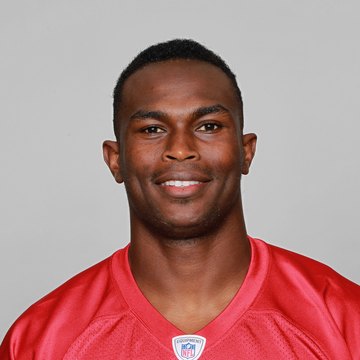 Julio Jones
The time is coming soon when the Hall of Fame credentials of Julio Jones will be debated—he's eligible for induction in 2029.
It's a debate that shouldn't take especially long—from 2010 to 2019, no wide receiver in the NFL had more receiving yards than Jones—and his career didn't start until 2011.
It didn't get any better for Jones than the 2015 campaign—he set career-highs in receptions and receiving yards, was targeted a jaw-dropping 203 times and had more receiving yards than any other player had scrimmage yards.
Jones wasn't the No. 1 wide receiver that year, but he finished less than a PPR point per game off the pace and averaged over 23 points per contest.
59
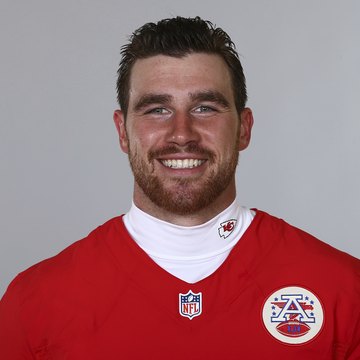 Travis Kelce
Oh look, Travis is back!
The stretch of dominance among tight ends that Kelce enjoyed in his heyday was unparalleled—he wasn't just the No. 1 tight end. He was a tier of his own. It was Kelce—and then everyone else.
The 2018 season was right in the middle of that seven-season reign of terror.
That year, Kelce was targeted a career-best 150 times by a young quarterback in his first year as the starter named Patrick Mahomes. He surpassed 100 catches for the first time in his career, topped 1,300 receiving yards and found the end zone 10 times on the way to his third straight No. 1 finish in PPR points at his position.
58
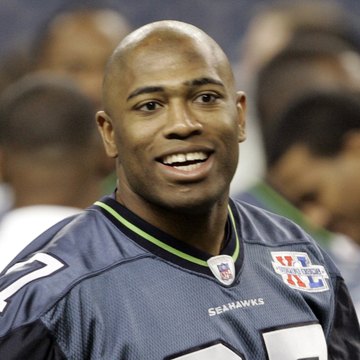 Shaun Alexander
This writer has a special place in his heart for Shaun Alexander. He was on my first two fantasy teams—both of which made the Championship game.
I lost that title game in 2005, but it wasn't Alexander's fault.
That 2005 season was the best of Alexander's career—he led the NFL with 370 carries, flirted with 1,900 yards on the ground, averaged over 117 rushing yards per game and paced the NFL in total touchdowns. He was fantasy's highest-scoring back that year.
Unfortunately, "The Curse of 370" got Alexander the following season. He missed six games the following year and was out of the NFL altogether a few years later.
57
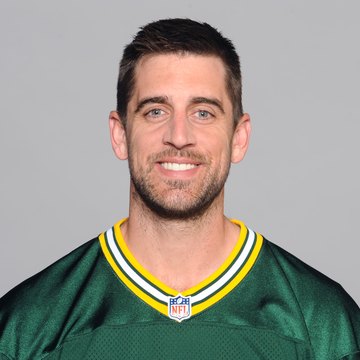 Aaron Rodgers
At this point in his career, Aaron Rodgers' days of fantasy relevance appear to be over—his ADP in drafts in 2026 is 28th among quarterbacks.
A decade ago, it was a far different story.
In 2016, Rodgers completed over 65 percent of his passes, topped 4,400 passing yards and threw a league-leading 40 touchdowns against just seven interceptions. It was also the best season of his two-decade career as a runner—Rodgers rushed for 369 yards and added four more touchdowns with his feet.
Rodgers was so lethally efficient that season that he out-pointed Drew Brees of the Saints—in a season where Brees threw for the sixth-most yards in NFL history.
56
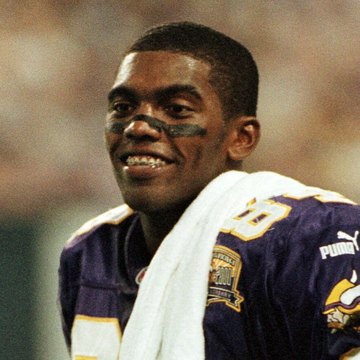 Randy Moss
Time for some hard-hitting fantasy analysis.
Randy Moss was good at catching a football.
Truth bomb.
Opponents and fantasy managers alike were well aware of that by the 2003 season—not that it really helped. Moss was arguably the most un-guardable wideout the league has ever seen.
That year, Moss was targeted 172 times—the second straight year he averaged over 10 targets a game. Moss caught a career-high 111 passes that season, set a career-best in receiving yards and led the league in touchdown grabs—for the third time.
It also marked Moss' last 1,000-yard season in the purple and gold—after a down 2004 he was traded to the Oakland Raiders.
55
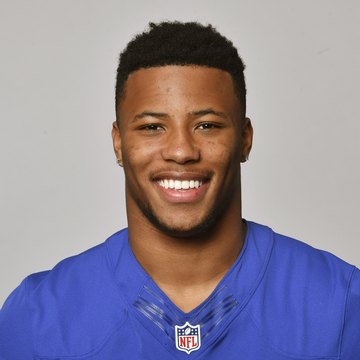 Saquon Barkley
In the 21st century, there hasn't been a running back drafted earlier than Saquon Barkley, who was selected second overall by the New York Giants in 2018.
He didn't take long to start paying off on that hefty investment.
Barkley entered the NFL with a hefty asking price in fantasy—he was selected seventh overall on average. But most of the six teams who passed on Barkley wanted a do-over after he cleared 1,300 yards on the ground, caught 91 passes, topped 2,000 total yards and found the end zone 15 times.
Barkley finished that first season as fantasy's highest-scoring back—and announced his presence in fantasy football in emphatic fashion.
54
 Christian McCaffrey
Oh look—it's Christian McCaffrey (again).
The 2023 season wasn't McCaffrey's most productive. But it was his most important. After his seismic 2019 campaign, McCaffrey had lost two seasons and changed teams, moving from Carolina to San Francisco.
But any doubts about McCaffrey (or the 49ers trading for him) was ground to dust beneath a second buzzsaw season. McCaffrey led the NFL in rushing yards for the only time in his career. Caught 67 passes. Topped 2,000 total yards on just 339 touches. Scored a career-best 21 total touchdowns...
And outscored the next-closest fantasy running back by over a touchdown—per game.
That rampage should probably be higher on this list.
But we aren't done with CMC. Not by a longshot.
53
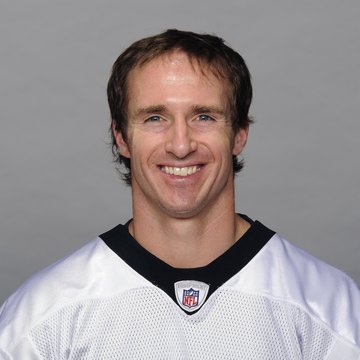 Drew Brees
That Drew Brees was just inducted into the Pro Football Hall of Fame surprised exactly zero people.
Because at his best, there has never been a more prolific quarterback in NFL history.
Over a 20-year career that included 13 Pro Bowls, Brees made what was once unthinkable routine—his five seasons with 5,000 passing yards are more than the No. 2 and No. 3 quarterbacks on that list combined.
2011 was the best of the lot—not only did Brees set an NFL record in passing yards, but he also led the league in touchdown passes and completion percentage.
That he didn't even lead his position in fantasy points per game that year speaks to a season where three quarterbacks topped 5,000 yards.
Yep. They threw the ball in the olden times.
52
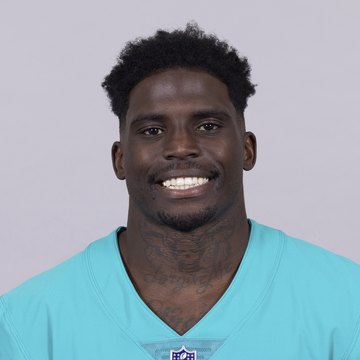 Tyreek Hill
The 21st century (and especially the last 10 years) has seen the rise of the wide receiver in fantasy football. It's not just PPR scoring. Or the fact that most leagues started to require three weekly starters.
In fact, it can be argued that those changes were driven by the growing number of ridiculous talents at the position.
And at his best, Tyreek Hill was absolutely ridiculous.
Hill's 2023 season came after he was an established star who had won a Super Bowl before being traded to the Miami Dolphins. But Hill's second season on South Beach was a reminder The Cheetah could still run—Hill set career-bests in both receiving yards and touchdowns (leading the league in both categories) on the way to nearly 380 PPR points.
51
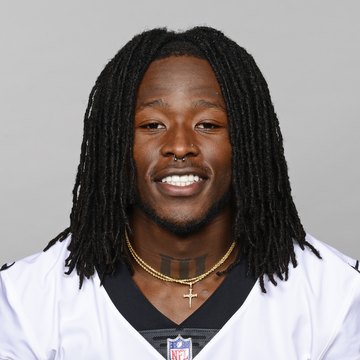 Alvin Kamara
Alvin Kamara is something of a unicorn.
If someone told you that in nine years in the NFL, a running back never had 1,000 yards on the ground, most would assume that back was an afterthought. Maybe a handcuff or late-round dart-throw.
Of course, most backs don't also start their careers with four straight seasons with over 80 catches just as fantasy scoring was pivoting to PPR.
The man had timing.
Kamara did just fine running the ball in 2020, averaging five yards a carry and leading the NFC with 16 rushing scores. Add in 83 receptions and a league-high 21 total touchdowns and Kamara was the No. 1 running back in fantasy by a wide margin—including over a 2,000-yard rusher.