20
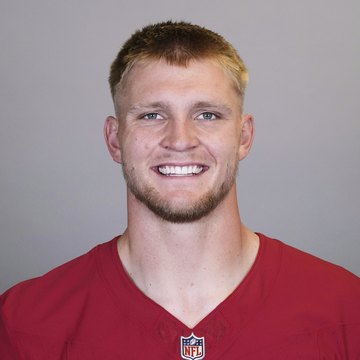 Trey McBride
Recency bias is most assuredly a thing in fantasy football—the last big thing that happened is the best big thing ever. And for as talented as Cardinals tight end Trey McBride is, he may never have another season like the one he just did.
But it also checks all the boxes for an all-time fantasy campaign.
Want some history? McBride had the most receptions ever by a tight end in a season and became the first player at the position with back-to-back 100-catch years.
Want fantasy points? McBride had the third-most by a tight end ever.
Want dominance over his peers? McBride outscored Kyle Pitts by over 100 PPR points.
19
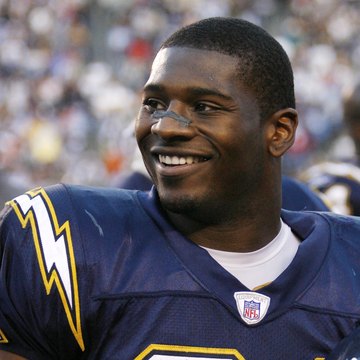 LaDainian Tomlinson
LaDainian Tomlinson was...something.
It wasn't just the Hall of Fame talent, although Tomlinson had no shortage of that. His skill-set was made for piling up PPR points. He was the focal point of the Chargers offense, in that he essentially was the Chargers offense.
He was my first fantasy football love affair—and it was torrid.
That Tomlinson wasn't selected for the Pro Bowl in 2003 is laughable—he averaged 5.3 yards per carry, caught a career-high 100 passes, led the league with 2,370 total yards and found the end zone 17 times.
Tomlinson came up just shy of 450 PPR points in 2003—and was the fantasy runner-up at his position.
18
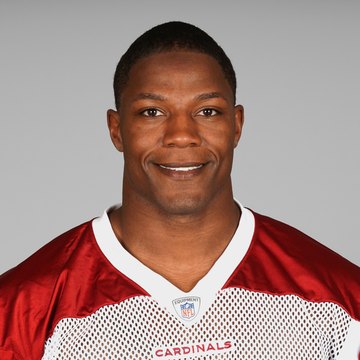 David Johnson
You can't tell the history of popular music without mentioning one-hit wonders.
And you can't tell the history of modern fantasy football without talking about David Johnson.
In eight NFL seasons, Johnson barely averaged four yards per carry. He topped 1,000 yards on the ground just once.
But that one season? Bonkers.
In his second season with the Arizona Cardinals, Johnson rushed for over 1,200 yards. Drew a whopping 120 targets in the passing game. Topped 2,100 total yards. And found the end zone 20 times.
Johnson was the only player in fantasy football to top 400 points that season, and he dominated the fantasy runner-up at running back (Ezekiel Elliott) by over 80 PPR points.
17
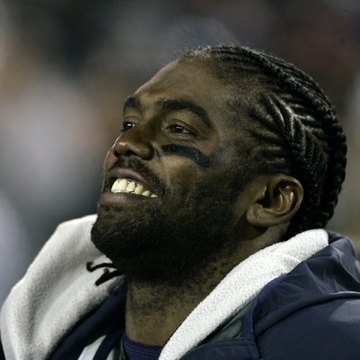 Randy Moss
By the time the 2007 season rolled around, Randy Moss had gone from the NFL's most feared receiver to a player trying to get his career back on track after a disappointing stint in Oakland.
They hadn't stolen all the city's sports teams yet.
Moss landed in New England that season catching passes from some rando named Mike Brady or Tom Brady or something.
And he got back on track, all right.
Brady targeted Moss 160 times during New England's undefeated regular season. Moss reeled in almost 100 of those targets and flirted with 1,500 receiving yards. Oh yeah, and Moss also set an NFL record with 23 touchdown receptions.
The only player who had more fantasy points than Moss that season was that Brady guy.
Whoever he was.
16
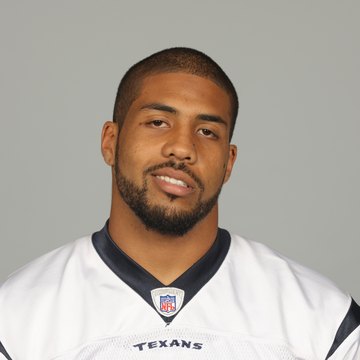 Arian Foster
There is nothing better in fantasy football than landing an elite running back as late as possible—it's the Golden Ticket that gets you a trip to the chocolate factory.
Arian Foster was 24 karat awesome in 2010.
In 2009, Foster was a seldom-used back who carried the ball all of 54 times. In his second season, though, he touched the ball just a little bit more—a league-leading 393 times. Foster averaged over 100 yards per game on the ground, topped 65 receptions, led the NFL with 2,220 total yards and scored 18 touchdowns on the way to finishing more than 75 fantasy points ahead of, well, anyone.
He was a winning Powerball ticket. And those who drafted him hit the jackpot.
15
 Dan Marino
People born before a certain year just don't understand the magnitude of what Dan Marino did in Miami in 1984.
Whippersnappers.
In a time when 4,000-yard passers were far more exception than rule, Marino did the unthinkable, becoming the first player in the history of the NFL to throw for over 5,000 yards in a season.
No one would repeat the feat for nearly a quarter-century.
Marino led all quarterbacks in every stat that mattered that season, including touchdown passes and yards per attempt. He averaged over 315 passing yards per game. And was the No. 1 fantasy quarterback by 60-plus points.
The runner-up was Neil Lomax. You cannot make this stuff up.
14
 Priest Holmes
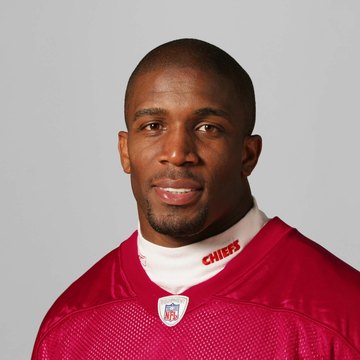
You had to know that Priest Holmes was going to make at least one appearance on this list.
There might be more.
Holmes logged a 1,000-yard season over four years in Baltimore, but he wasn't a highly-valued fantasy asset. In the last four seasons of his career after injuries set in, he never hit 1,000 rushing yards again.
But there was a three-year stretch where Holmes was the Tasmanian Devil—and 2002 was smack in the middle.
In his second season in Kansas City, Holmes topped 1,600 rushing yards, posted the second of three straight 2,000-yard seasons, caught 70 passes and found paydirt an NFL-high 24 times.
It was one of the six biggest seasons a back has ever had in PPR points.
And it wasn't even his best year.
13
 Peyton Manning
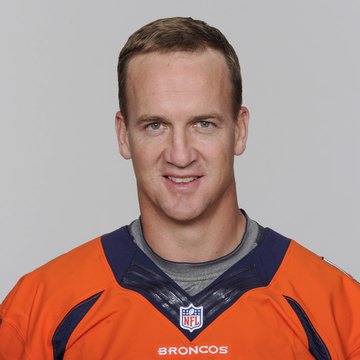
Peyton Manning led the Denver Broncos to a pair of Super Bowls.
OK, the one they won the team sorta led him—details.
The Broncos may have gotten waxed in Super Bowl XLVIII, but that came after Manning and the Denver offense absolutely shredded the league in the regular season.
Manning carved the NFL to pieces. He averaged over 340 passing yards a game and made history three times over. His 5,477 passing yards remain the single-season record. So do his 55 touchdown passes. And Manning was the first quarterback in league history to record 5,000 passing yards and 50 touchdown throws in the same year.
It's a top-five season from a fantasy QB all-time—from a guy who couldn't run if zombies were chasing him.
12
 Ja'Marr Chase
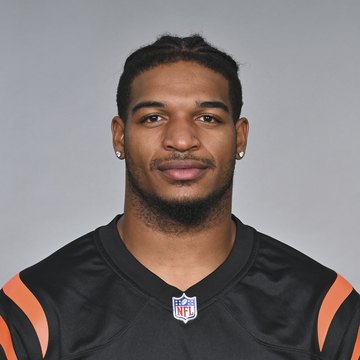
In most fantasy football leagues this year, Ja'Marr Chase will be the first receiver drafted.
There's a reason for that.
Even with Joe Burrow hurt last season, Chase was elite—he led the NFL in targets, caught 125 passes and topped 1,400 receiving yards.
Two years ago with his bae Joe Cool throwing him the rock, Chase also led the league in targets with 175. In addition, he led the league in receptions. And receiving yards. And touchdown catches, becoming the fifth receiver in the Super Bowl era to win the "Triple Crown."
Chase was the only non-quarterback to score 400 points that season, he topped Justin Jefferson by a mile for the top spot at his position and Chase posted the fourth-most PPR points by a wideout ever.
So, yeah—drafting Chase this season is probably a good idea.
11
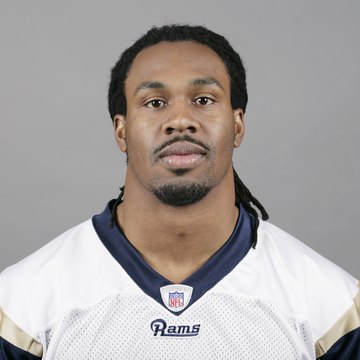 Steven Jackson
Steven Jackson had the unenviable task of being the guy who followed Marshall Faulk in the backfield for the St. Louis Rams. Jackson may not have reached the heights that Faulk did—but when he was on his game he was plenty capable of blowing up in his own right.
In 2006, Jackson most assuredly blew up.
Fresh off the first 1,000-yard rushing season of his career, Jackson exploded to the tune of an NFL-high 2,334 yards that season. He caught 90 passes, scored 16 total touchdowns and posted over 415 PPR points.
The only thing that stopped Jackson from leading all players in points by a sizable margin was the greatest fantasy campaign of all time.